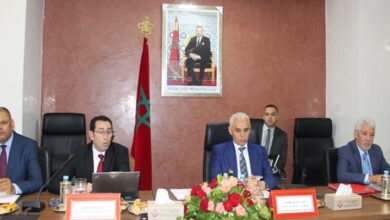
Nizar Baraka: “We are identifying current and future industrial needs”

Morocco’s Ambitious Water Management Strategy
Nizar Baraka, the Minister of Equipment and Water, has outlined Morocco’s ambitious roadmap focused on enhancing water storage capacity, developing "water highways," and utilizing renewable energy for seawater desalination.
The primary goal is to ensure every citizen has access to drinking water, regardless of water stress, while also meeting at least 80% of agricultural needs through irrigation.
Three Pillars of Water Management
Morocco’s strategy is built on three main pillars. Firstly, the water mix through dams, designed to store water and protect populations from flooding, aims to increase storage capacity from 20.8 billion cubic meters today to 27 billion cubic meters by 2030.
Secondly, the water highways will facilitate better redistribution of resources between watersheds, exemplified by the infrastructure connecting the Sebou to the Bouregreg, which will transfer surplus water to deficit areas.
Finally, desalination of seawater via renewable energy is essential, particularly for irrigating nearly 100,000 hectares of agricultural land.
Anticipated Decline in Water Resources
According to Minister Baraka, hydrometeorological forecasts indicate that Morocco could see a decline of 20 to 30% in its water resources by 2050 due to climate change and increased evaporation.
Structured and Multisectoral Governance
Water management in Morocco is governed by multiple levels of oversight, including a steering committee led by the Chief of Government and a National Water Commission headed by the Minister.
This coordination brings together various public stakeholders (Interior, Agriculture, Energy, ONEE, basin agencies) to ensure the monitoring and updating of water policies.
Anticipating Industrial and Demographic Demand
Baraka emphasized that Morocco is proactively addressing current and future industrial needs to produce more water at a lower cost. He pointed to the rise of water-intensive industries, such as battery gigafactories, as well as the growth of tourism and rapid urbanization.
Towards the 2027-2035 Program
The 2027-2035 water program will focus on building new dams, expanding desalination efforts, and reusing wastewater, which is projected to reach around 1 billion cubic meters by 2030.
This phase will also prioritize the recharge and preservation of groundwater resources, funded through the Mohammed VI Investment Fund, public-private partnerships, and the state budget.