SRM Tangier-Tetouan-Al Hoceima Confronts the Challenge of Flooding
How Does SRM Tanger-Tétouan-Al Hoceima Anticipate Natural Disasters?
SRM Tanger-Tétouan-Al Hoceima places the anticipation of climate and natural risks at the core of its public service management mission. As a regional operator responsible for essential services, it prioritizes prevention, vigilance, and operational preparedness as fundamental pillars of its actions.
This approach relies on continuous monitoring of high-risk situations, sustained attention to the most exposed areas of the territory, and proactive mobilization of technical and operational teams in response to potential risks. It also exists within a framework of ongoing coordination, vulnerability analysis, and progressive adaptation of intervention systems.
The exceptional weather events recently experienced in the Tanger-Tétouan-Al Hoceima region, affecting various provinces, particularly in Ksar El Kébir and its surrounding rural areas, served as a large-scale stress test for SRM-TTA. This period also witnessed landslides in several territories, notably in the provinces of Chefchaouen, Ouezzane, and Fahs-Anjra, causing damage to various drinking water and electricity infrastructures in particularly challenging topographical areas (breaking or sliding of pipelines, falling telephone poles, etc.).
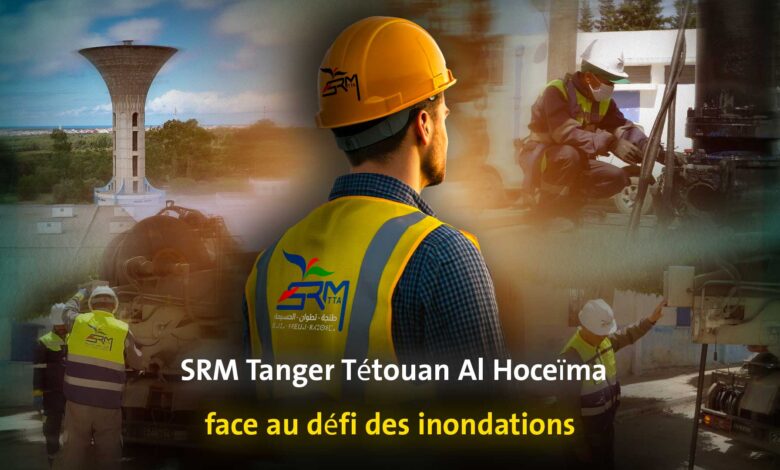
In these often difficult-to-access environments, due to the nature of the soil, SRM-TTA’s mobilization was total. Day and night, during the crisis and in the post-event stage, teams were deployed to temporarily restore drinking water installations, repair affected electrical infrastructures, secure sensitive sites, and clean and repair sewage networks, all under a constant imperative: to protect citizens and their property, ensure service continuity, preserve essential infrastructures, and restore vital services as quickly and effectively as possible.
Do you have a formalized and regularly updated crisis management plan?
Crisis management within SRM-TTA is organized using a structured framework, based on internal procedures, mobilization systems, and coordination mechanisms designed to guarantee rapid, coherent, and tailored responses depending on the nature of the event. In this context, from the outset, in light of potential climate risks in its area of operation, the company developed a crisis management plan that is continually improved based on lessons learned from recent adverse weather events impacting the Tanger-Tétouan-Al Hoceima region.
In an environment characterized by intensified climatic hazards, SRM-TTA thus pursues a continuous improvement process for its preparation tools and management strategies, aiming to sustainably reinforce its operational resilience and capacity to ensure the continuity of essential services.
In this framework, the establishment of SRM has been a significant advantage, enabling the mobilization of resources from all its components and support from partner SRMs nationally, allowing for coordinated action against crises, akin to the unity of fingers on a hand.
How is coordination structured with local authorities during emergencies?
Coordination with local authorities is a fundamental pillar of our intervention system. In emergency situations, SRM-TTA acts in close consultation with authorities and all relevant institutional stakeholders. This coordination ensures a shared understanding of the situation, prioritization of interventions, and a coherent mobilization of human and technical resources, within a framework focused on protecting populations and ensuring the continuity of vital public services.
Infrastructure and Resilience
Are your infrastructures currently adapted to new climate challenges?
In light of evolving climatic hazards, adapting infrastructures is not only a necessity but also a continuous challenge. SRM-TTA does not claim that its infrastructures are fully adapted to all new climate risks. However, the organization is steadfast in its daily commitment to progressively strengthen and adapt its networks and facilities to enhance their robustness, reliability, and resistance to extreme risks.
This ongoing adaptation process relies on a detailed understanding of the local terrain, regular vulnerability assessments, the integration of feedback from recent events, and the programming of actions and investments aimed at the resilience of networks and services, as well as the continuity of essential missions.
What recent investments have been made to strengthen network resilience?
The investments committed by SRM-TTA are part of a sustainable logic aimed at strengthening the resilience of networks and infrastructures, taking into account the particular characteristics of the Tanger-Tétouan-Al Hoceima region, which is marked by significant geographical diversity and exposure to climatic phenomena that may impact the continuity of essential services.
In this regard, the 2026 budget is primarily directed towards upgrading infrastructures, renewing, replacing, and rehabilitating networks to improve their capacity to absorb situations, particularly those related to natural hazards.
The total investment in 2026 planned for the region amounts to 1.7 billion dirhams, while the budget allocated for the renewal, replacement, and upgrading of networks and infrastructures reaches 200 million dirhams.
These efforts aim to secure sensitive facilities, enhance the reliability of water, electricity, and liquid sanitation networks, reduce operational vulnerabilities, and guarantee improved continuity of public service for citizens. This is the first program in an initiative expected to extend over several years, especially in light of results from studies and master plans for the networks.
Have you identified particularly vulnerable areas in the region?
Yes. SRM-TTA has identified several areas within its intervention perimeter that exhibit particular vulnerability concerning climatic, topographical, and operational risks.
From the beginning, the company implemented a risk mapping for various territories and zones to gain a clearer understanding of exposed sectors and to guide prevention and preparation actions. However, recent climatic hazards in the region have led us to reassess certain initial sizing assumptions.
For instance, strong winds and landslides observed in the provinces of Chefchaouen and Fahs-Anjra, as well as heavy rains recorded in Ksar El Kébir, have confirmed the need for enhanced vigilance and continuous adaptation of our systems.
This vigilance mapping is now an essential management tool. It requires constant updating based on field experience and evolving risks. In this type of approach, it is sometimes necessary to adopt more cautious—if not pessimistic—scenarios to better anticipate and prepare.
This approach allows SRM-TTA to better target its preventive actions, adapt its interventions to on-ground realities, and continuously improve its level of preparedness in the most exposed sectors, always considering the resources it possesses.
Operational Crisis Management
How is operational management organized in crisis situations?
In a crisis situation, SRM-TTA activates an organization based on the immediate mobilization of concerned teams, rapid information flow from the field, continuous situation assessment, and targeted deployment of intervention resources. The objectives are twofold: to secure sensitive installations and to restore the continuity of essential services for citizens in the shortest possible time without jeopardizing the safety of its employees.
What intervention protocols do you deploy in the event of a major incident?
In the case of a major incident, SRM-TTA activates a structured crisis management system under the supervision of the General Management. A crisis management unit is designated to lead the operation, mobilize the relevant teams, ensure coordination with competent authorities, assess the situation, set priorities, and determine actions on the ground.
SRM-TTA also establishes, in consultation with the competent authorities, a crisis management procedure outlining the organization, roles, decision-making circuits, and all technical and operational means to face a crisis or emergency situation. This procedure relies on defining alert levels and criteria for evaluating crisis situations based on their nature, impact, and severity.
A level 1 crisis generally corresponds to a major incident impacting normal operations, particularly for drinking water supplies, but whose consequences remain limited to a small number of clients. In this case, returning to normalcy usually occurs within a relatively short period, on the order of a few hours.
A level 2 crisis involves more significant or severe situations, such as a disruption in drinking water supply over a wide geographic area, prolonged insufficiency or cessation of deliveries, pollution affecting a significant portion of the network, or widespread damage caused by natural disasters like storms or floods, as seen in the recent event.
In all cases, interventions are organized around clear priorities: securing affected facilities and zones, protecting users and their property, ensuring the continuity or progressive restoration of service, mobilizing necessary resources, and keeping stakeholders informed while closely monitoring the situation until normalcy is restored.
What are your average response times?
Response times depend on the nature of the incident, its severity, site accessibility, and the scale of resources to be mobilized. In its daily operations, SRM-TTA relies on rapid intervention teams distributed throughout its area, supported by on-call teams to ensure continuous operational vigilance and a constant capacity for response.
In a crisis situation, SRM-TTA triggers an expanded mobilization of all available teams and resources, including external suppliers, in a framework aimed at an immediate, coordinated, and proportionate response to the stakes involved.
The goal remains to ensure, as promptly as possible, the handling of reported incidents, particularly when they impact the continuity of essential services or pose risks to the safety of users and infrastructures.
Communication and Relations with Citizens
What measures do you implement to inform citizens during a crisis?
SRM-TTA places a major emphasis on informing citizens and clients during crises, recognizing that the quality of communication is a vital lever for managing sensitive situations. In this context, the company mobilizes several complementary channels to ensure rapid, reliable, and comprehensible dissemination of useful information.
This communication includes public notices, institutional press releases, digital publications, and messages shared on the company’s official social media, addressing observed disruptions, ongoing interventions, planned or exceptional outages, and measures taken to progressively restore services. These materials serve to inform, guide, and raise awareness among users timely.
Additionally, the Customer Relations Center plays a central role in listening, processing reports, and supporting users, while institutional partners and local authorities contribute, when necessary, to enhance information dissemination closely tied to the affected territories.
SRM-TTA’s objective is to provide citizens with clear and up-to-date information regarding the state of affairs, possible disruptions, safety instructions, and measures in place to ensure continuity or restore service.
How do you handle complaints and emergency situations reported by users?
Complaints and emergency situations reported by users are processed with careful, structured, and prioritized attention, according to their nature, degree of urgency, and potential impact on the continuity of essential services.
When a report presents critical characteristics, particularly related to the supply of drinking water, electricity, or liquid sanitation, it is promptly directed to the relevant teams for quick operational response.
Depending on the type of complaint, its analysis, and level of severity, the crisis management protocol may be activated to mobilize necessary resources, coordinate interventions, prioritize actions, and ensure follow-up until normalcy is achieved.
This organization, albeit still in development, allows SRM-TTA to enhance its responsiveness, ensure better management of sensitive reports, and strengthen trust with citizens.
What tools do you prioritize for real-time communication?
In a crisis situation, real-time communication is an essential link in service continuity and the trust relationship with citizens. SRM-TTA prioritizes an approach that leverages complementary mobilizable channels to ensure the rapid, reliable, and coherent dissemination of information.
This communication primarily relies on the company’s digital platforms, its official social media, and close coordination with local authorities and relevant stakeholders. This collaboration ensures, depending on the nature of the situation, fluid circulation of useful information to citizens and clients.
The dual aim is to inform timely about the situation’s evolution, any potential disruptions, and engaged measures while ensuring clarity, reliability, and consistency in the messages conveyed.
Innovation and Digitalization
What role does digitalization play in your crisis management system?
In crisis situations, digitalization serves as a crucial lever to enhance SRM-TTA’s responsiveness and operational efficiency. Since its inception, SRM-TTA has committed to digitalization, particularly in support functions, customer management, and the Customer Relations Center. This evolution facilitates information flow, streamlines coordination among relevant teams, and supports more rapid, structured, and well-documented decision-making.
Do you rely on technologies such as smart sensors or early warning systems?
Given the extensive operational perimeter, SRM-TTA has chosen to leverage new technologies for information collection and processing through the implementation of a multi-year action plan that kicks off this year with the establishment of a Central Control Office, scheduled for completion within 18 months. This system will enable real-time supervision, management, and remote command of networks and infrastructures.
The aim is to improve service quality, reduce response times for outages, utilize modern decision-support tools, monitor performance indicators in real-time, minimize costs and losses, and enhance the availability of networks and facilities.
Ultimately, this transformation aims to evolve SRM-TTA’s networks towards smarter, Smart Grid-style infrastructures, emphasizing modernization, resilience, and sustainable performance.
Are you collaborating with technology partners to enhance risk management?
Currently, SRM-TTA is in its early months of operation, and its ambitions are only limited by existing equipment and available resources. The strategic vision is oriented towards implementing communicative digital solutions to identify, analyze, and consolidate field data to foster proactive network management.
To achieve these objectives, the management contract includes a substantial investment program, where the first ten years represent pivotal milestones to meet the targeted performance indicators. SRM-TTA is at the beginning of a long journey of transformation and evolution, necessitating significant effort and resources.
Nevertheless, commitment is evident, and the organization, with its entire human capital, is determined to engage in continuous evolution and modernization of its services, grounded in progressively enhanced field requirements and specificities, its tools, its supervisory capacities, and its anticipation mechanisms.
In this perspective, SRM-TTA actively explores opportunities, expertise, and technological solutions that can accompany it in its journey toward comprehensive service resilience.
Feedback and Continuous Improvement
What lessons have you drawn from recent crises in the region?
The recent crisis allowed us to test existing infrastructures in real conditions, highlighting vulnerabilities and underscoring a significant need for strengthening and restructuring networks, particularly in rural areas to minimize the impact of crises on service continuity for users.
How are these feedback lessons integrated into your action plans?
Feedback from experiences directly informs SRM-TTA’s action priorities. In this framework, the company reaffirms its commitment to the sustainable strengthening of infrastructures, improving territorial resilience, and continuously adapting its networks to new climatic constraints. This commitment translates into accelerated repair and upgrading operations for networks, as well as the initiation of a master plan, which will serve as a structural framework for planning investments and directing medium- and long-term development priorities.
Henceforth, all infrastructures to be built must incorporate, from the design phase, parameters related to climatic constraints to better anticipate risks, enhance the robustness of structures, and sustainably secure the continuity of public service.
Do you conduct crisis simulation exercises?
While preparing for crises naturally involves exercises and simulations, SRM-TTA was faced almost immediately with a real large-scale simulation. Just three months after its inception, the organization had to confront exceptional weather events affecting several provinces in the region over a prolonged period. This period constituted a genuine stress test for its organizational capabilities, coordination strength, and intervention capacity.
From the very beginning, SRM-TTA established a risk mapping for the region. However, recent climatic events prompted the company to reassess certain initial sizing assumptions and update its risk mapping, integrating observed vulnerabilities more effectively.
This experience allowed us to test in real conditions the robustness of mobilization mechanisms, the quality of coordination with competent authorities, the responsiveness of field teams, and the operator’s ability to simultaneously manage safety concerns, continuity of vital services, and protection of essential infrastructures.
In a context marked by the intensification of climate risks, this situation reinforced SRM-TTA’s conviction that resilience is built through preparation, anticipation, and the ability to fully learn from real events to sustainably consolidate crisis management systems.
Climate Change and Sustainability
How do you integrate climate change challenges into your strategy?
Climate change is no longer a distant hypothesis: it is an operational reality that fundamentally transforms the management conditions of essential public services. SRM-TTA incorporates this element into its strategic vision, through an approach combining adaptation, infrastructure security, service continuity, and sustainable resource protection. This orientation aligns with a logic of territorial responsibility and sustainable public service.
What measures do you deploy to sustainably enhance territorial resilience?
Sustainably enhancing the resilience of territories is neither a one-off action nor strictly a technical response. It requires a holistic approach centered on prevention, securing sensitive infrastructures, progressively improving networks, operational preparation, modernizing management tools, and a deep understanding of territorial vulnerabilities.
It is precisely in this logic that SRM-TTA’s actions are positioned. Recent events in the Tanger-Tétouan-Al Hoceima region, including severe weather impacts on several provinces, particularly in Ksar El Kébir, or violent winds and landslides recorded in areas like Chefchaouen, Ouezzane, and Fahs-Anjra, have highlighted the need for ongoing efforts to bolster the robustness of drinking water, electricity, and sanitation infrastructures, especially in challenging topographical settings with limited access.
In response to these realities, SRM-TTA is deploying concrete measures: preventive operations like sewer network cleaning, verification and security of drinking water facilities, restoration and progressive enhancement of certain electrical infrastructures, intensified mobilization in the most exposed sectors, and continuously improving intervention capabilities and rapid service restoration. This initiative is also supported by advancing supervisory tools that help improve facility monitoring and operational responsiveness.
However, territorial resilience is also built upon coordination. This is why SRM-TTA places significant importance on coordinating with local authorities for information flow, ensuring smooth mobilization mechanisms, and protecting citizens in sensitive situations.
Through this approach, SRM-TTA asserts a clear ambition: to embed its efforts into a sustainable trajectory of territorial resilience, founded on anticipation, field experience, continuous improvement, and the unwavering commitment of its teams to ensure the continuity of essential services and the safety of populations.
How do you reconcile crisis management and environmental protection?
Crisis management cannot be dissociated from environmental imperatives. For SRM-TTA, intervening in emergency situations means not only restoring service as swiftly as possible but also protecting networks, minimizing impacts on the natural environment, securing sensitive facilities, and acting responsibly.
Within this context, operational performance and environmental protection reinforce one another. A rapid, well-coordinated, and technically sound intervention protects infrastructures, ensures the continuity of essential services, and reduces environmental risks.
This responsibility is also shared with citizens. User behavior, such as respecting sanitation networks, avoiding solid waste disposal in pipes, promptly reporting anomalies, and responsibly using public services, directly aids in preventing incidents and limiting their impacts during crises.
Thus, territorial resilience relies on the mobilization of SRM-TTA, coordination with competent authorities, and responsible citizen involvement in preserving resources, infrastructures, and the environment.
Conclusion:
For SRM Tanger-Tétouan-Al Hoceima, climatic hazards indicate the resilience of its facilities. The objective is to develop infrastructures capable of withstanding such challenges, to have the means to manage these events, and to minimize the impact on service quality for users.
SRM reaffirms its full commitment as a regional actor engaged in supporting regional development, territorial equity, and environmental protection. The continuity of public distribution services is a requirement, and quality is an obligation. However, resilience cannot be the sole responsibility of the operator; it calls for shared social responsibility based on the mobilization of all stakeholders, particularly citizen involvement in adopting responsible behaviors towards the protection of natural resources and the environment.
Beyond crisis management, our ambition is to establish sustainable resilience driven by anticipation, innovation, coordination, and the constant commitment of the women and men of SRM-TTA, all dedicated daily to serving citizens while fostering a culture of prevention, resource preservation, and solidarity in the face of climatic challenges.