ELI Morocco Forum: M. Baraka Highlights the Dynamics of Major Infrastructure Projects in Morocco
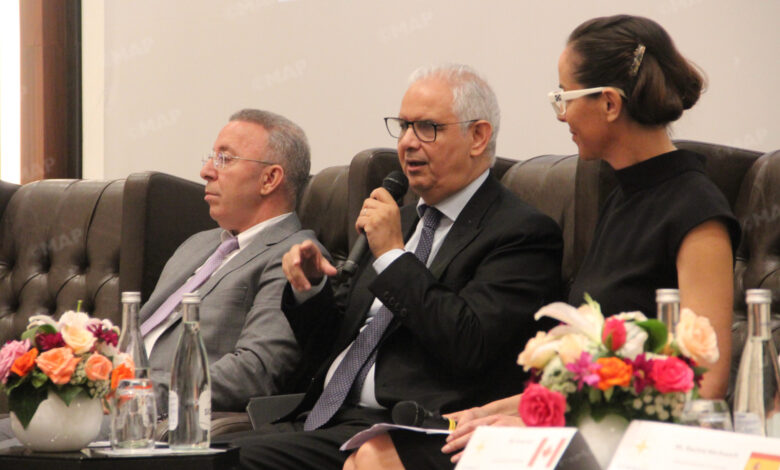
Morocco is undergoing a significant transformation through a sustained investment drive in strategic infrastructure. This message was conveyed by the Minister of Equipment and Water, Nizar Baraka, during his participation in the ELI Morocco Forum 2026, held in Tangier alongside the International Equine Festival Mata.
Speaking at a panel focused on port infrastructure and major structural projects, the minister emphasized that the Kingdom has been experiencing a true infrastructural revolution for over twenty-five years, guided by the vision of His Majesty King Mohammed VI.
Nizar Baraka highlighted that public investment has seen significant growth, rising from 240 billion dirhams in 2022 to nearly 380 billion dirhams today. This increase reflects Morocco’s determination to maintain its pace of development despite the challenges posed by drought, the repercussions of the war in Ukraine, and global economic uncertainties.
Strengthened Water Strategy in the Face of Climate Challenges
In response to seven consecutive years of drought, Morocco has expedited the implementation of its national water security strategy. This strategy relies on several complementary levers: the construction of dams, seawater desalination, the reuse of treated wastewater, and the development of hydraulic interconnections.
The Kingdom currently boasts 156 dams with a storage capacity of 21 billion cubic meters. Fourteen new dams are under construction, aimed at increasing this capacity to 27 billion cubic meters by 2030. Simultaneously, the number of small dams for rural areas is expected to be significantly enhanced.
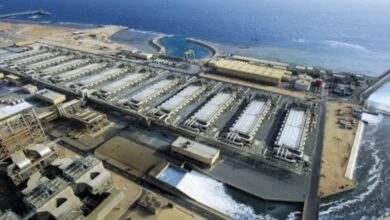
Desalination also constitutes a major pillar of this strategy. Its production capacity has escalated from 40 million cubic meters in 2022 to 410 million cubic meters currently, with an ambitious target of 1.7 billion cubic meters by 2030, which will cover nearly 60% of national water needs.
Tangier Med, Nador West Med, and Dakhla Atlantic at the Heart of the Port Strategy
The minister also highlighted Morocco’s advancements in the port sector. With its modern infrastructures, the Kingdom is solidifying its position as a logistical hub between Europe, Africa, and the Americas.
Tangier Med continues to affirm its leadership in Africa and the Mediterranean, with an annual traffic of 11 million containers. The launch of the Nador West Med port further enhances this momentum, with an initial capacity of 5.5 million containers.
On the Atlantic coast, the Dakhla Atlantic port project is progressing rapidly, with a completion rate of 72%. Scheduled to enter service in 2028, it is part of the Royal Atlantic Initiative aimed at boosting regional economic integration and facilitating Sahel countries’ access to the Atlantic Ocean.
A Lever for Export, Energy, and African Integration
Beyond port infrastructure, the Dakhla Atlantic project encompasses a vast industrial and logistics zone designed to bolster Moroccan and African exports. It also aligns with the development perspectives of the Nigeria-Morocco gas pipeline and projects related to green hydrogen.
According to Nizar Baraka, these investments will enable Morocco to strengthen its integration into global value chains while consolidating its role as a strategic economic platform between Europe and Africa.
Bringing together public decision-makers, investors, and international experts, the ELI Morocco Forum 2026 also emphasized the need to promote a development model based on trust, dialogue, and cooperation among peoples, complementing economic performance.