Desalination: The World Bank Warns Morocco About the Challenges of Its Ambitious Water Program
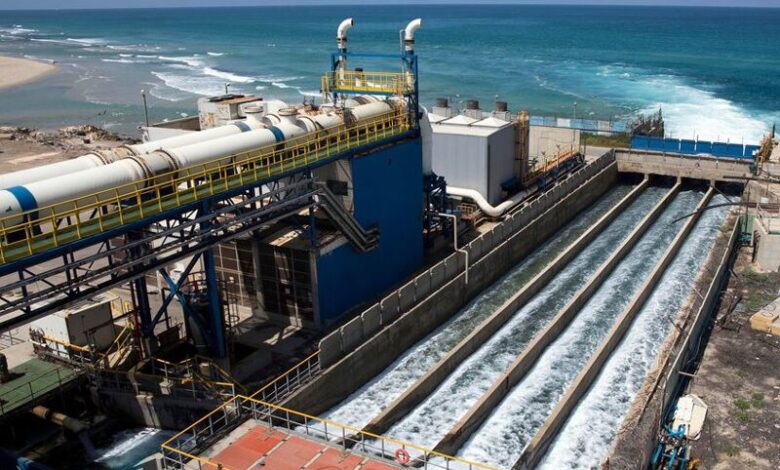
Morocco Accelerates Desalination Capacity Development to Tackle Water Stress
Morocco is speeding up the development of its desalination capacities to address water stress. However, the World Bank believes that this strategy will not yield the expected results without a more comprehensive reform of water resource management. In a report focusing on the future of desalination in the Middle East and North Africa region, the international institution highlights that, by itself, this technology will not sustainably resolve the water crisis.
According to the document, the Kingdom plans to increase its annual desalinated water production from 377 million cubic meters in 2025 to nearly 1.7 billion cubic meters by 2050, representing a more than fourfold increase in its current capabilities. This rise is attributed to the lingering effects of drought after six consecutive years of rainfall deficit between 2018 and 2024.
Desalination Cannot Replace Effective Water Management
For the World Bank, new desalination plants must be part of a comprehensive strategy incorporating various action levers. The institution specifically recommends reducing losses in distribution networks, better controlling water consumption, promoting the reuse of treated wastewater, and protecting groundwater, which is heavily exploited in several regions of the Kingdom.
The report emphasizes that while desalination provides an important response to the lack of water resources, it cannot solely compensate for the structural weaknesses in the sector.
Energy Challenges to Address
The study also highlights the constraints related to supplying future plants with electricity, particularly from renewable sources. While Morocco’s legislative framework now allows electricity purchase agreements between private producers and consumers, several implementing texts are still awaited to enable full integration of renewable energy in large desalination projects.
The report references the future Casablanca-Settat facility, which will have a capacity of 822,000 cubic meters per day. Partially powered by a 360-megawatt wind farm, it will also require significant support from the national electricity grid due to its estimated consumption of nearly one terawatt-hour per year.
Highlighting the Souss-Massa Experience
The World Bank also points to the Souss-Massa desalination project as an exemplary case of integrated water management. Commissioned in 2022, the complex currently produces 125,000 cubic meters of water per day for agricultural irrigation and 150,000 cubic meters for drinking water supply. Authorities plan to increase both capacities to 200,000 cubic meters per day.
The report also notes the existence of a cost-sharing mechanism with farmers, based on a minimum guaranteed water volume, to ensure the project’s economic viability while protecting the Chtouka aquifer.
The Cost of Desalination Remains a Major Challenge
Beyond the Moroccan context, the World Bank highlights that the Middle East and North Africa account for nearly 46% of global desalination capacity and is expected to host nearly two-thirds of new installations planned between 2026 and 2030.
However, the institution reminds us that this technology remains heavily dependent on energy, which constitutes the primary component of its operational cost. By 2040, desalination facilities could consume more than 10% of the total energy consumption in the region.
The report also draws attention to the environmental challenges related to the discharge of brine and chemical use, advocating for a cautious approach to minimize impacts on marine ecosystems.
A Water Transition Also Requires Reforms
For the World Bank, the success of Morocco’s program will depend as much on investments in infrastructure as on implementing reforms to enhance network efficiency, promote water savings, develop renewable energy, and ensure a sustainable financial model for both households and public finances.
The report concludes that desalination serves as a strategic lever to bolster the Kingdom’s water security but must be accompanied by more integrated governance and sustainable management of water resources.