ONCF: A Tender Relaunched for Several Train Stations
Delays in Railway Project Connecting Kénitra and Marrakech
A segment of the extensive railway project linking Kénitra to Marrakech is experiencing a slight setback. The National Office of Railways (ONCF) has declared the second phase of a tender for the construction of several new stations unsuccessful, as no company submitted a bid.
Valued at 385 million dirhams excluding taxes, the tender involves multiple strategic infrastructures, including a high-speed train station and a station intended for the future regional express network in Benguerir Green City. It also plans for new railway facilities in Sidi Bou Othmane, Sidi Ghanem, and near the Grand Stadium of Marrakech.
A Tender Without Candidates
The lack of bids now forces ONCF to relaunch or adjust the bidding process for the affected contracts. However, this delay is limited to this specific project and does not call into question the overall national railway program.
Several other tenders are progressing as planned. In July, ONCF awarded the construction of the Marrakech Guéliz station and the Technical Center of Marrakech to TGCC.
The Moroccan company won this bid with an offer of 562.7 million dirhams excluding taxes, outbidding SGTM, whose proposal exceeded 572 million dirhams.
96 Billion Dirhams to Transform the Railway Network
The station contracts are part of a national railway program estimated at 96 billion dirhams. This budget allocates 53 billion dirhams for infrastructure and equipment related to the Kénitra-Marrakech axis.
Approximately 29 billion dirhams will be dedicated to acquiring new trains, while 14 billion dirhams are designated for modernizing and maintaining the existing railway network.
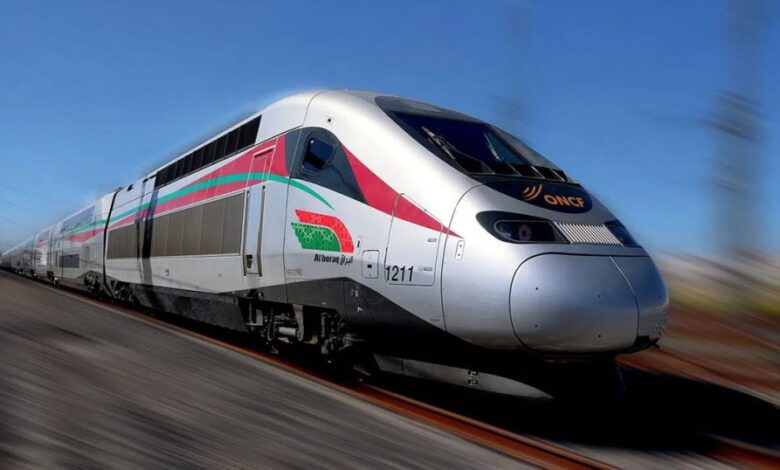
The extension of the high-speed line to Marrakech is one of the key components of this transformation. Trains are expected to reach a commercial speed of 320 km/h, while the infrastructure will be designed to support speeds up to 350 km/h.
Tangier to Marrakech in About Three Hours
The project aims to significantly reduce travel times between the major cities of the Kingdom. The journey from Tangier to Marrakech is projected to decrease from over five hours to approximately three hours.
Between Rabat and Marrakech, the target travel time is around one hour and fifteen minutes. This improvement is expected to enhance the attractiveness of rail transportation and facilitate travel between the north, center, and south of the country.
The program also includes the creation of a high-speed rail bypass around Casablanca. This infrastructure will allow long-distance trains to avoid the most crowded sections of the existing network and free up additional capacity for regional services.
168 New Trains Planned
The transformation of the network is accompanied by a substantial renewal of rolling stock. ONCF is preparing to acquire 168 trains across several categories.
The program includes 18 high-speed trains, 40 intercity trains, 60 regional trains, and 50 trains intended for the future regional express networks.
Several international manufacturers are involved in the consultations and industrial discussions related to this extensive program, including Alstom, Hyundai Rotem, CAF, Talgo, and CRRC.
Regional Express Networks Expand
The future regional express network is also set to enhance connections between the primary urban areas of the Kingdom. Several regions are involved, including Casablanca, Rabat-Salé-Kénitra, and Marrakech-Safi.
In Marrakech, the future Grand Stadium station will provide direct rail service to the sports arena. In Benguerir, the new station is expected to strengthen the link between the national railway network and the university and technology ecosystem developed around Mohammed VI Polytechnic University.
These new infrastructures are intended to support urban, economic, and tourist development in the areas concerned.
A Setback That Does Not Compromise the Program
The declaration of the failed tender for the stations is merely a temporary setback in a much larger railway undertaking. ONCF will need to revise its procedures to attract companies to construct the necessary infrastructures.
Meanwhile, other awarded contracts will continue their progression. Ultimately, the 96 billion dirhams railway program aims to profoundly modernize the national network, accelerate high-speed connections, and strengthen regional linkages throughout the Kingdom.