Gotion and Volkswagen Validate Their Industrial Project in Kenitra
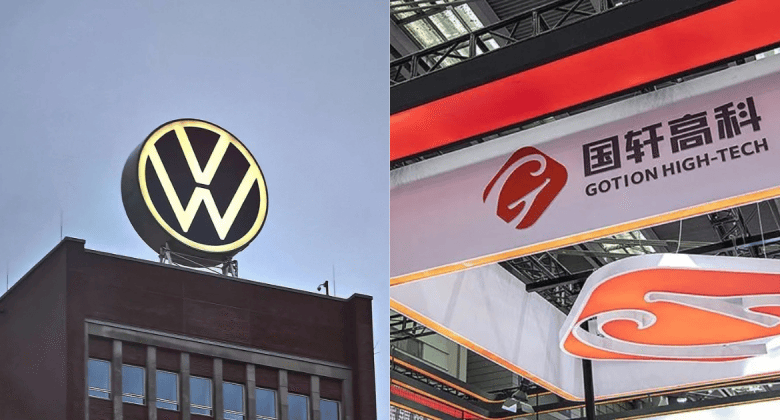
Gotion High-Tech Shareholders Approve Investment Agreement with Volkswagen
On October 20, 2026, shareholders of the Chinese battery manufacturer Gotion High-Tech granted approval for an investment agreement with Volkswagen and its subsidiary PowerCo, marking a significant step in the project to construct a battery material plant in Kenitra, Morocco. Valued at €480 million (approximately 5.19 billion dirhams), the facility is projected to have an annual capacity of 100,000 tons of LFP (Lithium Iron Phosphate) active cathode materials, aimed primarily at the partnership’s European industrial sites.
Kenitra at the Heart of the Gotion-Volkswagen Partnership
Gathering for an extraordinary general meeting in Hefei, China, shareholders of Gotion High-Tech approved the resolution concerning joint investments with Volkswagen and PowerCo. According to the official minutes referenced 2026-078, made public after the vote, the resolution garnered 93.14% in favor, with 4.20% against and 2.66% abstentions.
Volkswagen China, Gotion High-Tech’s largest shareholder, abstained from voting on this resolution due to its status as a related party, and its voting rights were excluded from the total votes counted. The proposal, requiring a qualified majority of two-thirds, was thus adopted.
This approval represents a crucial milestone for the Moroccan project, announced at the end of September. However, it does not guarantee that all investments have been finalized, as several regulatory authorizations and contractual conditions still need to be met.
A Plant for LFP Battery Materials
The project plans to establish a joint venture in Kenitra, held 51% by Gotion Power Africa S.A.S. and 49% by Power Holdco Lux S.A., a Luxembourg-based subsidiary of PowerCo. The plant is set to produce active cathode materials intended for lithium iron phosphate batteries.
With an announced annual capacity of 100,000 tons, the Moroccan site will supply the battery cell manufacturing units planned in Slovakia and Spain. The partners aim to create an integrated industrial chain, from cathode material production to the fabrication of cells designed for the European market.
The total construction duration is expected to span up to five years; however, the actual timeline will depend on the progress of work, necessary authorizations, and the partnership’s implementation conditions. Additionally, available documents specify that the stated investment for Kenitra does not include land or buildings for the factory.
A Moroccan Company Established for Investment
The industrial set-up relies on Gotion Power Africa S.A.S., established in Rabat on August 3, 2026, with a share capital of 10,000 dirhams. This simplified joint-stock company is wholly owned by Gotion GmbH, the German subsidiary of the Chinese group based in Hanover.
Its role includes managing the group’s investments in Morocco and establishing the joint venture that will host PowerCo. The latter will join the capital through Power Holdco Lux. At the time of the initial announcement, the future joint venture did not yet have a definitive corporate name.
The capital distribution outlines a Chinese majority of 51% and a 49% stake for PowerCo. According to the governance structure presented in the documents, the CEO, who will also serve as the Chief Financial Officer, will be appointed by the majority shareholder. Thus, Gotion will play a central role in managing the forthcoming Moroccan entity.
Three Industrial Sites for a €3.22 Billion Investment
The partnership between Gotion and PowerCo encompasses three industrial projects across Morocco, Slovakia, and Spain. The total announced investment reaches €3.22 billion (approximately 34.85 billion dirhams), with contributions of €1.6 billion from Gotion and €1.62 billion from PowerCo’s entities.
In Kenitra, the project involves an investment of €480 million, facilitating the annual production of 100,000 tons of LFP active cathode materials. The joint venture will be 51% owned by Gotion and 49% by PowerCo.
In Slovakia, the Šurany facility is expected to produce lithium-ion cells with an announced capacity of 8.4 GWh per year, with the same investment allocation of €480 million (51% for Gotion, 49% for PowerCo).
In Spain, the Valencia project aims for an annual capacity of 29.1 GWh of lithium-ion cells, with an investment of €2.26 billion. Here, the capital structure will be reversed, with PowerCo holding 51% of the joint venture and Gotion taking 49%.
Funding will be sourced from the equity of the involved companies and financing obtained from lenders. Disbursements will be spread out, and final costs may differ from initial estimates.
The €480 Million Investment in Kenitra Does Not Align with PowerCo’s Contribution
It is crucial to distinguish between the total cost of the Moroccan project and the direct financial contribution from Volkswagen. In its announcement on September 28, the German automaker indicated that PowerCo would contribute approximately €470 million to the combined Moroccan and Slovak entities by 2030 in exchange for 49% of each entity’s capital.
This amount pertains to both countries and does not represent PowerCo’s exclusive contribution to the Kenitra plant. The €480 million stated for Morocco reflects the total projected cost of the project, encompassing all contributions.
The precise allocation of each partner’s direct funding in the Moroccan site remains to be determined. The announced figures must, therefore, be interpreted with respect to their respective contexts, to avoid confusion between overall investment and individual shareholder contributions.
Production Primarily Intended for European Factories
The industrial strategy envisions complementarity among the three sites. The plants in Valencia and Šurany will manufacture cells primarily targeting Volkswagen’s European needs, while the Moroccan site will supply the necessary cathode materials for their production.
Chinese documents indicate that materials produced by the Moroccan joint venture will be supplied preferentially to the other two joint ventures. This arrangement aims to secure a portion of industrial supplies and strengthen the links between the different stages of the battery production chain.
Several aspects are yet to be clarified, including contractual volumes, raw material supply commitments, compensation mechanisms in the event of shortages, and local purchasing modalities, which will require further agreements. At this stage, the announcement does not imply that the entire annual capacity of 100,000 tons has already been secured with firm orders.
Shareholders Also Approve Spanish Contracts
Gotion High-Tech’s extraordinary general assembly also validated a second resolution concerning two construction contracts in Spain, totaling €1.09 billion (approximately 11.83 billion dirhams). This proposal received 97.17% of favorable votes, with 0.18% against and 2.65% abstentions. Volkswagen China did not participate in this vote.
The contracts pertain to the Sagunto site near Valencia. The first involves the design and construction of clean and dry rooms for the first production phase, amounting to €295 million and a projected duration of 472 days from the start of work. The second, valued at €799 million, concerns work and equipment for the second phase, with a planned duration of 1,181 days.
These services will be executed by Gotion Spain Green Energy S.L. for PowerCo Battery Spain S.A.U. Both contracts are fixed-price and their sums pertain to construction and equipment work and should not be mechanically added to the announced €3.22 billion industrial investment for the partnership.
The documents also mention €152 million in previously awarded public funds in Spain for the Valencia project before the partnership. A guarantee from Volkswagen covers any potential reimbursement of this subsidy, with a compensation mechanism set at 49% of the amounts the manufacturer might owe. This provision pertains exclusively to the Spanish project and does not represent public funding for the Kenitra site.
Investment Still Subject to Several Conditions
The industrial agreement remains subject to various suspensive conditions, including the procurement and maintenance of regulatory authorizations, the absence of legal prohibitions, and the fulfillment of formalities related to the establishment of joint ventures and certain asset transfers.
Thus, the vote on October 20 marks a significant step in validating the partnership but does not equate to the finalization of all investments. The documents also outline possibilities for termination in the absence of approvals, serious breaches, or delays beyond an unspecified contract deadline.
For Morocco, the Kenitra project represents an opportunity for industrial development within the electric battery value chain. Its realization will now depend on the completion of procedures, the timeline of construction, and the establishment of industry and commercial commitments between the partners.