Moroccan Ports: The Kingdom Strengthens Its Leadership in Africa
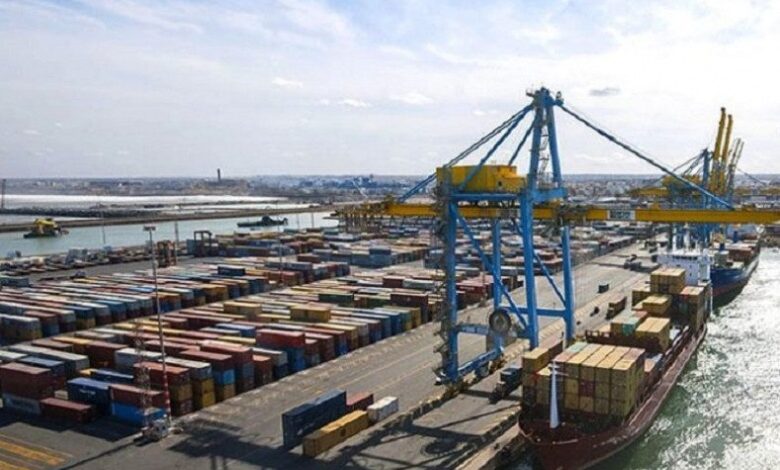
With over 11.1 million containers handled at Tangier Med by 2025 and 51 billion dirhams of investments earmarked for Nador West Med, Morocco is reaffirming its maritime ambitions. From the Mediterranean to the Atlantic, the Kingdom is developing a port network that integrates with its industrial ecosystems and major international trade routes. This model strengthens its competitiveness, but its long-term success will depend on its ability to create greater national added value in the face of African competition.
Tangier Med: A Showcase of the Moroccan Port Model
The proximity to the Strait of Gibraltar is a geographical advantage that Morocco has progressively transformed into an economic lever. The Tangier Med port complex exemplifies this strategy, thanks to its positioning along major international maritime routes and its integration into global logistics chains.
According to official data released for the fiscal year 2025, the four container terminals at Tangier Med processed 11,106,164 TEUs, marking an 8.4% increase compared to 2024. The total tonnage reached 161 million tons, rising by 13.3%.
These performances solidify the complex’s status among the leading port platforms in Africa and the Mediterranean Basin. They demonstrate its capacity to attract major shipping companies and support the evolution of international trade flows.
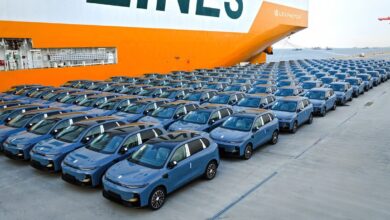
In addition to container traffic, Tangier Med recorded 535,203 trucks transporting international road freight in 2025, a 3.6% increase. Conversely, the number of vehicles handled totaled 526,862 units, reflecting a decrease of 12%.
This evolution highlights the diverse activities of the complex, which combine transshipment, international road transport, and industrial exports. The automotive sectors, particularly those linked to the Renault and Stellantis factories, showcase the connections between port infrastructure and the national production apparatus.
Industrial Integration: A Decisive Competitive Advantage
Morocco’s port performance does not solely rely on terminal size or the number of containers processed. It also hinges on the Kingdom’s ability to develop industrial ecosystems around its logistical infrastructure.
In 2025, the industrial zones developed by Tangier Med attracted 17.13 billion dirhams in private investments, with 84 new industrial projects confirmed, according to data presented in baseline figures.
This dynamic reflects an evolution in the economic model: ports are no longer just transit points for goods; they are becoming support hubs for production, processing, and export. The automotive, aerospace, textile, agri-food, and logistics sectors benefit from the proximity of terminals and their connections to international markets.
This integration of industry and logistics constitutes a differentiating factor for Morocco. It can alleviate certain supply constraints and facilitate the integration of companies into global value chains.
One crucial indicator for measuring the impact of this strategy remains the actual value created within the national economy. Transshipment volumes do not directly correspond to Moroccan exports, as goods can transit through Tangier Med without being produced or consumed in Morocco.
Thus, consolidating this advantage will also depend on the development of local suppliers, the creation of skilled jobs, and the ability of Moroccan companies to capture a larger share of industrial added value.
Nador West Med: A New Strategic Hub in the Mediterranean
With Nador West Med, Morocco aims to bolster its port infrastructure on the Mediterranean facade and enhance the country’s logistical and industrial capabilities.
According to a Royal Cabinet statement from January 28, 2026, referenced in the baseline data, the complex represents 51 billion dirhams in public and private investments. Its infrastructure includes 5.4 kilometers of dikes, 4 kilometers of linear quays, and four energy terminals.
The announced capacity at launch reaches 5 million containers per year, along with 35 million tons of liquid and solid bulk. The project also plans, in its first phase, 700 hectares of industrial and logistics activity zones. Additionally, private investments of 20 billion dirhams were confirmed by the date of the announcement.
The energy dimension is another pillar of Nador West Med. The complex is set to host a liquefied natural gas terminal with an announced annual capacity of 5 billion cubic meters, as well as a terminal dedicated to hydrocarbons.
This focus aligns Morocco’s port ambitions with the challenges of diversifying energy supplies and fostering industrial development.
The next step will be critical: converting the planned capacities into actual traffic, attracting operators and investors, and generating sustainable economic benefits in the Oriental region. The commissioning timeline and commercial ramp-up will need to be assessed based on the latest official announcements.
Dakhla Atlantique: An Opening to West African Markets
On the Atlantic front, the Dakhla Atlantique project constitutes another axis of Morocco’s port strategy. Located in Dakhla, Western Sahara—a disputed territory administered by Morocco—the future complex aims to develop commercial, fisheries, industrial, and logistical activities.
According to data attributed to the Ministry of Equipment and Water for April 2026, the project’s physical progress stood at 57.16%, while financial progress reached 48.63%. The announced investment is estimated at 12.5 billion dirhams, with facilities planned for commercial activities, fishing, and ship repair.
The ambition is to strengthen trade with West African markets and develop new economic connections with Sahel countries. The port could thus complement the existing network, opening additional perspectives on the Atlantic facade.
However, achieving this goal will depend on multiple factors: the quality of land connections, the emergence of industrial activities generating freight, competitive pricing, and the ability to attract regular trade flows.
As with Nador West Med, the economic impacts can be fully assessed only as the infrastructure comes online and is utilized effectively.
Casablanca and Jorf Lasfar: Complementary Pillars of the National Network
Morocco’s port strategy is not limited to major international platforms and ongoing projects. It also relies on a network of specialized ports that provide a significant portion of the country’s industrial supplies and commercial exchanges.
According to indicators attributed to the National Ports Agency (ANP), consolidated traffic at the ports under its jurisdiction reached 102.4 million tons in 2025, up 2.5% year-over-year. The agency’s revenue amounted to approximately 3 billion dirhams, reflecting a 6.2% increase.
This data pertains to a distinct perimeter from that of Tangier Med and should not be aggregated carelessly. Nevertheless, they underscore the importance of the national port network in the functioning of the Moroccan economy.
Casablanca maintains a major role in commercial exchanges and logistics, while Jorf Lasfar plays a strategic part in phosphate, chemical, and energy activities. Safi, Agadir, and other regional ports complement this system by addressing specific sectoral and territorial needs.
The current challenge is to enhance the complementarity between these platforms, strengthen their connections with industrial and agricultural basins, and optimize the movement of goods across the territory.
African Competition is Intensifying
The development of the ports of Lomé, Abidjan, Tema, Dakar, and Djibouti illustrates the intensifying competition among African maritime platforms. Investments in container terminals, handling equipment, and land corridors contribute to shifting regional power dynamics.
Morocco benefits from significant advantages: a consolidated operational experience, international maritime connectivity, and an export-oriented industrial base. However, competing platforms also possess geographical and commercial advantages, particularly in serving landlocked countries and large regional markets.
In this context, port leadership cannot be regarded as definitively secured. It requires ongoing efforts in logistics competitiveness, digitalization of procedures, development of rail connections, and enhancement of services to economic operators.
The energy transition, decarbonization of port activities, skills training, and control of operating costs will also take on increasing importance. Competition will hinge less on sheer volumes handled and more on the reliability, speed, and overall cost of logistics chains.
By 2035, Transforming Ports into Engines of Growth
The Moroccan model rests on a coherent direction: developing a complementary port network that combines international platforms, specialized industrial hubs, and new trade interfaces oriented towards Africa.
Tangier Med already represents a measurable operational success. Nador West Med and Dakhla Atlantique, in contrast, are structural investments whose returns will depend on their commissioning, commercial appeal, and integration into regional economies.
Thus, Morocco’s true challenge is no longer merely to maintain its port lead but to translate this position into industrial strength, logistical sovereignty, and sustainable economic influence.
This entails greater participation of local companies in value chains, development of skills, technological innovation, and deepening exchanges with African economies.
In the global maritime competition, the most successful ports are not necessarily those that handle the most containers. They are also those that transform trade flows into productive investments, skilled jobs, and prosperity for their regions. The ability to create value will be the linchpin of the Moroccan port strategy’s success over the next decade.