Blue Economy: Fishing Generates 14.8 Billion MAD in Morocco
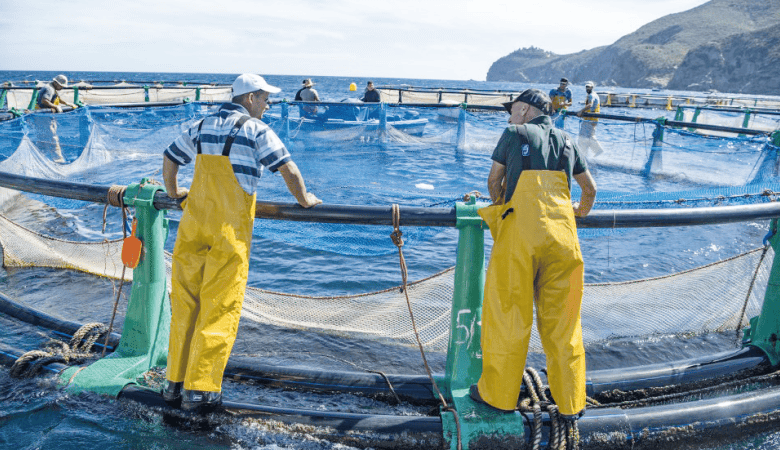
The blue economy represents a significant lever for growth and employment in Morocco. Maritime fishing alone generates 14.8 billion dirhams in added value and nearly 159,300 jobs, according to a technical note published on October 20, 2026, by the World Bank. Nationwide, marine-related activities produced 46.2 billion dirhams in 2022, accounting for 3.8% of the Gross Domestic Product (GDP) and mobilizing the equivalent of 495,000 full-time jobs.
Fishing and Tourism Dominate the Maritime Economy
Maritime fishing is one of the main pillars of Morocco’s blue economy. With an estimated added value of 14.8 billion dirhams, it plays a pivotal role in the economic activity of coastal areas and in job creation. Ports and maritime transport account for approximately 3.7 billion dirhams in added value.
According to the World Bank, coastal tourism and fishing make up nearly 90% of the added value from maritime activities, providing over 470,000 jobs. These figures highlight the weight of two sectors that are closely tied to natural resources, coastal appeal, and the economic activities of coastal regions.
However, the note differentiates the wealth generated directly by the ports from the value of the goods that transit through them. International trade carried out by sea supports many industrial and commercial activities, but these are recorded in other branches of the economy.
The scope of the blue economy includes coastal tourism, fishing, aquaculture, maritime transport, port activities, and various industries related to the sea. It should not be confused with the overall economic weight of coastal areas. A previous World Bank study estimated that these areas accounted for 59% of the national GDP, 52% of jobs, and 81% of industry across all activities.
Port Infrastructures Concentrate Public Expenditure
The allocation of public spending is one of the main lessons from the note published in October. In 2024, equipment, port infrastructures, transport, and logistics absorbed 69% of the public spending dedicated to maritime sectors, compared to 18% for fishing.
This disparity draws attention to the distribution of resources among the various components of the blue economy. Fishing remains a major sector for employment, accounting for nearly one in three blue jobs, according to data presented by the institution.
The challenge is to ensure that investment allocation considers both the economic contribution of sectors, their infrastructure needs, and their job creation potential. Port modernization is essential for Morocco’s commercial competitiveness, but the development of fishing and aquaculture also requires suitable equipment and sustainable support for professionals.
A $350 Million Program to Develop the Blue Economy
This dynamic is part of the results-oriented program dedicated to the blue economy, supported by a $350 million funding approved by the World Bank in May 2022, equivalent to approximately 3.43 billion dirhams at the prevailing conversion rate.
The program covers several areas, including the institutional framework, management of marine and coastal resources, fishing, tourism, and aquaculture. It also benefits from a $5 million technical assistance package, approximately 49 million dirhams, provided by the Problue Multi-Donor Trust Fund.
On the ground, interventions focus on monitoring fish stocks, ensuring beach quality, and restoring coastal ecosystems. The framework also includes support for fourteen pilot aquaculture farms specializing in producing seaweeds and shellfish.
The goal is to enhance sustainable management of marine resources while promoting economic activities capable of generating new revenues and jobs in coastal regions.
Moroccan Aquaculture Faces Scaling Challenges
Despite its potential, aquaculture in Morocco remains limited. According to World Bank data, national production reached approximately 3,600 tons per year in November 2025, while the sector’s ambitions aim for 300,000 tons and 30,000 jobs within the next decade.
At that time, the country had 322 licensed aquaculture farms, with a theoretical capacity exceeding 124,000 tons per year. The gap between this capacity and actual production underscores the challenges faced in scaling up operations.
The World Bank points out the lack of hatcheries, feed factories, cold storage facilities, and processing units as significant obstacles. Financing needs, technical training, and business support also hinder the development of this sector.
Nonetheless, several sub-sectors are seen as promising, including shrimp farming, shellfish farming, and seaweed cultivation. VitaminSea Morocco, a Moroccan shrimp producer highlighted among pilot projects, reported a production of approximately 60 tons per year aimed at the domestic market, with a target of 300 tons. The company sourced its larvae from American suppliers. Setexam, a specialist in seaweed, is also among the noteworthy experiences recognized in the institution’s work.
However, consolidating these activities requires strengthening production capacities, marketing channels, and conservation and processing infrastructures.
Coastal Tourism Confronted with Climate Risks
Coastal tourism is another pillar of Morocco’s blue economy, yet it remains vulnerable to the effects of climate change. According to a technical note from the World Bank published in June 2024, this segment accounted for approximately 300,000 direct jobs in 2019, out of a total of 565,000 jobs in national tourism.
The coasts of Agadir, Tangier, Tetouan, and Casablanca are among the main hubs for this activity. In the Souss-Massa region, coastal resorts concentrated nearly 70% of tourist demand, as highlighted in the same analysis.
The climate projections outlined in this note present significant economic risks. Depending on the scenarios considered, visitor spending could decline by 8% to 18% by 2035, while job losses could approach 32% in the coastal tourism segments most exposed, particularly in accommodation and dining.
The risks extend beyond the tourism sector alone. A prior World Bank study estimated average annual losses due to erosion of Morocco’s coastlines at $434 million, approximately 4.25 billion dirhams. Annual damage caused by flooding was assessed at about $450 million, or 4.41 billion dirhams. Both estimates represent distinct risks and do not exclusively measure losses from the blue economy.
A National Strategy for Sustainable Coastal Development
According to the World Bank, developing the blue economy requires an integrated approach that combines infrastructure, skills, natural resource management, and the economic viability of sectors. Investments in ports, fishing, aquaculture, and tourism must incorporate maintenance costs and the imperative of preserving coastal ecosystems.
The publication on October 20 comes as Morocco prepares its national strategy for maritime activities under the work of the inter-ministerial committee for the blue economy. A prior note from the World Bank had already provided technical support for this reflection.
The challenge now is to transform the economic weight of the sea into more inclusive and sustainable growth. Fishing and tourism have a substantial economic foundation, while aquaculture offers diversification prospects. The success of this strategy will depend on the ability to better coordinate public investments, support businesses, and preserve the resources that coastal activities depend on.