Dakhla Atlantic: Construction Progress Exceeds 74%
Dakhla Atlantic Port Project Makes Strides Towards Completion
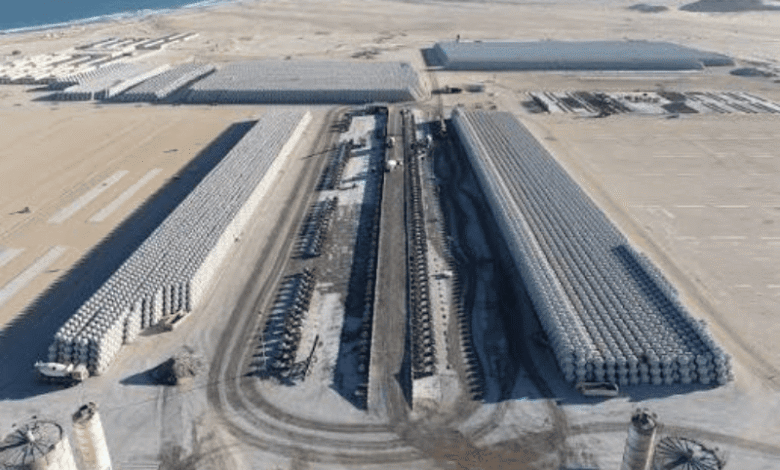
The construction of the Dakhla Atlantic port continues to progress, with completion exceeding 74% as of the end of September 2026, according to information released on October 20. This strategic infrastructure aims to enhance the logistical capabilities of southern Morocco, support industrial and fishing activities, and promote trade with African markets.
Dakhla Atlantic: A Strategic Project for the Southern Provinces
The Dakhla Atlantic port is integral to Morocco’s strategy to strengthen the economic infrastructure of the Southern provinces and support their industrial development. With more than 74% of the work completed as of the end of September 2026, the project has reached a significant milestone in its construction.
Designed to accommodate a variety of port activities, the future complex is set to improve cargo handling capabilities, support the fishing sector, and facilitate the establishment of new businesses. Its strategic location on the Atlantic coast also makes it particularly valuable for fostering exchanges between Morocco, West Africa, and international markets.
Beyond its port functionalities, the project represents a significant investment in the region. Its goal is to enhance Dakhla’s economic attractiveness and promote the emergence of new productive activities centered around logistics and industrial transformation.
A Future Industrial and Logistical Hub Focused on Africa
Dakhla Atlantic could lead to the development of an economic ecosystem that combines maritime transport, warehousing, logistics, industrial services, and seafood product processing. The availability of modern port infrastructure is a crucial factor in attracting investors and improving the logistics of goods transport.
Developing local processing capabilities could also increase the added value generated in the Southern provinces, particularly in the fishing and agri-food sectors. However, this growth will depend on several conditions, including the quality of road connections, energy availability, and the compatibility of local skills with business needs.
The attractiveness of the future port will also hinge on its ability to attract consistent trade flows and develop synergies with other port facilities in the Kingdom. The objective is to position Dakhla as a central hub for trade and industrial activities linked to the Atlantic coast.
Fishing and Local Processing Among Expected Activities
The fisheries sector is among the activities poised to benefit from the development of Dakhla Atlantic. Suitable infrastructure can facilitate the handling, transport, and marketing of seafood products, while creating favorable conditions for the establishment of processing units.
However, realizing these prospects will require additional investments in industrial equipment, cold chain facilities, logistics services, and vocational training. Coordination between public and private stakeholders will be critical to transforming port capacities into sustainable economic opportunities.
Therefore, value creation will depend equally on infrastructure and the ability to attract businesses and develop a sufficiently robust commercial activity.
Progress Does Not Equate to Operational Readiness
While the reported progress of over 74% as of the end of September 2026 indicates advancement in the construction phase, it does not mean that the port is operational. The completion of construction, installation and fine-tuning of equipment, and the necessary operational procedures remain crucial final steps.
The actual timeline for becoming operational and the ramp-up of activities will depend on the completion of the project’s various components and their readiness for commercial use.
For Morocco, the challenge now is to transform Dakhla Atlantic into a genuine lever for wealth creation, regional integration, and economic diversification. The project’s success will depend on its ability to combine port infrastructure, industrial investment, efficient logistics, and sustainable business establishment.