Renault is preparing a future Dacia model at its Tangier plant.
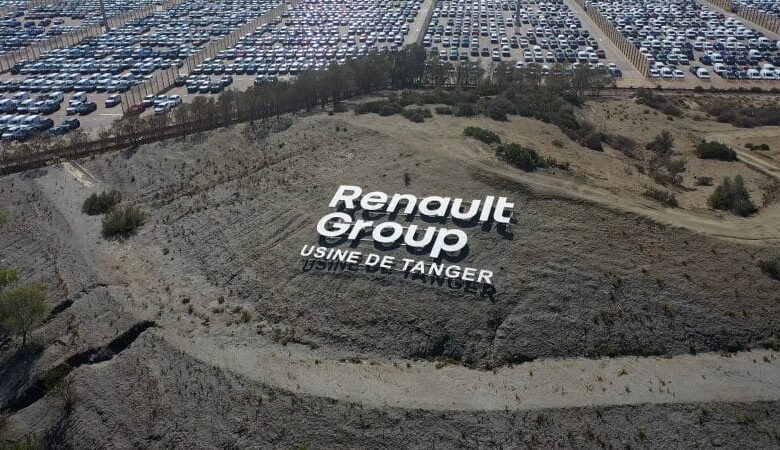
Renault Group Prepares New Industrial Phase in Morocco for a Strategic Dacia Vehicle
The Renault Group is gearing up for a new industrial phase in Morocco with the upcoming industrialization of a future strategic vehicle for Dacia. The Tangier plant, located in Melloussa, is already hosting preparatory work for this program, in close collaboration with engineers from Renault Technologie Maroc (RTMA). This new phase confirms Morocco’s growing role in the French automaker’s industrial organization, especially in the transition from vehicle design to production.
Thierry Charvet, Director of Industry, Quality, and Supply Chain at Renault, along with Philippe Brunet, Director of Group Technology, recently visited the Tangier site to assess its readiness. Their visit focused on the upcoming industrial steps and the technical resources necessary for launching this new automotive program, which is deemed significant for both Dacia and the entire group.
The Tangier Plant Prepares for a New Industrial Program
During the visit, Thierry Charvet stated that the group is laying the groundwork for the industrialization of a future vehicle in Tangier. While the model identity and launch schedule remain under wraps, the officials emphasized the importance of preparing the facilities, coordinating teams, and adapting production means.
The Melloussa plant currently operates two assembly lines, with daily production exceeding 1,000 vehicles. The site also employs digital tools designed to enhance the monitoring of industrial operations.
Among these tools is Plant Connect, recently implemented at the heart of the assembly workshop. This solution enables real-time tracking of the two production lines and supports teams in continuously improving performance. For Renault, this digitalization aims to strengthen operations management and prepare the site for the demands of a new automotive program.
Renault Technologie Maroc at the Heart of Industrialization
The Renault Technologie Maroc center plays a vital role in this preparation. Established in March 2025, it has two complementary locations: a headquarters at the Tétouan Shore activity park focusing on technological professions, and a branch situated directly within the Melloussa plant.
This proximity to the assembly lines enables engineers to collaborate closely with manufacturing teams, facilitating coordination between product engineering, industrial process design, and industrialization operations.
According to Philippe Brunet, the center is particularly involved in seeking competitive solutions, managing costs, improving quality, and bridging the gap between design and manufacturing. Additionally, its teams participate in the industrial choices for the future vehicle and maintain relationships with local suppliers.
Thus, the preparation for the new program enhances interactions between technical services and workshops. It also mobilizes the network of suppliers based in the Tangier region, whose contributions will be crucial in meeting the automaker’s industrial requirements.
Morocco’s Increasing Importance in Renault’s Organization
This development comes amid a global reorganization of the group’s engineering activities. In April 2026, Renault announced a plan to reduce its engineering workforce by 15 to 20% over two years, resulting in the potential loss of 1,600 to 2,400 positions from an estimated total of 11,000 to 12,000 engineers.
In this new structure, the group’s French, Indian, and Romanian centers are responsible for complete model design, while the Moroccan division is set to play a role in their industrialization and transition to production.
The development of local skills and closer collaboration between engineering teams and industrial units are therefore significant levers for preparing future programs. For Morocco, this evolution presents an opportunity to strengthen its position within the automotive value chain, extending beyond mere assembly operations.
It is also part of a strategy aimed at enhancing industrial competitiveness, optimizing production costs, and bolstering the integration of national suppliers.
Tangier Produced Nearly 300,000 Vehicles in 2025
Inaugurated in February 2012, the Renault plant in Tangier produced 299,395 vehicles in 2025. Of this total, 282,498 units were exported, accounting for approximately 95% of production.
The group’s second facility in Morocco, the Société Marocaine de Construction Automobile (Somaca) located in Casablanca, assembled 95,079 vehicles in the same year. Together, the two sites produced a total of 394,474 units, representing a decrease of nearly 5% compared to 2024.
The Melloussa plant produces various models, including the Dacia Sandero, one of the top-selling models for private individuals in Europe since 2017, as well as the Dacia Jogger, whose hybrid version has been produced in Morocco since July 2024. The site also assembles the Renault Express utility vehicle and the electric quadricycles Mobilize Duo and Bento.
This model diversity illustrates the site’s capability to accommodate different vehicle categories and adapt its assembly lines to shifts in demand and automotive technologies.
Renault Aims for 80% Local Integration by 2030
By the end of 2025, Renault plans to increase its installed industrial capacity in Morocco to over 500,000 vehicles per year. The group also aims to achieve an 80% local integration rate by 2030.
To support this goal, the automaker anticipates a procurement volume of three billion euros from Moroccan suppliers, roughly equivalent to 32.3 billion dirhams.
The preparation for the future model in Tangier fits into this trajectory. Strengthening engineering skills, enhancing cooperation between technical teams and manufacturing workshops, and involving the local industrial fabric could help increase the added value produced in Morocco.
However, the specifics regarding the vehicle’s identity and launch modalities remain to be confirmed. In the meantime, the ongoing work in Melloussa highlights Renault’s commitment to preparing its next industrial phases by leveraging the production capacities and technical skills developed in the Kingdom.