Fouzia ELBAYED Signs a New Work on Theatre at the International Book Fair
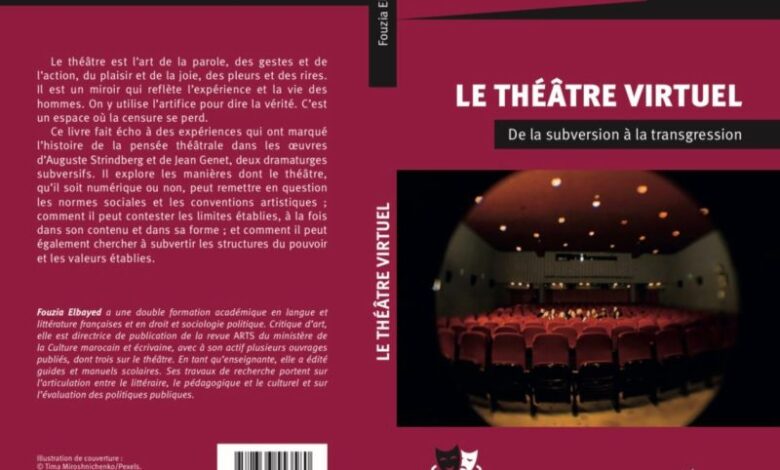
In celebration of the 31st edition of the International Book Fair, writer and art critic Fouzia ELBAYED introduced her latest work titled “The Virtual Theatre: From Subversion to Transgression,” which was recently published by L’Harmattan in Paris, as part of their Univers théâtral collection. This 132-page book engages in an in-depth reflection on the transformations within contemporary theatre and explores the new forms of artistic expression associated with digital media.
Through this critical study, the author immerses readers in the mechanisms of subversion and transgression within the theatrical realm, whether it be classical or virtual. More than just an essay, this work serves as the culmination of an extensive intellectual and academic journey, enriched by over thirty years of research, artistic critique, and cultural commitment.
For Fouzia ELBAYED, theatre remains a privileged space for truth, inquiry, and confrontation with human realities. She evokes the thoughts of Albert Camus, who referred to theatre as “a place of truth,” as well as those of Antoine Vitez and Jean-Louis Barrault, who viewed this art form as a means to represent the fragility of existence and to combat human anxieties.
The book particularly delves into theatre’s capacity to challenge social, political, and aesthetic norms. It analyzes how contemporary theatrical forms, especially through digital technologies, can blur the lines between the real and the virtual, while also engaging audiences more deeply in the theatrical experience.
Central to this discussion are two prominent figures in modern theatre: August Strindberg and Jean Genet. Though they belong to different generations, these playwrights are united in this study for their innovative dimensions, creative power, and their shared desire to disrupt established conventions.
Through their works, the author illuminates a theatre that becomes a space for contestation and questioning of dominant norms. The dramatists explored in the study present transgressive forms of writing and representation, addressing sensitive subjects related to power, the body, sexuality, violence, and social institutions. Thus, theatre evolves into an experimental arena where artistic and symbolic boundaries are continually pushed.
The book also highlights the role of digital technology in shaping this contemporary creative dynamic. According to the author, modern technologies provide unprecedented opportunities for participation, interactivity, and the transformation of traditional theatrical codes, thereby paving the way for new forms of virtual dramaturgy.
With this publication, Fouzia ELBAYED aims to enrich critical thought surrounding theatre and to open new perspectives for reflection on the role of art in contemporary societies. The work aspires to be a significant intellectual contribution to the understanding of the relationships between artistic creation, society, and digital technologies.
Holding dual qualifications in French language and literature, as well as in law and political sociology, Fouzia ELBAYED also serves as the editorial director of the ARTS journal, under the Ministry of Culture. An art critic, researcher-educator, and trainer for leaders, she has published several works, including three dedicated to theatre, along with various guides and educational manuals. Her writings primarily focus on the interconnections between literature, culture, pedagogy, and the evaluation of public policies.