Pharma 5 Unveils Cannabidiol-Based Medication Produced in Morocco Following an Investment of Over 200 Million Dirhams
Pharma 5 Announces Breakthroughs in Moroccan Pharmaceutical Sector with Local Cannabidiol Production
After five years of research and industrialization, Pharma 5 has announced two significant advancements in the Moroccan pharmaceutical industry: the local production of an active ingredient based on cannabidiol (CBD) derived from Rif crops and the manufacturing of a medication intended for certain severe forms of epilepsy. This program mobilized over 200 million dirhams and brings together agricultural producers, researchers, and industry professionals.
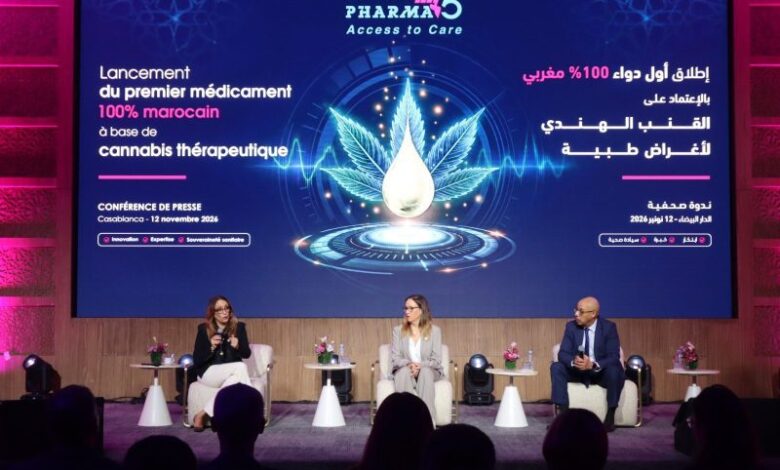
On Thursday, November 12, 2026, in Casablanca, Pharma 5 presented the results of five years dedicated to research, development, and industrialization surrounding cannabidiol (CBD). This project has successfully developed a pharmaceutical active ingredient from cannabis cultivated legally in Morocco, along with a locally produced medication aimed at addressing specific severe forms of epilepsy.
With an investment exceeding 200 million dirhams, this initiative marks a new phase in creating an integrated pharmaceutical sector that links agricultural production from the Rif with industrial transformation and drug manufacturing within Morocco.
Pharma 5 Aims for Scientific and Industrial Mastery
Transforming cannabis into a pharmaceutical substance that meets consistent quality standards is a complex process. The natural variability of plant material necessitates rigorous selection, extraction, purification, and batch control.
To meet this challenge, Pharma 5 has involved farmers, researchers, engineers, and pharmacists in an integrated production chain. For Mia Lahlou-Filali, the General Director of Pharma 5, this achievement is part of the laboratory’s ongoing commitment to advancing national pharmaceutical production, a mission it has supported for over forty years.
Yasmine Lahlou-Filali, General Director and Responsible Pharmacist, emphasizes the scientific rigor necessary for mastering the entire industrial process. The laboratory also links this project to the founder Dr. Abdallah Lahlou-Filali’s research and interest in the medicinal applications of cannabis, which began in 1973.
From the Rif to Active Ingredient: A Local Production Chain
The initiative starts in the regulated cultivation areas of the Rif, where the raw material is produced before being sent to extraction and purification units. Pharma 5 reports having achieved a cannabidiol with a purity level above 98%, compliant with European Pharmacopoeia standards.
The local production of this active ingredient represents a key milestone of the program. It enables Morocco to control an essential step in drug manufacturing and could eventually open up supply opportunities for other pharmaceutical laboratories.
According to data provided by Pharma 5, the project involves over 40 hectares of cultivation, includes 70 families from the Rif in the formal sector, and has processed more than 100 tons of biomass. For agricultural producers, this organization presents prospects for regular market access and involvement in a value chain whose transformation activities are conducted domestically.
This development is supported by a regulatory framework established by Law No. 13-21 concerning the legal uses of cannabis. In March 2026, the National Agency for the Regulation of Activities Related to Cannabis (ANRAC) and the Moroccan Agency for Medicines and Health Products signed an agreement regarding procedures for registering cannabis-based products.
A Medication for Severe Forms of Epilepsy
The other component of the project involves developing a cannabidiol-based medication for certain patients suffering from severe forms of epilepsy, particularly when seizures persist despite available treatments.
During the presentation, Dr. Abdoulmoumen Mahly, Director of Research and Innovation at Pharma 5, noted that some particularly severe forms of the disease can lead to dozens of seizures per day. He emphasized the potential benefits of pharmaceutical-grade cannabidiol for patients whose seizures remain challenging to control, highlighting its use within specific medical indications and under specialized supervision.
Globally, the World Health Organization estimates that around 50 million people live with epilepsy, with nearly 80% residing in low- or middle-income countries. In this context, localized manufacturing of treatment represents a potential solution for availability and financial access for affected patients and their families.
The Moroccan Agency for Medicines and Health Products lists the Cannabidol Pharma5 specialty as a 100 mg/ml oral solution, with a public price set at 5,498 dirhams for a 100 ml bottle. However, the product is still categorized as "not marketed." Thus, its actual market availability and potential reimbursement options need to be confirmed.
Perspectives for the Pharmaceutical Industry and Rif Producers
By integrating regulated cultivation, research, active ingredient production, and medication manufacturing, Pharma 5 aims to develop a fully domestic value chain in Morocco.
Beyond the health aspect, this initiative could open up commercial avenues in African and international markets, contingent on obtaining the necessary regulatory approvals from each country. The project’s success will depend on its ability to ensure sustainable avenues for Rif producers and facilitate access to treatment for affected patients.
This dual focus on agriculture and health represents one of the primary challenges of this new industrial phase: to transform the regulated valorization of cannabis into a value-creating activity in Morocco, while also developing pharmaceutical solutions that meet specific medical needs.