Morocco: In Pursuit of African Economic Hubs
Strengthening Morocco’s Economic Position on the African Continent
In a continent where major economies compete to attract international investments, Morocco is consolidating its financial, industrial, and logistical advantages. With its robust infrastructure and openness to international markets, the Kingdom aims to solidify its position as a continental economic hub.
The competition among African economic hubs is intensifying. From Johannesburg to Lagos, and from Nairobi to Cape Town, major metropolises are striving to attract capital, regional headquarters of multinationals, and high-value-added activities. In this landscape, Morocco boasts a unique set of advantages that allows it to maintain a distinct position at the crossroads of European, African, and Atlantic markets.
This ambition hinges on an economic framework that combines infrastructure, financial services, industrial platforms, and logistical connectivity. The development of these various ecosystems aims to establish the Kingdom as a territory for the establishment, production, and coordination of international investments.
A Growing Financial Dimension
Casablanca Finance City (CFC) is one of the key tools in this strategy. The platform welcomes international groups, financial institutions, and service companies seeking to support their growth on the continent. It reinforces Casablanca’s role as a regional decision-making and coordination center.
In the 40th edition of the Global Financial Centres Index published in September 2026, Casablanca ranks 38th globally and retains its status as Africa’s leading financial hub. This recognition enhances Morocco’s visibility among international investors.
The current challenge is to deepen the national financial market, diversify financing instruments, and improve savings mobilization to support productive investment.
Industry and Logistics as Competitive Levers
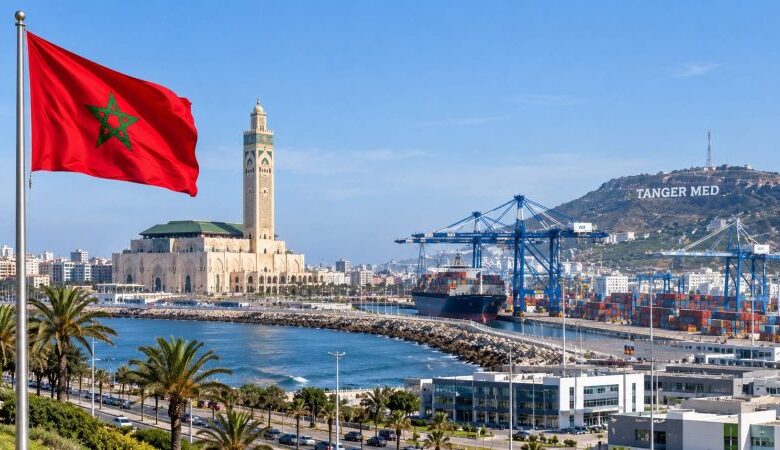
Morocco’s attractiveness is also supported by its industrial and port infrastructures. The Tangier Med complex serves as a prominent example. By 2025, the port complex had handled over 11.1 million twenty-foot equivalent units (TEUs), marking an 8.4% increase. Its industrial platform attracted 17.13 billion dirhams in private investments, corresponding to 84 projects.
These achievements reinforce the Kingdom’s position in international value chains, particularly in the automotive, aerospace, textile, and agri-food sectors. They provide investors with a production base connected to European markets, while also open to African exchanges.
The complementarity between Casablanca, which serves financial and decision-making functions, and Tangier, focused on industrial and logistical activities, thus enhances the coherence of the national economic framework.
Turning Attractiveness into Added Value
According to the Office of Foreign Exchange, foreign direct investment revenues reached 39.11 billion dirhams by the end of July 2026, compared to 36.78 billion a year earlier. Net inflows stood at 29.47 billion dirhams, marking an increase of 58.5%.
These indicators reflect a renewed interest in the Moroccan destination. However, the performance of a hub is not solely measured by the amounts invested; it also depends on its ability to create qualified jobs, facilitate the transfer of skills, and develop high-value-added activities.
Innovation is another strategic area. The development of startups, access to funding, and the connections between research, industry, and entrepreneurship are crucial for enhancing the Kingdom’s competitiveness in comparison to the ecosystems of Lagos, Nairobi, and Johannesburg.
An Ambition on a Continental Scale
Morocco boasts significant advantages: infrastructure, proximity to Europe, trade openness, and industrial experience. However, consolidating these assets requires deepening the capital market, fostering a more competitive business environment, and providing enhanced support for Moroccan companies in international markets.
In an Africa poised to intensify its exchanges and economic integration, the Kingdom intends to leverage its geographical position and productive capacities to attract more investments and develop new growth engines.
Thus, the stakes extend beyond mere territorial attractiveness; it is about building an integrated economic platform capable of linking finance, industry, logistics, and innovation while strengthening Morocco’s influence on the continent.