Moroccan Biologists Call for the Integration of Artificial Intelligence in Laboratory Analysis Development
Calls for Modernization of Hematology Laboratories, Relocation of Specialized Analyses, and an End to Sending Medical Samples Abroad
Moroccan biologists and medical biology experts have unanimously emphasized the urgent need to accelerate the integration of artificial intelligence and new technologies into the nation’s medical laboratories. This initiative serves as a vital lever for enhancing the quality of biological analyses, improving diagnostic accuracy, reducing examination turnaround times, and strengthening Morocco’s health sovereignty. It also aims to limit dependence on foreign laboratories, particularly regarding the export of biological samples for specialized analyses.
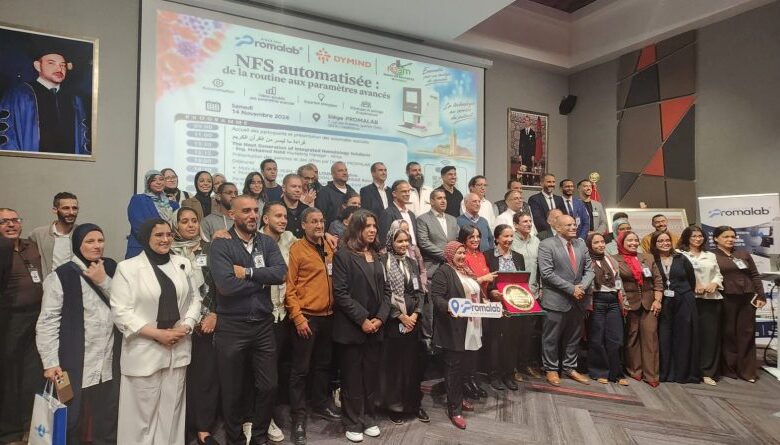
This assertion was central to a scientific meeting held in Casablanca on November 14, 2026, organized by the Moroccan Economic Gathering of Biologists (REBM) in partnership with “Promalab,” under the theme: “Together for the Medical Biology of Tomorrow.”
Participants, including professionals and experts in the field, highlighted that the development of the medical analysis system is now closely linked to the ability of laboratories to embrace technological advancements. This involves transitioning from conventional biological examinations to adopting intelligent systems and advanced biological parameters that could significantly enhance national healthcare services.
The meeting also spotlighted a crucial strategic issue: Morocco’s capacity to develop its laboratory infrastructure and possess the technical and scientific means necessary to conduct specialized analyses domestically, rather than continuing to rely on foreign laboratories. Such practices incur additional costs, lead to longer wait times for results, and present challenges in managing samples and health data.
In this context, expert Norddine Habti called for an end to the practice of sending medical samples abroad, stressing the importance of developing national capacities and equipping Moroccan laboratories with the technologies and expertise needed to perform all types of analyses, including the most specialized and advanced ones, within Morocco. This direction is part of a broader effort to bolster national autonomy in medical biology and enable Moroccan laboratories to meet modern diagnostic demands without unnecessary foreign dependency.
Bouchra El Maliki, president of “Promalab,” asserted that the integration of artificial intelligence into medical biology is now an essential direction for supporting the modernization of Morocco’s healthcare system. She emphasized that advancing healthcare services requires mobilizing all stakeholders, both public and private, to invest more in innovation, technologies, and knowledge transfer.
El Maliki also highlighted the role the private sector is expected to play in providing cutting-edge medical solutions and equipment, as well as supporting Moroccan laboratories in their technological transition to improve the quality of analyses, expedite their execution, and enhance the services offered to patients.
She pointed out the more than three-decade experience of “Promalab” in supporting national laboratories through the supply of modern equipment and technological solutions, continuous training, and knowledge transfer. She specifically noted the importance of the partnership with the manufacturer “Dymind” in developing technologies for automated complete blood counts (CBC) and integrating advanced analytical parameters into daily laboratory practices.
Dr. Bahaeddine Benjelloun, president of the REBM, affirmed that the rapid transformations occurring in the field of medical biology necessitate increased involvement from professionals in the technological modernization process, as well as collaborative efforts to allow Moroccan laboratories to fully leverage the opportunities provided by artificial intelligence applications.
He reminded attendees that medical laboratories are a fundamental link in the healthcare system, given their role in early disease detection and in generating essential data for diagnosis and treatment. He stated that modernizing their operational capabilities, enhancing the precision of analyses, and reducing examination turnaround times are all factors likely to positively impact the quality of patient care.
The REBM president also indicated that the partnership between the REBM and “Promalab” aims to strengthen professional support in response to scientific and technological advancements, as well as to promote modern solutions that can enhance analytical services and bolster the capacities of national laboratories.
He further insisted that the integration of artificial intelligence must go hand-in-hand with investments in human skills, training, and scientific research to ensure optimal utilization of these technologies while preserving the essential role of professional expertise in the analysis and interpretation of results.
On the scientific front, Professor Hicham Yahyaoui delivered a presentation on advancements in complete blood count (CBC) techniques, emphasizing the importance of transitioning from traditional analyses to advanced biological parameters, and the possibilities that new technologies offer for improving the interpretation of biological results and contributing to greater diagnostic accuracy.
Discussions also covered the major challenges related to the modernization of medical laboratories, including the availability of cutting-edge equipment, the qualification of human resources, the enhancement of quality standards, and the expansion of the use of digital solutions and intelligent systems at various stages of analysis execution and biological data management.
This debate confirms that the future of medical biology in Morocco depends not only on providing modern equipment within laboratories but also on constructing an integrated ecosystem capable of producing knowledge, developing expertise, and fostering national mastery of technologies. This is a critical challenge for reducing reliance on sending samples overseas, accelerating diagnostic pathways, and ensuring better control of national health data.
Amidst the opportunities presented by artificial intelligence and the challenges of modernizing laboratory infrastructures, Moroccan medical biology is moving toward a new phase characterized by innovation, investment in skills, and strengthening national capacities. The ambition is to make health sovereignty a tangible reality, serving to enhance the quality of medical services and ensuring that Moroccan citizens have access, within their own country, to fast and reliable diagnostics.