Morocco: 39.57 Billion Dirhams in Investments Planned for 2027 in Water, Road, and Port Infrastructure
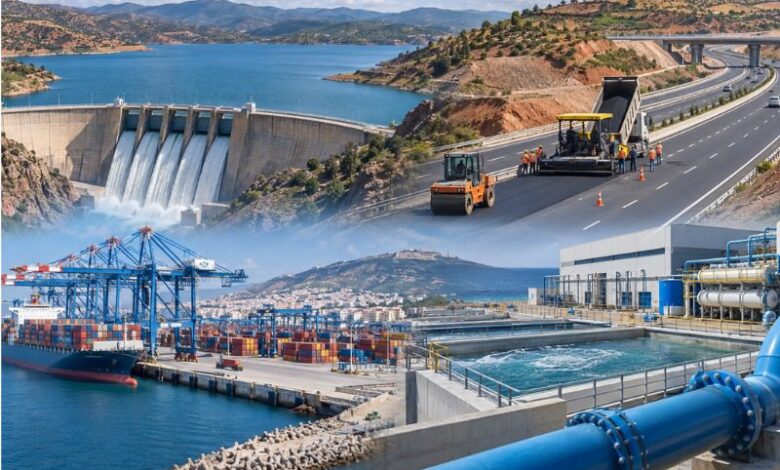
The Ministry of Equipment, Water, and Forests, along with the public establishments under its authority, plans to mobilize 39.57 billion dirhams by 2027, equivalent to approximately 3.62 billion euros. Presented by Nizar Baraka before the House of Representatives, this plan prioritizes hydraulic, road, and port infrastructures, creating opportunities for construction companies, industrial stakeholders, and consulting firms.
Morocco is set to continue its investments in infrastructure in 2027. The program, unveiled on November 4, 2026, by Nizar Baraka, the Minister of Equipment, Water, and Forests, was presented to the Basic Infrastructure, Energy, Mining, Environment, and Sustainable Development Commission of the House of Representatives, amounting to a total of 39.57 billion dirhams.
This financial package is part of the examination of the 2027 finance bill and distinguishes between investments directly led by the ministry and those planned by the public establishments and enterprises under its auspices.
A Financial Package of 39.57 Billion Dirhams Shared Between the Ministry and Public Operators
From the total amount announced, the ministry plans to mobilize 20.419 billion dirhams, accounting for nearly 52% of the overall package. The relevant public establishments and enterprises, on their part, are set to allocate 19.147 billion dirhams, representing about 48% of the total.
It should be noted that these amounts are separate from the investment payment credits recorded in the general budget, which amount to approximately 16.55 billion dirhams. The ministerial envelope of 20.419 billion dirhams encompasses a broader scope that includes various budgetary channels.
The budgetary credits from the department, based on the presented scope, reach about 23.08 billion dirhams, with investment expenditures representing nearly 88%, compared to 1.17 billion dirhams for personnel and 1.486 billion for operational costs.
The program also involves a multi-year dimension, with announced commitment credits for subsequent fiscal years reaching 45.95 billion dirhams within the presented sectorial scope, while the commitment authorizations from the general budget are estimated at around 42.89 billion.
These amounts facilitate the programming of commitments, with payments expected to take place in the following fiscal periods. They therefore do not represent expenses fully executed in 2027 and should not be added to the payment credits for calculating annual investment.
Water: The Primary Investment Priority for the Ministry
With 9.28 billion dirhams allocated for payment credits, or about 45% of the ministry’s investment, the water program stands at the forefront of departmental priorities. It also benefits from 20.82 billion dirhams in commitment credits to support operations across multiple fiscal years.
This direction reflects the intent to enhance the Kingdom’s hydraulic capacities, diversify available resources, and secure the supply to various regions.
The program notably plans to continue work on 14 major dams, initiate the construction of a new facility, and raise the height of an existing dam, aiming to increase national storage capacity to over 24 billion cubic meters by the end of 2027.
The development of seawater desalination, interconnections between hydraulic basins, and supply infrastructure are also key pillars of the national water policy.
These projects directly involve various sectors of construction and engineering, including hydraulic civil engineering, earthworks, concrete works, electromechanical equipment, pipelines, and transfer networks. However, these do not necessarily represent new contracts initiated in 2027; rather, they are part of broader public programming.
Roads: 7.18 Billion Dirhams for Road Infrastructure
The road program constitutes the second largest area of investment led by the ministry, with 7.18 billion dirhams in payment credits, nearly 35% of its investment envelope.
The associated commitment credits reach 18.62 billion dirhams, reflecting the ongoing efforts devoted to the planning, development, and maintenance of the national road network.
This programming is of interest to public works companies specialized in earthworks, pavement construction, engineering structures, and maintenance operations. It also affects consulting firms, testing laboratories, and industrial suppliers of aggregates, cement, asphalt, and other construction materials.
Beyond their technical dimension, these infrastructures contribute to improving regional connectivity, facilitating the movement of goods, and enhancing access to economic activity zones.
Ports: 2.82 Billion Dirhams Allocated by the Ministry
Port infrastructures make up the third major investment program, with 2.82 billion dirhams in payment credits and 5.89 billion dirhams in commitment credits.
The planned operations require specialized skills in maritime engineering, the construction of port facilities, foundations, earthworks, technical equipment, and logistical developments.
These investments hold particular significance for the Moroccan economy, which largely relies on maritime connectivity and the efficiency of logistics chains for its trade exchanges.
Public Establishments Plan 19.147 Billion Dirhams in Investments
In addition to the programs directly managed by the ministry, the public establishments and enterprises under its authority anticipate a financial package of 19.147 billion dirhams.
The sectoral breakdown reveals a predominance of investments in port infrastructures, followed by water and road sectors.
| Sector | Planned Investments |
|---|---|
| Port Infrastructures | 8.21 Billion Dirhams |
| Water Sector | 5.05 Billion Dirhams |
| Road Infrastructures | 4.03 Billion Dirhams |
| Forests and Water | 1.20 Billion Dirhams |
| Other Establishments | 649 Million Dirhams |
Thus, ports account for approximately 43% of the investments planned by the public operators. The water sector constitutes nearly 26%, while road infrastructures absorb about 21%.
This distribution differs from that of investments directly managed by the ministry, where hydraulic infrastructures occupy the top position, illustrating the complementarity between ministerial programs and investments made by specialized operators.
Tanger Med, ONEE, and ADM Among the Major Public Investors
At the level of the institutions, the Special Agency Tanger Med (TMSA) ranks first with a program allocation of 5.83 billion dirhams, nearly 30% of the investments planned by the concerned operators.
The Water branch of the National Office for Electricity and Drinking Water (ONEE) plans to allocate 3.76 billion dirhams, while the National Company of Motorways of Morocco (ADM) programs 3.32 billion dirhams.
Other entities are also contributing to this investment effort. The hydraulic basin agencies have a funding program of 1.29 billion dirhams, while Nador West Med and the National Agency for Water and Forests (ANEF) each plan for 1.20 billion dirhams.
The National Ports Agency (ANP) has an envelope of 1.164 billion dirhams. The Road Financing Fund plans for 709 million dirhams, compared to 414 million for the Hassania School of Public Works and 200 million for the Public Testing and Study Laboratory. The National Agency for Public Equipment has 35 million dirhams available.
These amounts correspond to individual investment programming by the different agencies and should not be equated with contracts for works already awarded.
Forestry and Meteorology: Complementary Investments
The ministerial programming also encompasses the forestry and meteorological sectors along with management and supervisory functions.
The forestry development program benefits from 789 million dirhams in payment credits, while management and supervisory functions account for 230 million dirhams, and the meteorological program has 99 million dirhams available.
These credits complement the major infrastructure programs, particularly in resource management, meteorological observation, and territorial planning.
Opportunities for Construction Companies and Industries
The 2027 budget programming relates to a wide range of economic activities. Hydraulic projects are likely to engage civil engineering firms, consulting offices, pipe suppliers, and manufacturers of technical equipment.
Road infrastructures interest public works companies, material producers, art structure specialists, and control laboratories. Port projects require specific skills in maritime engineering, construction works, and logistical developments.
These programs may also generate needs for engineering, technical assistance, site monitoring, and maintenance. However, the actual economic impact will depend on budget execution, the progress of operations, procurement procedures, and the real involvement of companies.
Infrastructures: A Lever for Investment Attractiveness in Morocco
For industrial investors and businesses looking to expand their operations in Morocco, the availability of water, road connectivity, and port capacities are crucial factors influencing establishment decisions.
The 2027 programming thus enables the identification of sectors where the state and its public operators intend to continue enhancing their facilities. It also provides insights into territorial and industrial dynamics that may accompany the economic development of the Kingdom.
The skills mobilized in these major projects can also serve as technical references for Moroccan companies seeking to strengthen their presence in African markets, where infrastructure needs remain significant.
From Budget Programming to Project Realization
With 39.57 billion dirhams in planned investments for 2027, the Ministry of Equipment, Water, and Forests and the public establishments under its authority reaffirm the strategic importance of infrastructure in national priorities.
Water, roads, and ports constitute the main focus of the announced efforts, with promising prospects for construction companies, material industries, consulting firms, and specialized engineering.
The key challenge will now lie in concretizing this programming through effective budget execution, the initiation of operations, and the realization of projects. The announced amounts, in fact, remain forecasts articulated in the 2027 finance bill, currently under parliamentary review, and are not expenses already committed or executed.
Source: Batimag