Nigeria-Morocco Pipeline: ADNOC Approached to Fund $26 Billion Megaproject
The African Atlantic Pipeline Project Reaches New Milestone in Securing International Funding
The African Atlantic Pipeline project has taken a significant step forward in its quest for international financing. The Nigerian National Petroleum Company (NNPC) has begun discussions with several potential investors, including the Emirati group ADNOC, to support this strategic infrastructure project, which spans nearly 6,800 kilometers and aims to connect Nigeria to Morocco while serving various countries in West Africa.
Funding for the African Atlantic Pipeline, also known as the Nigeria-Morocco Gas Pipeline, has entered a new phase. The NNPC is actively seeking international investors to mobilize the capital necessary for this ambitious energy megaproject, which is estimated to cost between $25 billion and $26 billion.
Prominent among the groups approached is the Abu Dhabi National Oil Company (ADNOC), one of the leading players in the energy sector in the United Arab Emirates. NNPC’s General Manager Bashir Bayo Ojulari discussed these efforts at the international energy conference ADIPEC 2026, held earlier this month in Abu Dhabi.
However, it is important to note that, at this stage, no definitive financial agreement or quantified financial commitment from ADNOC has been announced. The ongoing discussions are part of a strategy to mobilize potential partners, without yet constituting a solid investment decision.
An Energy Corridor Nearly 6,800 Kilometers Long
Jointly promoted by the National Office of Hydrocarbons and Mines (ONHYM) and the NNPC, the African Atlantic Pipeline is among the most ambitious energy infrastructure projects planned on the African continent.
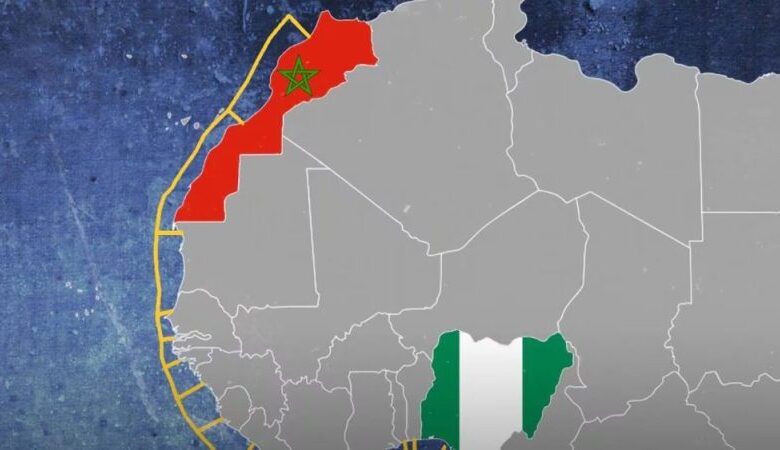
According to data provided by the Nigerian company, the infrastructure is expected to stretch nearly 6,800 kilometers, with approximately 5,100 kilometers offshore. Its transportation capacity could reach 30 billion cubic meters of gas per year, with 15 billion allocated to Morocco and European markets.
The proposed route is set to serve 13 countries along the African Atlantic coast, with possible interconnections to landlocked Sahelian states. The goal is to enhance energy supply security, support the industrialization of the involved economies, and promote energy exchanges between African markets.
Institutional and Technical Progress in the Project
From an institutional perspective, the pipeline has made significant progress with the signing of the intergovernmental agreement by the member states of the Economic Community of West African States (ECOWAS) on July 19, 2026, in Freetown.
At the same time, ONHYM has confirmed the completion of the Front-End Engineering Design (FEED) studies, along with the completion of route reconnaissance and progress on environmental and social studies.
These steps contribute to preparing the necessary technical and institutional conditions for the project’s realization, although its completion still hinges on securing funding and final investment decisions.
Gradual Implementation Strategy Considered
To facilitate financing and the implementation of this infrastructure, NNPC may now prefer a phased approach to its execution.
This strategy could, in particular, leverage the West African Gas Pipeline (WAGP), an existing operational network connecting Nigeria to Benin, Togo, and Ghana. This infrastructure could serve as a starting point for gradual expansion towards Sierra Leone and other sections of the energy corridor.
Such an approach would allow for staggered investments, simplify the mobilization of financial partners, and consider a phased operation of different segments.
Opportunities for Moroccan and African Companies
Beyond its energy implications, the Nigeria-Morocco pipeline could create significant opportunities for companies specializing in civil engineering, public works, energy engineering, pipeline manufacturing, and industrial equipment.
The implementation of the various sections could mobilize expertise in technical studies, land and offshore works, mechanical installations, station construction, and logistics.
For Moroccan operators, the challenge will be to position themselves in future markets and keep abreast of changes in contractual setups and consultation procedures. At this point, however, no new construction tenders or open subcontracting projects have been confirmed.
The project’s realization now depends on several critical steps: securing financial commitments, establishing operational governance, and making investment decisions to commence work.
With an estimated budget of $26 billion, the African Atlantic Pipeline transcends just the role of a gas transport infrastructure. It represents a pivotal project for energy and economic integration between Morocco, West Africa, and international markets.
SOURCE: Batimag