Desalination: The Dakhla Station Set to Become Operational Soon
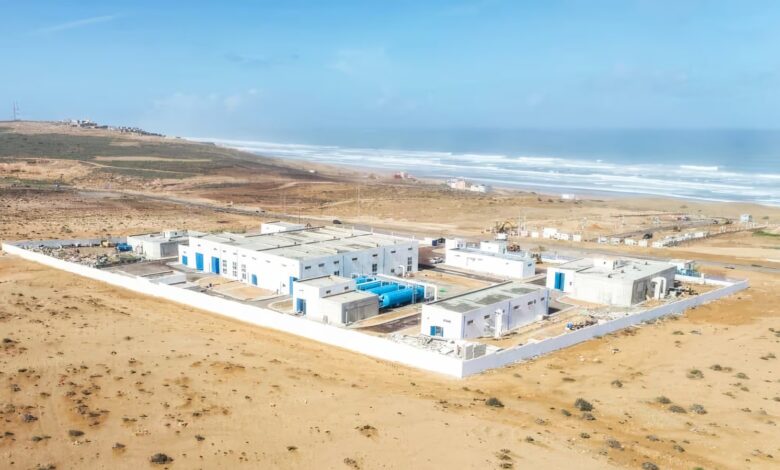
Dakhla’s Desalination Plant Construction Enters Final Phase
The construction of the desalination plant in Dakhla is moving into its final phase. Recognized as one of the major water projects undertaken in Morocco’s southern provinces, this infrastructure aligns with the national strategy aimed at securing water supply amid water stress, the effects of climate change, and the recurring droughts.
With a projected capacity of approximately 112,000 cubic meters of desalinated water per day, the upcoming plant is set to meet the drinking water needs of the Dakhla-Oued Eddahab population while supporting the region’s economic activities.
Agriculture at the Heart of the Challenges
The project holds particular significance for the agricultural sector, which is experiencing robust development in the region. The availability of an additional water resource is expected to facilitate irrigation across thousands of hectares and bolster agricultural production.
This infrastructure is anticipated to enhance food security, promote job creation, and stimulate local economic activity.
The pressure on water resources has indeed intensified due to population growth, urban expansion, and the development of sectors such as agriculture, fishing, tourism, and logistics. The region remains heavily reliant on groundwater, which is increasingly under strain.
Desalination to Reduce Pressure on Aquifers
In this context, seawater desalination emerges as a viable solution to diversify supply sources and reduce dependence on underground resources.
The future Dakhla plant is poised to provide a sustainable alternative resource, catering to both potable water needs and various requirements linked to the region’s economic and agricultural development.
Beyond its hydraulic dimension, the project integrates a more comprehensive approach that combines sustainable resource management, territorial development, and adaptation to climate change impacts.
A Plant Powered by Wind Energy
A standout feature of Dakhla’s desalination plant is its reliance on wind energy.
Utilizing this renewable energy source is expected to minimize the carbon footprint of the desalination process, which is particularly energy-intensive.
This choice also reflects a commitment to coupling water resource security with the development of renewable energies. The project is therefore based on a model that combines seawater desalination and clean energy, embracing a framework of energy transition and sustainable development.
A New Asset for Dakhla’s Attractiveness
The commissioning of this infrastructure is likely to enhance the Dakhla-Oued Eddahab region’s attractiveness to investors.
A more secure water availability is, indeed, a crucial factor for attracting and developing activities in sectors such as agro-industry, logistics, tourism, and manufacturing.
Thus, the plant could play a significant role in supporting the economic transformation of the southern provinces by providing economic stakeholders with a more reliable water resource.
The Project is Part of a Broader Infrastructure Initiative
The desalination station is being developed alongside the construction of several strategic infrastructures in the southern provinces, notably the express road linking Tiznit to Dakhla, which spans 1,055 kilometers.
According to sources, this road has been marketed under the new name "President Donald J. Trump Highway," announced by the U.S. president on the Truth Social network. This route is presented as a project aimed at promoting the development of the southern provinces and strengthening Morocco’s role as a crossroads between Africa, Europe, and the Americas.
Dakhla Embracing a Model Combining Water, Energy, and Development
With its imminent launch, the desalination plant is set to mark a new phase in the mobilization of water resources in the southern provinces.
By integrating desalinated water production, wind energy utilization, and support for agricultural and economic development, the project embodies a holistic approach aimed at addressing the intertwined challenges of water security, energy transition, and territorial development.
For Dakhla-Oued Eddahab, this infrastructure represents an additional lever to enhance the region’s resilience to water stress and facilitate its economic transformation in the coming years.