Moroccan Textiles: The Challenge of Industrial Integration and “Made in Morocco”
The Moroccan Textile Industry Aims for High-Value Integration
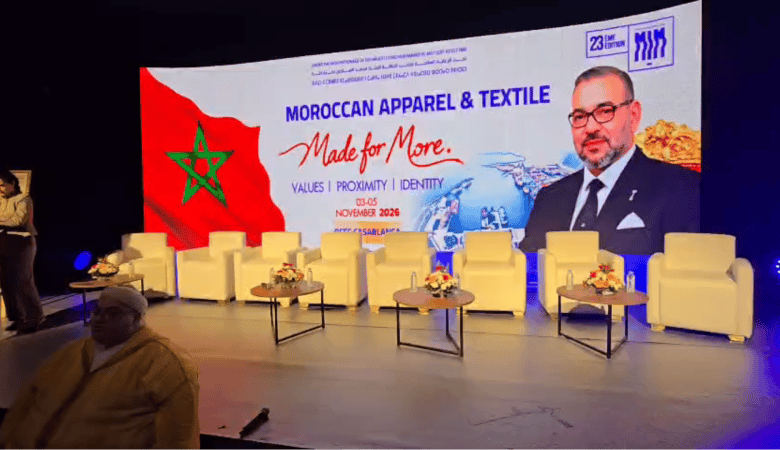
The Moroccan textile sector aspires to go beyond the traditional outsourcing model to develop an integrated industry with high added value. At the International Textile Fair MIME 2026, held from November 3 to 5 in Casablanca, the Moroccan Association of Textile and Apparel Industries (AMITH) calls for support in this transformation. The company Karnawall Maroc exemplifies this dynamic with a fully integrated production chain in Morocco.
The Moroccan Textile Industry: A Sector of 240,000 Jobs
With 240,000 jobs and an annual revenue of 66 billion dirhams, of which 44 billion dirhams come from exports, the Moroccan textile and clothing industry plays a significant role in the national economy.
These figures were presented by Anass El Ansari, president of AMITH, during the opening of the MIME 2026 International Textile Fair, organized in Casablanca under the High Patronage of King Mohammed VI.
Despite its considerable economic weight, the sector must now evolve its development model. According to the AMITH president, a large part of the activity remains focused on subcontracting, a model that limits opportunities for creating added value and industrial development.
The challenge now is to enhance local integration, allowing Moroccan companies to gain greater control over various stages of production, from raw materials to finished products.
AMITH Advocates for a Support Strategy for Exporting Companies
El Ansari also mentioned the new directions announced by King Mohammed VI during the opening of the parliamentary session, particularly regarding strategies intended for productive and exporting businesses.
AMITH hopes that the textile industry will be included among the sectors benefiting from these initiatives to support investments, strengthen industrial sovereignty, and accelerate the transformation of the national productive fabric.
For industry professionals, this evolution represents a significant lever to improve the competitiveness of Moroccan companies in international markets, increase export value, and foster the creation of new jobs.
Karnawall Maroc: A Model of 100% Integrated Production
Among the companies present at MIME 2026, Karnawall Maroc stands out with an industrial approach based on the integration of the entire production chain.
Its representative, Youssra Goujanne, explains that the company engages in activities covering all manufacturing steps, from spinning to the finished product, as part of a project promoted as 100% Moroccan.
Specializing particularly in the tent market, the company has developed a technical fabric entirely made in Morocco, composed equally of cotton and polyester, with 50% of each material.
The company currently employs around 750 people at its factory. According to its representative, the capabilities and size of the industrial site also allow for potential new hires to accompany the development of its activities.
From Spinning to Finished Product: A Comprehensive Moroccan Industrial Chain
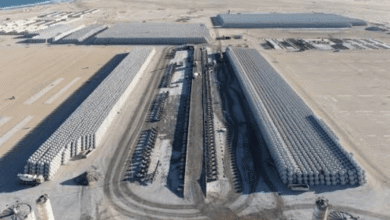
Karnawall Maroc’s activities encompass several complementary trades, including spinning, weaving, gluing, and finishing. The company is also involved in ready-to-wear, tent manufacturing, and producing textiles for home furnishings.
This industrial organization concretely illustrates the ambitions advocated by industry professionals: to develop integrated local production, reduce dependency on subcontracting, and enhance the capacity of Moroccan companies to offer their own products.
Through the MIME 2026 fair, the Moroccan textile industry showcases the prospects of a sector that is looking to take a significant step in its development by focusing more on industrial integration, investment, and the valorization of national expertise.