Dakhla Atlantic: Construction Progress Exceeds 74%
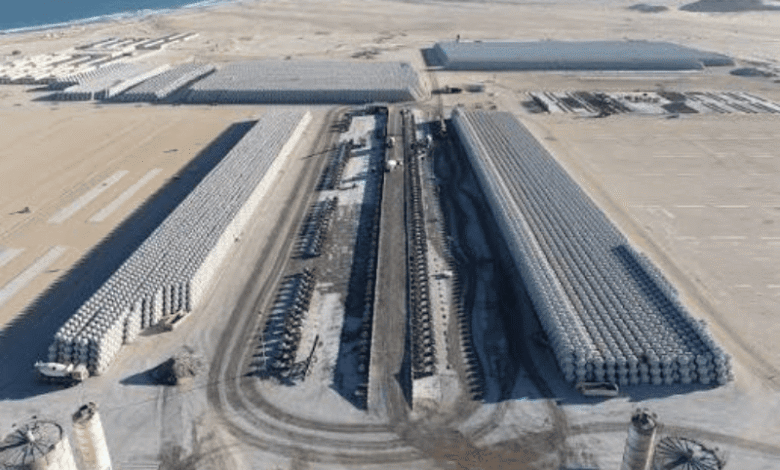
Dakhla Atlantique Port Construction Progresses: Over 74% Complete by September 2026
The construction of the Dakhla Atlantique Port is moving forward, with a progress rate exceeding 74% as of the end of September 2026, according to information reported on October 20. This strategic infrastructure aims to enhance the logistical capacities of southern Morocco, support industrial and fisheries activities, and promote trade exchanges with African markets.
Dakhla Atlantique: A Strategic Project for the Southern Provinces
The Dakhla Atlantique Port is part of Morocco’s broader strategy to bolster the economic infrastructures of its southern provinces and support their industrial development. With over 74% of the work completed by the end of September 2026, the project is advancing to a new phase in its construction.
Designed to accommodate a variety of port activities, the upcoming facility is set to improve cargo handling capabilities, support the fishing sector, and facilitate the establishment of new enterprises. Its location on the Atlantic coast also provides unique advantages for enhancing trade connections between Morocco, West Africa, and international markets.
Beyond its port functions, the project represents a significant investment in the region. Its goal is to bolster Dakhla’s economic attractiveness and foster the emergence of new productive activities centered around logistics and industrial processing.
A Future Industrial and Logistics Hub Turned Towards Africa
Dakhla Atlantique has the potential to foster the development of an economic ecosystem that includes maritime transport, warehousing, logistics, industrial services, and seafood processing. The availability of modern port infrastructures is indeed a crucial factor for attracting investors and improving the flow of goods.
Developing local processing capacities could also increase the added value generated in the southern provinces, particularly within the fisheries and agri-food sectors. However, this evolution will depend on several factors, including the quality of road connections, energy availability, and the alignment between local skills and business needs.
The future port’s attractiveness will also rely on its ability to capture regular trade flows and develop synergies with other port platforms across the Kingdom. The goal is to make Dakhla a pivotal point for trade exchanges and industrial activities linked to the Atlantic coast.
Fishing and Local Processing Among Expected Activities
The fisheries sector stands out as one of the activities likely to benefit from the development of Dakhla Atlantique. Appropriate infrastructures can facilitate the handling, transportation, and valorization of seafood products while creating favorable conditions for the establishment of processing units.
However, realizing these prospects will require additional investments in industrial equipment, cold chain logistics, logistical services, and vocational training. Coordination between public and private stakeholders will be crucial for transforming port capacities into sustainable economic opportunities.
Therefore, value creation will depend equally on the infrastructures developed and the capacity to attract businesses and sustain a sufficiently robust commercial activity.
Progress Rate Not Yet Indicative of Operational Status
The announced progress rate of over 74% as of the end of September 2026 reflects the advancement of construction but does not indicate that the port is operational yet. The completion of construction, installation, finalization of equipment, and necessary operational procedures remain critical steps.
The effective timeline for operationalization and the ramp-up of activities will depend on the completion of various components of the project and their readiness for commercial use.
For Morocco, the challenge now is to make Dakhla Atlantique a genuine lever for wealth creation, regional integration, and economic diversification. The success of the project will hinge on its ability to combine port infrastructures, industrial investments, efficient logistics, and the sustainable establishment of businesses.