Brookings: Morocco Establishes Itself as a Future Leader in Africa’s Electric Vehicle Market
Morocco’s Ambitions in the Electric Vehicle Industry in Africa
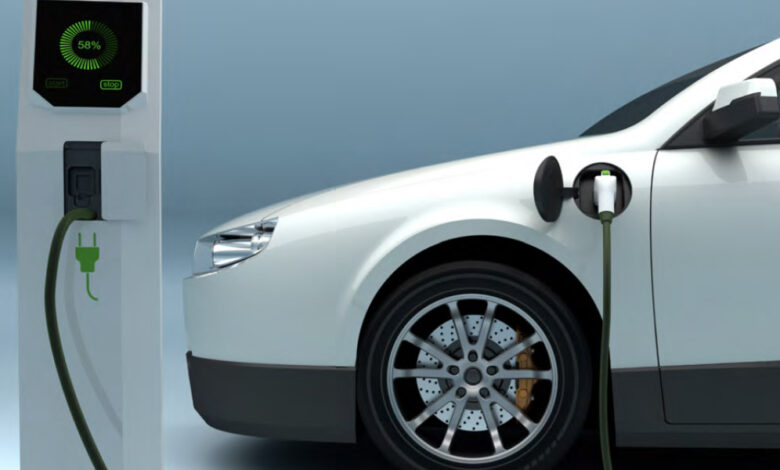
Morocco is solidifying its ambition to become a key player in the electric vehicle industry across Africa. A recent report from the American think tank Brookings Institution highlights the remarkable advancements the Kingdom has made in the fields of electric batteries and sustainable mobility.
Titled “Africa’s Automotive Sector Capabilities: Strategies for Leveraging Emerging Market Opportunities,” the report emphasizes the massive investments transforming Morocco’s automotive ecosystem and enhancing its integration into global value chains.
A $6.5 Billion Investment in Electric Batteries
According to the study, an investment of $6.5 billion has been mobilized in Morocco this year to launch Africa’s first gigafactory dedicated to the production of batteries for electric vehicles. This strategic step marks the continent’s entry into an industry destined to play a pivotal role in the global energy transition.
The report also references a previous investment of $300 million aimed at creating a cathode manufacturing unit, a crucial component in the production of lithium-ion batteries.
A Strategic Advantage Through Natural Resources
Brookings points out that Africa holds nearly 19% of the world’s critical mineral reserves necessary for manufacturing electric batteries.
Morocco enjoys a significant advantage in this context due to its substantial phosphate resources. The Kingdom is estimated to account for approximately 72% of global phosphate reserves, a strategic raw material for various technologies related to batteries and electric mobility.
African Cooperation for Building an Integrated Value Chain
The think tank also highlights the collaboration between Morocco, the Democratic Republic of Congo, and Zambia, formalized through a memorandum of understanding aimed at developing an integrated regional value chain.
In this partnership, Morocco leverages its industrial and manufacturing capabilities, while the DRC capitalizes on its strategic mineral resources, and Zambia enhances its copper processing capabilities locally.
A Moroccan Automotive Industry on the Rise
The report underscores Morocco’s numerous advantages: an ambitious industrial policy, modern infrastructure, and a privileged geographic position at the gates of Europe.
Over the last two decades, the Kingdom has transitioned from an assembly-based operation to full vehicle production, thereby strengthening its presence in international markets.
In 2023, Morocco ranked among the leading automotive suppliers to the European Union, surpassing several historical competitors in the sector.
The Renault Plant in Tangier: A Beacon of International Success
The analysis highlights the performance of the Renault Group industrial complex in Tangier, which exported its production to 68 countries in 2024. More than 76% of the vehicles produced were destined for the European market, reinforcing Morocco’s role as a strategic industrial platform for automotive manufacturers.
A Preferred Destination for International Investors
Amidst rising trade tensions and a surge in protectionist policies in the United States and Europe, Morocco is increasingly attracting foreign investments, particularly from China.
Thanks to its stability, efficient logistics infrastructure, and privileged access to European and African markets, the Kingdom positions itself as an ideal platform for industries looking to expand their operations internationally.
Morocco at the Heart of the African Automotive Revolution
According to Brookings, Morocco is among the best-positioned African economies to capitalize on the global rise of electric vehicles. By combining strategic resources, industrial capabilities, and regional partnerships, the Kingdom is gradually strengthening its status as an industrial and technological hub within the new economy of sustainable mobility.