The ANEF Kicks Off the 2026-2027 Hunting Season
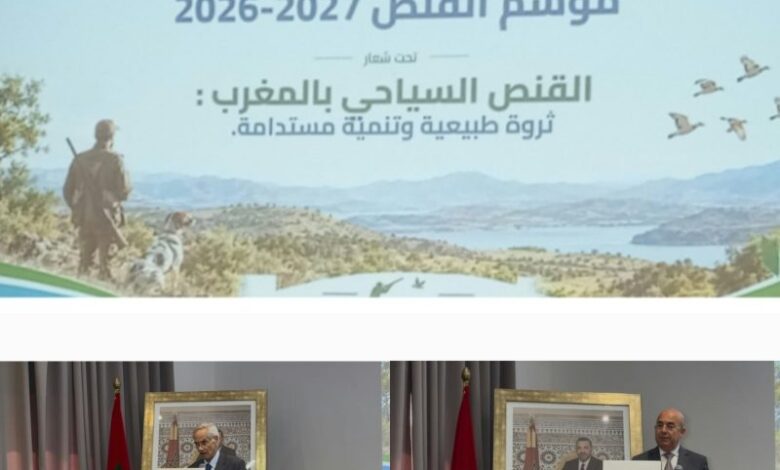
Official Launch of the 2026-2027 Hunting Season in Morocco
The National Agency of Water and Forests (ANEF), in partnership with the Royal Moroccan Hunting Federation (FRMC), officially kicked off the 2026-2027 hunting season on Friday, October 2, 2026, at the Palais des Congrès in Marrakech. This launch was celebrated through a study and awareness day in the Marrakech-Safi region under the theme: "Tourist Hunting in Morocco: A Natural Wealth for Sustainable Development."
This event is part of ongoing efforts to enhance the sustainable management of the country’s wildlife heritage, protect biodiversity, and develop the tourist hunting sector within the Kingdom. The focus is on valuing natural resources, invigorating rural territories, and supporting sustainable development.
The meeting was presided over by Mr. Abderrahim Houmy, Director General of the National Agency of Water and Forests, alongside Mr. Ahmed Moussaoui, President of the Royal Moroccan Hunting Federation. The gathering brought together hunters, hunting associations, representatives from tourist hunting, local authorities, and institutional partners.
In his speech, the Director General emphasized that the previous hunting season saw a positive trend across several key indicators in the sector, attracting over 65,000 Moroccan hunters and nearly 5,000 foreign hunters.
He also noted a significant increase in the number of hunting lots allocated, rising from 1,278 in the 2020-2021 season to 1,737 in the 2025-2026 season, following the launch of the national strategy "Forests of Morocco 2020-2030." In the same timeframe, the area allotted for hunting expanded from 3.35 million hectares to nearly 4.39 million hectares, highlighting the importance of leasing hunting rights as a mechanism for sustainable management of hunting resources, while ensuring compliance with the requirements for wildlife conservation and ecological balance.
Mr. Houmy further underscored the continued strengthening of partnerships in various areas relating to the sector, including training for hunters, combating poaching, preserving natural habitats, and conserving biodiversity.
The event also highlighted the growing momentum in Morocco’s tourist hunting sector, supported by 146 specialized companies, as well as the initiatives aimed at diversifying hunting products and services, particularly through the promotion of bow hunting. This effort is designed to enhance the appeal of this activity and to leverage its tourist and environmental potential.
In line with this momentum, the development of tourist hunting in Morocco was a major focus of the program, given its contribution to enhancing natural and rural spaces, invigorating the local economy, and enriching and diversifying the national tourism offer.
To this end, the program featured a presentation focused on the management of wildlife heritage in the Marrakech-Safi region, particularly spotlighting the tourist hunting potential in the area and its development prospects.
The meeting also served as a platform to present the book "Iconic Game Species of Morocco," produced by the National Agency of Water and Forests, which highlights several species of game present in Morocco and their importance in the country’s natural and hunting heritage.
Moreover, the day was an opportunity to honor experienced hunters in the region by sharing their testimonies and experiences in hunting practices. These individuals were recognized for their contributions to mentoring within the practice, preserving hunting heritage, and passing it on through generations.
In a practical approach, workshops dedicated to tourist hunting and bow hunting were also organized. The latter represents one of the new offerings in Morocco’s tourist hunting sector, providing avenues for diversifying hunting offerings and enhancing the destination’s appeal. These workshops also explored potential new hunting products and ways to enhance the national hunting heritage.
The program concluded with a field visit to a hunting lot allocated to a tourist hunting company. Participants were able to explore various infrastructures, installations, and services offered to clients, showcasing the competitive potential of Morocco’s tourist hunting product on an international scale.
This visit also featured a practical simulation, conducted without firearms, of a partridge release operation intended for collective hunting. Two technical presentations were provided, addressing the company’s experience in organizing collective partridge hunts and the practice of bow hunting in Morocco.
At the end of the event, the National Agency of Water and Forests and the Royal Moroccan Hunting Federation reaffirmed their commitment to continue their efforts toward developing responsible, ethical, and secure hunting practices, in alignment with the objectives of the national strategy "Forests of Morocco 2020-2030."
Both parties highlighted that the development of the hunting sector requires enhancing governance and mobilizing all stakeholders to achieve a balance between biodiversity conservation, sustainable management of hunting resources, valuing natural and rural spaces, and contributing to the economic and social development of the territories.
They also emphasized the importance of the active involvement of hunters, professionals, and associations in protecting the national natural and hunting heritage to ensure its sustainability, valorization, and transmission to future generations, as an integral part of the Kingdom’s natural and cultural heritage.