SOMAGEC: Moroccan Expertise Supporting a Strategic Energy Corridor in Africa
Moroccan Group SOMAGEC Participates in Infrastructure Development for Electricity Transmission from Angola to the Democratic Republic of Congo
The Moroccan group SOMAGEC is involved in the development of infrastructure aimed at transporting electricity from Angola to the Democratic Republic of Congo (DRC). This long-term project sits at the intersection of energy, mining, and industrial challenges, fitting within the broader trend of economic integration in Central Africa.
Energy is one of the key determinants of Africa’s industrial competitiveness. In the southeastern part of the DRC, where mining activities are primarily focused on copper and cobalt extraction, the availability of electricity directly impacts production capabilities and local transformation prospects. It is in this context that the energy corridor linking Angola to the Kolwezi region is being established, with the participation of the Moroccan group SOMAGEC.
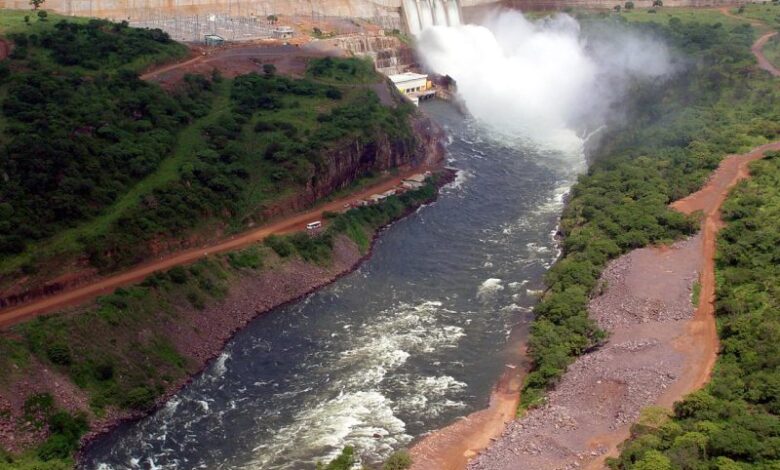
Approved by Angolan authorities in August 2026, the concession reached a pivotal milestone on September 30 with the signing of project contracts, announced by the public Angolan electricity transmission company, RNT-EP. Spanning a duration of 30 years, the project involves the development of a link between the Capanda hydroelectric complex and Kolwezi, passing through Xá-Muteba, Saurimo, and Luau.
A Supply Challenge for the Congolese Mining Basin
Covering approximately 1,240 kilometers, this infrastructure is designed to transport electricity generated in Angola to the Congolese market. The project anticipates an initial export capacity of 800 MW, with potential expansion up to 1,400 MW. These capacities are significant considering the energy needs of an industrial basin whose development is closely tied to mining production.
For the DRC, the interconnection represents a supplementary supply source. It may enhance the electrical supply to mining and industrial facilities in Lualaba, while supporting investments related to the extraction and processing of mineral resources. The availability of reliable energy is indeed a crucial factor for improving the competitiveness of productive activities.
For Angola, the project opens up prospects for maximizing its production capabilities. Exporting electricity to a neighboring country integrates national energy infrastructures into a framework of regional exchanges and economic cooperation. The interconnection thus addresses a dual concern: bringing production resources closer to consumption centers and strengthening synergies between African economies.
A Financing Structure Based on Private Capital
The financial dimension is another critical aspect of the operation. SOMAGEC Energy Holding, designated as the concessionaire by Angolan presidential decree, is developing the project in partnership with Averi Finance, which is involved in financial structuring and capital mobilization.
According to RNT-EP, funding is entirely based on private capital, without resorting to Angolan public debt or incurring debt for the public transport operator. The structure relies on the BOOT model—Build, Own, Operate, and Transfer—which incorporates financing, construction, ownership, and operation of the infrastructure before its transfer at the end of the concession period.
This arrangement enables the mobilization of private resources for the development of large-scale facilities while sharing responsibilities among project partners and public authorities. It also reflects the evolution of infrastructure financing mechanisms on the continent, where investment needs demand new forms of cooperation between private operators and public institutions.
Moroccan Expertise in African Infrastructure
For SOMAGEC, this corridor represents a significant venture in expanding its activities across Africa. The group operates within an environment where energy infrastructure plays a central role in industrialization and regional integration strategies.
The involvement of a Moroccan company in such a large-scale project underscores the capability of national operators to engage in structural operations alongside international financial partners. It is part of a broader trend of Moroccan groups establishing a presence in infrastructure, energy, transport, and industrial equipment sectors across the continent.
The next step will be the realization of the project, which will depend on the progress of studies, effective mobilization of funding, and the construction of facilities. Its significance goes beyond merely connecting electricity lines; it aims to enhance energy exchanges between two countries and meet the needs of a strategic industrial basin.
Through this partnership, SOMAGEC is contributing to an infrastructure initiative that places energy at the heart of competitiveness, industrialization, and economic integration challenges in Central Africa.