Significant Recovery Expected in 2025-2026
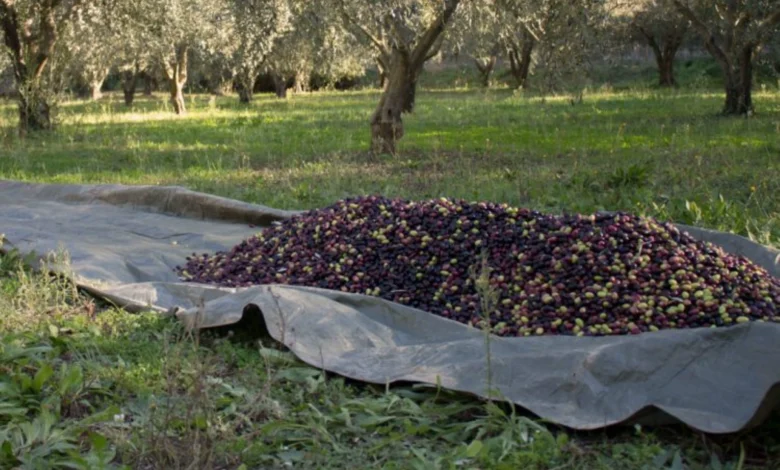
Olive Growing in Tadla: An Agricultural Pillar in Transformation
The olive oil sector remains one of the most strategic agricultural areas in the operational zone of the Regional Office for Agricultural Development of Tadla (ORMVAT) and, more broadly, in the Béni Mellal-Khénifra region. As a true socio-economic engine, it significantly contributes to improving farmers’ incomes and generates nearly 2.5 million workdays each year, with 20% benefiting female labor.
Cultivated Areas, Varieties, and Economic Importance
With 36,617 hectares of olive groves, including 30,862 hectares currently in production, olive trees account for over 70% of the region’s fruit-bearing trees. The irrigated area totals 34,653 hectares (94.6%), of which 8,063 hectares utilize drip irrigation.
The Moroccan Picholine dominates overwhelmingly, representing 85% of the planted area, followed by local varieties such as Menara and Haouzia, each covering 8%. Imported varieties like Arbequina, Arbosana, and Koroneiki account for 7% and are attracting increased interest in new plantations.
A Notable Contribution Yet Threatened by Six Years of Drought
In a normal agricultural year, the region contributes about 8% of the national production, exceeding 120,000 tons of olives. However, the last six campaigns have witnessed a drastic decline in production due to severe drought, extreme temperatures, and a critical drop in the water reserves of the Bin El Ouidane and Ahmed El Hansali dams.
These extreme conditions have caused significant drying of plantations, affecting flowering, fruit setting, and maturation. For the 2024-2025 season, production has plummeted to 44,076 tons, representing a 63% decrease compared to a normal year, leading to soaring prices:
2025-2026: A Promising Recovery Ahead
The 2025-2026 season is expected to herald a positive turnaround with estimated production hitting 97,695 tons, marking a 221% increase. This improvement is driven by several factors:
- Return of precipitation: 257 mm in 2024-2025 (+47%)
- Abundant rains in March-April 2025, crucial for flowering and fruit setting
- Lower winter temperatures, favoring better dormancy
- Careful irrigation scheduling: 9 rotations of water for Béni Moussa and 6 for Béni Amir
- New plantations from the Green Morocco Plan entering production
This recovery is expected to help gradually lower prices after several years of market pressure.
Modernization and Enhancement: A Strategic Turning Point
Despite climatic challenges, the sector is undergoing a profound transformation, involving:
- Introduction of more productive and water-efficient varieties
- Organization of producers (aggregation, cooperatives, professional organizations)
- Modernization of processing and preservation techniques
ORMVAT is actively supporting this change with an upgrade program targeting 291 oil extraction units and 30 canning units, in collaboration with ONSSA.
In a normal year, these units ensure the production of 20,000 tons of olive oil and 6,500 tons of table olives. To date, 120 extraction units and 6 packaging units have received health certification, thereby strengthening the presence of regional products in national and international markets.