An international consortium seeks to finance a $4.5 billion green hydrogen and ammonia project in Laâyoune.
A major industrial and energy project planned for Laâyoune is entering a decisive phase, with the international consortium leading the initiative actively seeking European funding sources. The goal is to mobilize the necessary resources for an investment estimated at $4.5 billion.
According to information reported by Africa Intelligence, the consortium ORNX is exploring the possibility of obtaining European financing to support the first phase of the project. It includes Spanish company Acciona, German firm Nordex, and American company Ortus Climate Mitigation.
This initiative comes at a time when Morocco is accelerating the development of an integrated ecosystem dedicated to green hydrogen and its derivatives, leveraging its significant solar and wind potential as well as its proximity to European markets.
An Integrated Green Energy Platform
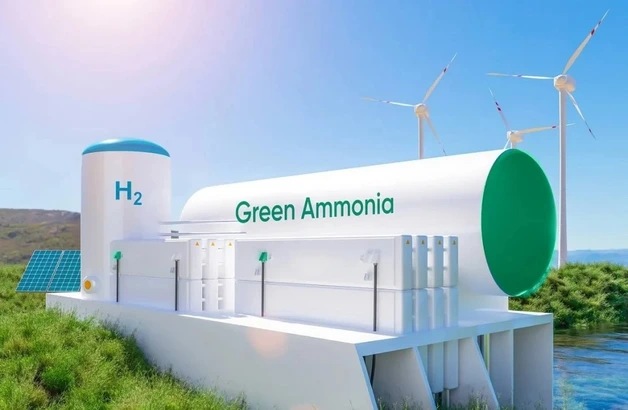
The project aims to establish an industrial platform that combines renewable electricity production, green hydrogen generation, and the transformation of hydrogen into green ammonia, intended for both domestic use and export.
The first phase is expected to rely on more than 2 gigawatts of solar and wind capacity, along with electrolysis facilities with a capacity nearing 900 megawatts.
The setup will also incorporate energy storage systems and seawater desalination units to meet some of the water needs of the industrial complex while minimizing pressure on conventional water resources.
Up to 560,000 Tons of Green Ammonia Annually
According to the forecasts shared regarding the project, the first phase could produce approximately 100,000 tons of green hydrogen per year.
A significant portion of this production would then be converted into green ammonia, aiming for a capacity of around 560,000 tons per year.
This integration would facilitate the establishment of a production chain from renewable electricity generation to the manufacturing of an easily transportable energy product, particularly aimed at international markets.
The Search for European Funding
The pursuit of European funding is a crucial step given the scope of investments required for the complex.
The project encompasses several components necessitating substantial investments, including solar and wind capacities, electrolyzers, storage infrastructure, desalination units, and facilities for transforming hydrogen into ammonia.
The mobilization of new funding sources is intended to create a financial structure capable of supporting the various stages of the project.
American Support for Preliminary Studies
The project has already benefited from American support of $5.7 million intended for funding preliminary studies.
These studies particularly focus on the technical, economic, financial, environmental, and regulatory aspects necessary for preparing the next phases of development.
The American company KBR was also selected to conduct initial engineering and design studies to establish the project’s technical specifications and assess its feasibility.
Morocco Leverages Its Renewable Potential
The Laâyoune project aligns with Morocco’s strategy to develop an industry for green hydrogen and its derivatives, utilizing the country’s substantial solar and wind resources.
The availability of renewable energy, combined with Morocco’s geographic position and the development of its export infrastructure, represents an asset for attracting international investments in hydrogen production, ammonia, and associated industrial products.
In the long run, such projects could also promote the emergence of new industrial activities related to clean energy, stimulate investments, and create jobs while strengthening Morocco’s integration into global energy transition value chains.
With a potential investment of $4.5 billion, the Laâyoune project transcends the mere production of green hydrogen and ammonia. It could catalyze the emergence of a new industrial hub in southern Morocco, aimed at producing and exporting low-carbon fuels and molecules to international markets.