The dirham falls against the euro and the dollar: what this really means for households.
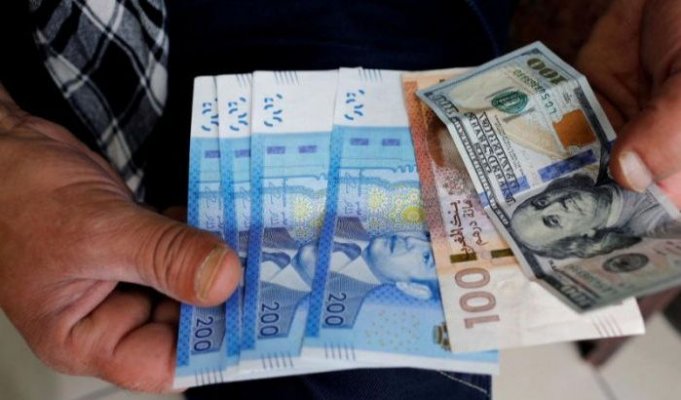
Recently, the dirham has declined against both the euro and the dollar, with the euro surpassing the symbolic threshold of 11 dirhams. This threshold holds more symbolic importance than economic significance. After several years of stable fluctuations — including a 4% appreciation of the dirham against the euro in 2024 — the main question now is how far this downward trend will impact the real economy.
A decline in the dirham does not automatically lead to a general increase in prices. Its impact varies depending on the exposure of each product to foreign currencies, international prices, and the ability of businesses to absorb or pass on their increased costs.
A Contextual Movement
Morocco operates under a managed floating exchange rate regime with bands of fluctuation set at ±5%, around a parity calculated from a basket composed of 60% euros and 40% dollars. Therefore, the dirham’s exchange rate is influenced not only by supply and demand in the Moroccan market but also by the relationship between the euro and the dollar.
The recent changes in the dirham must be viewed in a longer-term perspective. Following the fluctuations of 2022, particularly marked by the rise of the dollar against the euro, the Moroccan currency has experienced mixed developments in the subsequent years. Indeed, the exchange rate is influenced by both international movements of the euro and dollar and currency flows within Morocco.
The latest projections from Bank Al-Maghrib offer additional insights. Following a 2% appreciation in 2025, the effective exchange rate of the dirham is expected to depreciate by 4.1% in 2026 and by 2% in 2027. This indicator, which takes into account trade with several commercial partners and price differentials, does not equate to a corresponding decline of the dirham against the euro or the dollar. However, the central bank believes that its value remains broadly aligned with economic fundamentals.
Imports Factor In, but They Don’t Tell the Whole Story
This year, the demand for foreign currencies has increased. By the end of August, imports of goods rose by 15.8% to 617.5 billion dirhams, compared to an 8.7% increase in exports, which reached 334.9 billion. As a result, the trade deficit widened by 25.4%.
Higher imports mechanically lead to an increase in transactions in foreign currencies. However, they alone cannot account for the evolution of the dirham. Tourist spending, remittances from Moroccans living abroad, investments, and other financial flows also feed into the foreign exchange market. By the end of August, travel receipts had grown by 9.7%, amounting to 97.9 billion dirhams.
It is this combination of factors, along with the movements of the euro and dollar, that helps explain the observed exchange rate.
Why Prices React Differently
For households, the primary issue is not the decline of the dirham itself, but how it is transmitted to prices.
August provides a clear illustration of this selective transmission. The general price index increased by 0.8% over the month, but it fell by 0.3% year-on-year. Underlying inflation, which excludes volatile price items, increased only by 0.1% over the year.
Fuel presents a particular case. Its price depends on international energy prices, which are expressed in dollars, and then converted into dirhams. When both oil and the dollar move in the same direction, the effect can be amplified for Moroccan consumers. However, available data do not allow for the isolation of the precise portion attributable to exchange rates in the price increase observed in August.
The rest of consumer behavior reacts differently. An imported product, such as a car or a trip abroad, or certain goods that have a high proportion of imported components, are directly exposed to exchange rates. In contrast, the prices of many services and locally produced goods are more influenced by wages, domestic costs, competition, or company margins.
Thus, we should be wary of a simplistic equation: weaker dirham = widespread inflation.
Who Loses and Who Wins?
The exchange rate primarily redistributes effects based on individual exposure to foreign currencies.
For a household that pays for studies in Europe, prepares for a trip abroad, or purchases goods billed in euros or dollars, a weaker dirham means higher expenses in national currency for the same amount in foreign currency.
Conversely, a household that regularly receives euros or dollars — particularly through transfers from relatives abroad — will acquire more dirhams for the same amount in foreign currency. Travel receipts also benefit, in terms of value in dirhams, from a more favorable exchange rate for foreign currency earnings.
However, again, the gain is not automatic: an exporter benefiting from a stronger euro may still face costs for supplies that are denominated in foreign currencies.
The Real Issue is the Duration of the Movement
The dirham surpassing 11 DH to the euro should not be considered an alarm bell in itself. The dirham still moves within its fluctuation band. What deserves closer attention is the persistence of the current trend. If the dirham remains persistently weaker against major currencies and if international prices for energy or other raw materials simultaneously increase, the transmission to prices may become more apparent.
For households, the crucial indicator is not the crossing of a psychological threshold like 11 DH. Rather, it is the gap that emerges, over time, between their income in dirhams and the costs of goods, services, or expenses dependent on foreign currencies.
It is here that the exchange rate ceases to be merely a market statistic and becomes a very concrete question of purchasing power.
Sara AMGHAR