Morgan Stanley Strengthens Its Interest in Morocco, Driven by Industry and Foreign Investments
In this context, Morgan Stanley Investment Management (MSIM) has gradually increased its exposure to the Moroccan market through its NextGen Emerging Markets fund in 2026, while maintaining a weighting below the Kingdom’s representation in the MSCI Frontier Emerging Markets Net Index.
This strategy reflects both confidence in Morocco’s economic prospects and a degree of caution regarding the valuation levels of certain local assets.
Morgan Stanley highlights several favorable factors for the Moroccan economy, including a relatively controlled inflation rate, the credibility of monetary policy, stability in the foreign exchange market, and a manageable external position.
According to the American institution, these elements contribute to creating a more favorable environment for medium- and long-term investments. Improvements in domestic demand and rising consumption could also become new engines of growth, alongside investment and exports.
The evolution of the industrial sector is one of the main aspects attracting Morgan Stanley’s attention. Morocco is no longer limited to hosting traditional industrial activities, but is gradually developing sectors that are more integrated into global value chains.
According to World Bank data cited by Morgan Stanley, the transport equipment industry in Morocco has grown by 140% since 2014, now accounting for approximately 2% of GDP.
This transformation extends beyond the automotive sector. The chemical, pharmaceutical, and electronics industries are also experiencing expansion, contributing to diversifying the Kingdom’s productive base and increasing the added value of exports.
Foreign direct investment is also a crucial factor in this dynamic. European companies maintain a significant presence in various manufacturing industries, while Chinese investments are particularly increasing in the automotive sector.
This diversification of investment sources strengthens Morocco’s integration into international production chains.
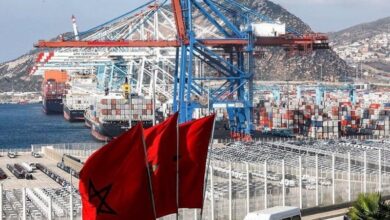
Infrastructure is another asset highlighted. The development of ports, transportation networks, and trade connections enhances the Kingdom’s positioning as a hub for production, export, and logistics services.
Its proximity to the European market, combined with the development of economic relations with African markets, also represents an advantage for international companies seeking an industrial base to access multiple markets.
Financially, the value of the Class A shares of the NextGen Emerging Markets fund increased by 4.94% in June, compared to 3.99% for its benchmark index.
Since the beginning of 2026, however, the fund has shown a performance of 13.48%, lagging behind its benchmark index, which reached 15.95%.
Despite this gap, the increased exposure to Morocco indicates that Morgan Stanley appears to favor a long-term view of the Moroccan market, focusing more on the structural transformations of the economy than on short-term stock market fluctuations.
The American institution distinguishes between the robustness of the Kingdom’s economic outlook and the valuation levels of certain listed stocks, where it remains more cautious.
The decision to gradually increase exposure to Morocco thus reflects a bet on the country’s economic and industrial transformation, supported by industrial growth, foreign investment, infrastructure development, and improved domestic demand.
This dynamic places Morocco further on the radar of major international investment institutions, which see its industrial evolution and geographical positioning as levers likely to enhance the attractiveness of the Moroccan market in the coming years.