Bourita at the UN: The Sahara Issue Has Entered a New Phase
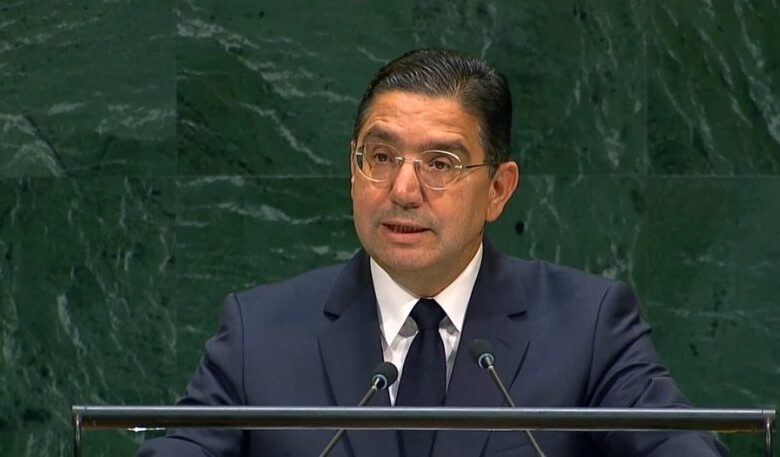
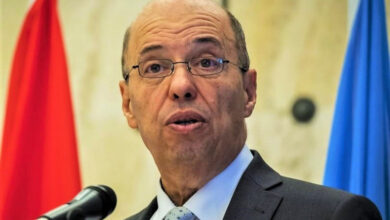
NEW YORK – Moroccan Foreign Minister Nasser Bourita has stated that the issue of the Moroccan Sahara has entered a new phase, highlighting that the dynamics established in recent years have opened what the Kingdom sees as a new stage towards a definitive political resolution of the regional dispute.
Speaking before the United Nations General Assembly, Nasser Bourita emphasized that, thanks to the momentum generated by King Mohammed VI, the Sahara question has experienced what he termed a "historic turning point," particularly with the adoption of Resolution 2797 by the Security Council in October 2025.
The Moroccan minister noted that following this adoption, the matter has embarked on a trajectory that signifies a break from past approaches, now focused on the pursuit of a definitive political resolution.
For Rabat, this process is now grounded on several clearly defined principles and parameters.
The first, Bourita indicated, is that no solution can be considered outside the framework of autonomy under Moroccan sovereignty.
The second principle pertains to the resolution process itself. The Moroccan Foreign Minister stressed that no other approach or mechanism could replace the political process conducted under the auspices of the United Nations, based on the Moroccan autonomy initiative.
Bourita also underscored the responsibilities of the four parties involved in the political process, as defined in Security Council resolutions.
Moreover, he expressed that the status quo cannot serve as a sustainable perspective, asserting that the political process is now underway and must advance towards a definitive solution.
The Moroccan minister connected the credibility of the political process to respect for the ceasefire and the resolutions of the Security Council, criticizing violations of the ceasefire and the failure to adhere to UN decisions in this regard.
On the humanitarian front, Nasser Bourita condemned the situation of the populations living in the Tindouf camps, calling for an end to what he described as the retention of these populations as "hostages" for several decades, and stressing the need to respect international law and humanitarian principles.
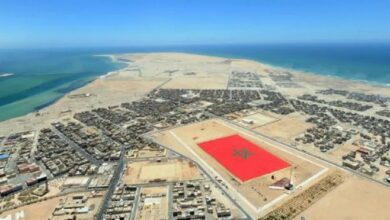
Alongside the political process, the Moroccan minister emphasized the continuation of development programs in the Southern provinces of the Kingdom.
He specifically mentioned the investments made in infrastructure, higher education, healthcare, airports, and other areas as part of the ongoing development dynamics in these regions.
Nasser Bourita also addressed the political participation of residents in the Southern provinces, reminding the audience of their involvement in the Kingdom’s legislative elections, which he sees as a testament to their representation and participation in national political and institutional life.
Through this intervention, Morocco reaffirms its position that the resolution of the Sahara question must take place within the framework of the political process led by the United Nations, with the Moroccan autonomy initiative serving as the basis for negotiations.