Volkswagen Confronts a Historic Crisis and Considers Further Job Cuts
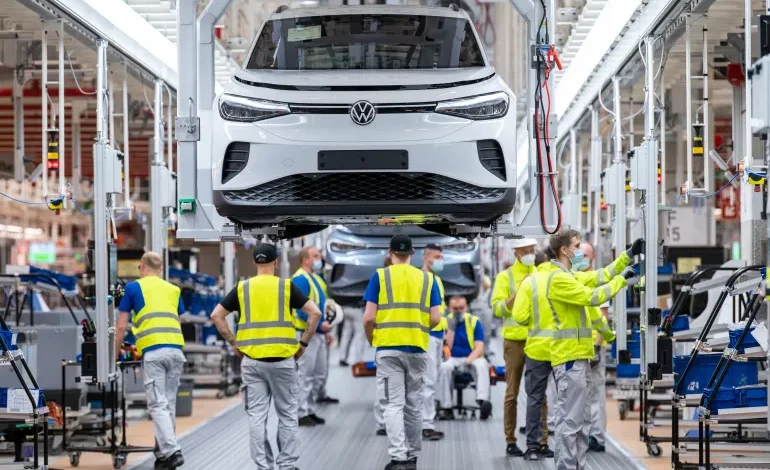
The Volkswagen Group is currently facing a particularly challenging period. Its CEO, Oliver Blume, acknowledged that the German automaker is in an “extremely concerning” situation as the German automotive sector grapples with mounting pressures from the global economic slowdown and increased competition from China.
In an interview published on the company’s internal network, Oliver Blume described the current situation as “the greatest storm in its history”, affecting both Volkswagen and the entire German automotive industry.
The CEO is scheduled to meet with employee representatives in the coming days to present the new cost-cutting measures under consideration by the group. These meetings are expected to take place at Volkswagen’s headquarters in Wolfsburg, as well as at several industrial sites, including those in Zwickau and Emden.
The Closure of Several Plants Remains a Possibility
Volkswagen is preparing new measures aimed at reducing costs and workforce. Although no final decision has yet been made regarding the closure of factories, Oliver Blume admitted that the group currently sees “no possibility” of maintaining the profitability of certain sites in the 2030s.
The factories in Emden, Hanover, Zwickau, and Neckarsulm are among those that have raised concerns.
The company, which remains Europe’s leading automotive group, is confronted with significant overcapacity in the European market, estimated at around 500,000 vehicles per year.
However, Oliver Blume stated that the closure of factories would be “the last option” and also the most costly. The group is therefore seeking to identify alternative solutions that would allow it to maintain industrial activity at sites facing reduced profitability.
Volkswagen is Seeking New Activities for Its Sites
In this context, Volkswagen is exploring various possibilities for industrial reconversion. Advanced discussions are reportedly underway with companies in the defense sector about potential use of the Osnabrück site.
This strategy aims to preserve part of the industrial capacity and jobs while adapting the group’s activities to the changing market.
Last July, Oliver Blume had already presented a cost-saving plan to the Volkswagen supervisory board. However, a decisive resolution had yet to be made.
According to several German media outlets, the government of the state of Lower Saxony, which holds 20% of the voting rights in the group, opposed the validation of the plan.
Up to 50,000 Job Cuts Anticipated
The restructuring announced by Volkswagen already foresees the elimination of 50,000 jobs. According to Oliver Blume, agreements have thus far been reached with around 37,000 employees as part of this program.
However, the CEO believes that the success of the restructuring will depend on the ability of all stakeholders to support the proposed measures.
This outlook has sparked significant opposition from employee representatives.
The president of the IG Metall union, Christiane Benner, has sharply criticized management’s direction and warned that employees would resist any decision aimed at closing factories.
In an interview with Wirtschaftswoche, she reminded that Volkswagen employees have already made substantial and painful financial sacrifices. In her view, the new measures proposed by management represent “another slap” to the employees.
A Major Turning Point for the German Automotive Industry
The situation at Volkswagen illustrates the structural difficulties facing the German automotive industry. Between the weak global economy, the transition to electric vehicles, high production costs, and the rise of Chinese manufacturers, major European groups must now revisit their industrial models.
For Volkswagen, the challenge now is to reduce costs and adapt its production capacities without causing significant social upheaval.
The upcoming discussions between management and employee representatives will be crucial for the future of the affected industrial sites and could mark a new phase in the deep restructuring of Europe’s leading automaker.