
Morocco-Egypt Trade: $521 Million in Imports
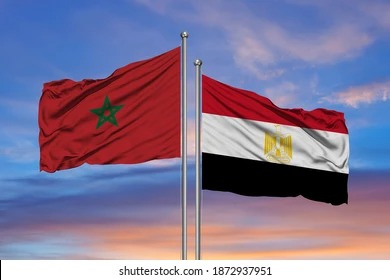
Morocco Ranks as One of Africa’s Key Markets for Egyptian Products
Morocco has emerged as one of the leading African markets for Egyptian products over the first seven months of 2026. According to statistics from the Egyptian Cabinet, the Kingdom imported Egyptian goods worth $521 million, equivalent to around 4.74 billion dirhams, placing it fourth among Egypt’s African markets.
Morocco in the Top 5 of Egypt’s African Markets
From January to July 2026, Moroccan imports from Egypt reached $521 million. Morocco lags behind Libya, Sudan, and Algeria but significantly outpaces Tunisia.
Algeria ranks third with purchases totaling $566 million, around 5.15 billion dirhams. The gap between Algeria and Morocco is relatively narrow, at $45 million, close to 410 million dirhams.
Tunisia comes in fifth place with imports of $252 million, the equivalent of 2.29 billion dirhams. Thus, Tunisian purchases account for less than half of those made by Morocco during the same period.
At this pace, Moroccan imports of Egyptian products averaged nearly $74 million per month, or approximately 677 million dirhams.
Libya and Sudan Lead Trade with Egypt
Libya stands as the largest African market for Egyptian products. In the first seven months of 2026, Libya’s imports from Egypt reached $869 million, nearly 7.91 billion dirhams.
Sudan holds the second position with imports totaling $659 million, roughly 6 billion dirhams.
Together, these two neighboring countries have absorbed $1.53 billion worth of Egyptian goods between January and July. This amount surpasses the combined purchases of Algeria and Morocco, which together total $1.087 billion, nearly 9.89 billion dirhams.
This geographical proximity significantly explains the substantial trade volumes between Libya and Sudan and Egypt within Africa.
Four Maghreb Markets Among the Top Five
The rankings also highlight the significant role of the Maghreb in Egyptian exports to Africa. Four countries from the region are among Egypt’s top five African clients: Libya, Algeria, Morocco, and Tunisia.
These four markets alone account for approximately $2.21 billion worth of Egyptian product purchases over the first seven months of 2026, nearly 20.1 billion dirhams.
When adding Sudan, Egypt’s top five African export markets reach around $2.87 billion, equivalent to about 26.1 billion dirhams.
The importance of these five markets is underscored by the fact that total trade between Egypt and all African countries amounted to $6.1 billion during the same period, encompassing trade in both directions.
Collectively, the top five markets represent approximately 47% of Egypt’s overall trade with Africa from January to July 2026.
Persistent Trade Imbalance Between Rabat and Cairo
The figures also shed light on a long-standing characteristic of trade relations between Morocco and Egypt: bilateral exchanges remain largely in favor of Cairo.
Egyptian exports to Morocco have consistently outpaced Moroccan sales to the Egyptian market for several years. This imbalance is regularly highlighted by Moroccan business circles, who call for increased presence of Moroccan products in the Egyptian market.
However, both countries have a common trade framework that could facilitate exchanges. Morocco and Egypt have been implementing the Agadir Agreement since 2007, which was signed in Rabat in February 2004 with Tunisia and Jordan.
Both economies are also engaged in the African Continental Free Trade Area (AfCFTA), which aims to progressively enhance trade between continental countries and promote the integration of African markets.
What Potential Lies for Moroccan Exports?
The level of Moroccan imports from Egypt indicates a significant bilateral market already in place. However, it also raises the question of Moroccan companies’ capacity to boost their exports to Egypt.
This potential is not solely dependent on trade agreements. It also hinges on the competitiveness of businesses, the diversification of exported products, logistical costs, and the ability to identify opportunities within various sectors of the Egyptian economy.
In the context of the rising prominence of the AfCFTA, the evolution of trade relations between Rabat and Cairo could serve as an interesting indicator of both economies’ ability to better balance their commercial ties.
For Morocco, the challenge lies in transforming trade integration mechanisms into tangible opportunities for its exporters. For Egypt, the Moroccan market already confirms its significance among the major African destinations for its products.