MASEN: A Strategic Player in Africa’s Energy Transition
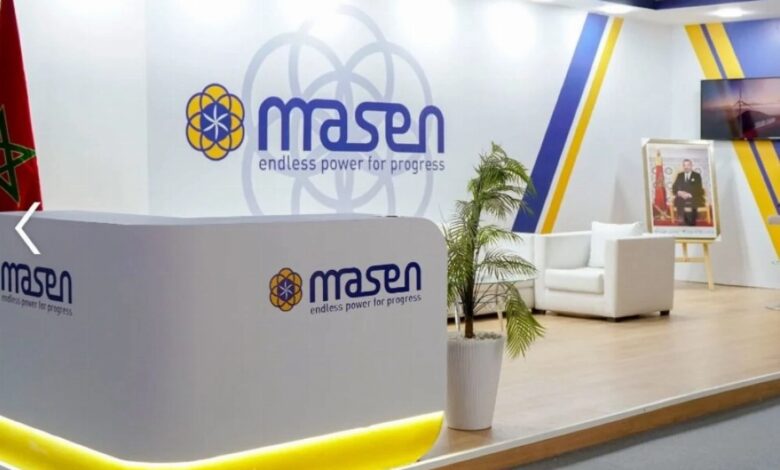
In Morocco, as is the case across the African continent, the energy transition is no longer solely reliant on the construction of new production capacities. It also involves structuring projects, securing investments, and developing sustainable partnerships. Within this framework, MASEN (Moroccan Agency for Sustainable Energy) holds a unique position at the intersection of Moroccan expertise and African energy cooperation.
The rise of renewable energy in Africa presents a vast array of opportunities as well as numerous challenges. Solar, wind, and hydropower offer the continent considerable potential, especially as electricity demand continues to grow.
However, the main challenge lies in the ability to transform this potential into concrete, funded, and sustainable projects.
In this environment, MASEN’s experience takes on particular significance. The Moroccan agency has several years of experience in developing large-scale renewable energy projects and mobilizing both public and private partners.
Moroccan Expertise
Established to support the development of renewable energy in Morocco, MASEN has progressively emerged as one of the main actors in the Kingdom’s energy strategy.
Its experience spans multiple dimensions, including project development, institutional engineering, financial structuring, mobilization of international partners, and support for complex projects.
This expertise now serves as an asset in interactions with African countries looking to accelerate their own energy transition.
The challenge is not simply to replicate the Moroccan model but to share methods and experiences that can be adapted to the realities of each market.
The Challenge of Bankable Projects
To accelerate investments in renewable energies, the availability of natural resources alone is not sufficient.
A solar or wind project must also present adequate guarantees to attract investors and financial institutions.
Thus, the bankability of renewable energy projects becomes a central issue.
This necessitates clearly defining award mechanisms, distributing risks among various actors, and ensuring a sufficiently predictable environment for investors.
This aspect highlights the importance of the cooperation programs that MASEN is involved in.
The Noor Ouarzazate Example
Moroccan experience is particularly illustrated by the Noor Ouarzazate solar complex, which has become one of the most emblematic energy projects on the African continent.
Beyond its production capacity, Noor Ouarzazate represents a valuable experience in the design, financing, and management of large-scale energy infrastructure.
The complex also demonstrates the importance of partnerships among public institutions, international donors, and private players.
This experience serves as a benchmark in discussions dedicated to the development of solar projects in Africa.
A Role in African Cooperation
MASEN’s role is gradually extending beyond the strict confines of the Moroccan market.
The agency’s participation in capacity-building programs aimed at African institutions aligns with a South-South cooperation logic.
The meeting organized in Marrakech last June, which brought together representatives from 17 African countries around competitive calls for projects in renewable energy, serves as a case in point.
The objective was to enhance the skills of public institutions in the design, launch, and management of renewable energy projects.
This approach addresses a common challenge faced by many African countries: not only having the necessary energy resources but also possessing the institutional skills to transform those resources into investments.
International Partnerships
Cooperation around these programs involves several major international institutions, including the World Bank, the African Development Bank, GIZ, the French Development Agency, and the International Renewable Energy Agency.
This international presence underscores the growing importance of structuring African renewable energy markets.
For African states, these partnerships can facilitate access to expertise and funding mechanisms necessary for developing new projects.
For Morocco, they also help strengthen its positioning in international networks dedicated to the energy transition.
Africa: A New Energy Frontier
The African continent holds considerable potential for renewable energy.
The exceptional sunlight in several regions, along with wind and hydropower resources and increasing electricity demands, creates a particularly conducive environment for developing new infrastructures.
However, disparities between countries remain significant.
Institutional capabilities, regulatory frameworks, access to financing, and electrical infrastructures vary greatly from one market to another.
In this context, the experience of countries like Morocco can help accelerate the sharing of knowledge and best practices.
Expertise Beyond Borders
MASEN’s positioning reflects a broader evolution in the role of Moroccan energy institutions.
The objective is no longer solely to develop the Kingdom’s renewable capacities but also to leverage Moroccan expertise in the field of energy transition.
This dimension could become an important element of economic cooperation between Morocco and other African countries.
It could also pave the way for new partnerships in investment, engineering, training, and financing of energy infrastructures.
MASEN: A Catalyst for Cooperation
The experience accumulated by MASEN grants Morocco an edge in a sector poised to gain increasing importance in African economies.
The energy transition now represents a pressing climate, economic, and geopolitical issue.
In this new equation, the ability to produce renewable energy is crucial, but so is the capacity to structure projects, secure investments, and support public institutions.
It is on this terrain that MASEN’s expertise takes on an African dimension.
Through its projects, partnerships, and the cooperative programs it participates in, the agency thus contributes to establishing Morocco as a reference player in the development of renewable energy in Africa.