Inflation Slows Down. Not the Price Tag from the Past.
Navigating Inflation: Understanding the Disconnect Between Statistics and Household Experience
Two weeks after the latest monetary policy meeting of Bank Al-Maghrib, one figure continues to grab attention: 0.7%. This is the inflation forecast for 2026. After the shocks of recent years, this number may be reassuring. Yet, it says little about the prices that households are still paying today.
This confusion is not uncommon. When inflation slows down, prices do not revert to previous levels. They generally continue to increase, albeit at a slower pace.
For instance, consider a product that was sold for 100 dirhams before the inflation shock. If its price rises to 110 dirhams and stabilizes around that level, inflation could become almost negligible. However, the price remains 10% higher than its original value. For economists, the increase in prices has halted. For consumers, the expense of 110 dirhams is still very real.
This distinction is essential to understanding household sentiment.
The Average Basket vs. Real Household Needs
Published inflation is an average. It aggregates hundreds of prices to provide a useful measure of the general evolution of the cost of living. However, no household consumes precisely the average basket defined by statisticians.
The effects are particularly evident in the food sector. Some products have seen price decreases after soaring in previous years. Olive oil, for instance, experienced a significant price hike before falling back. Such fluctuations may help moderate overall inflation without erasing the price increases already woven into everyday expenses.
This highlights the difference between a decrease in inflation and a decrease in prices. The former indicates that price increases are slowing down, while the latter means that price levels are retreating. These two phenomena have different implications for a household’s budget.
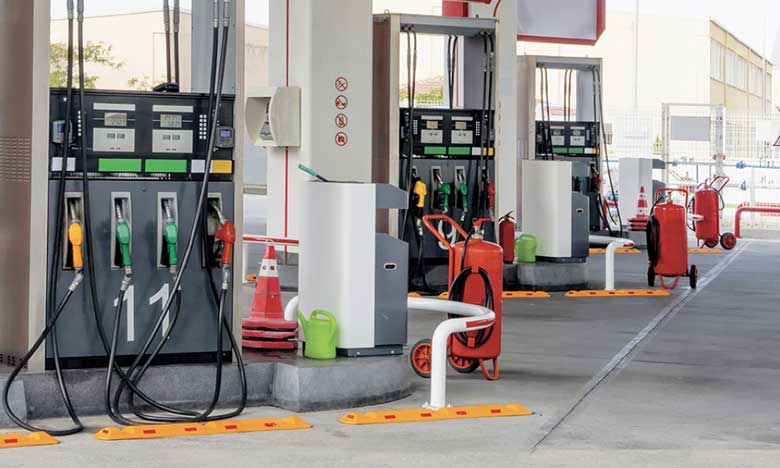
Fuel prices illustrate this mechanism very concretely. Even when the price of fuel stops rising rapidly, the level it has reached continues to burden drivers, especially those who drive long distances. A structurally higher expense ultimately alters spending decisions: less travel, greater reliance on public transport when available, or cuts in other expenditures.
Therefore, the slowdown in inflation does not erase the accumulated expenses from previous years. Moreover, the trajectory projected by Bank Al-Maghrib suggests a need to look beyond 2026. While overall inflation is expected to remain very moderate this year, underlying inflation—which excludes volatile prices—is anticipated to develop differently. After a forecast of -0.2% in 2026, it is expected to rise to 2.2% in 2027.
In other words, the current calm should not be interpreted as the establishment of a permanently stable price environment. Some aspects of the current weakness are attributable to factors that will not persist indefinitely.
During the previous inflationary episode, the goal was to prevent prices from spiraling. Today, as this pressure has visibly eased, the focus shifts to how this stability can be reflected in the standard of living.
Calm Does Not Restore Purchasing Power
It is here that the figure of 0.7% reveals its true limitations. Low inflation does protect future purchasing power. It prevents an increasing portion of income from being eroded by rising prices. However, it does not automatically restore the purchasing power lost when prices increased faster than incomes.
For the standard of living to truly progress, a second movement is required: incomes must grow faster than expenses. This relates to wages, employment, and productivity. An economy can sustainably improve households’ disposable income if it can generate more value from the same resources and distribute part of that as income.
Bank Al-Maghrib’s decision to maintain its key interest rate at 2.25% also reflects a change in priorities. With inflation now contained, there is more room for monetary policy to support economic activity while remaining vigilant to the gradual return of underlying tensions.
The next phase is thus less dramatic than the battle against a price surge, but it is likely more crucial for households. Transitioning inflation from 0.7% to a sustainably controlled level is a condition for stability. Ensuring that this stability translates into higher disposable income is another matter altogether.
It is within these two stages—prices on one side, income on the other—that much of the question of purchasing power now lies.