Morocco Allocates 75 Billion Dirhams to Increase Port Capacity to Over 450 Million Tons by 2030
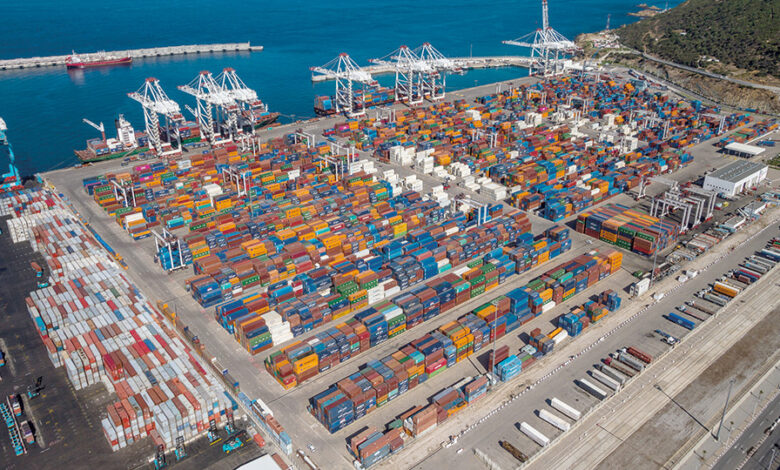
Morocco is embarking on a major port modernization initiative, mobilizing nearly 75 billion dirhams, with the goal of increasing national capacity to over 450 million tons of goods by 2030, up from approximately 390 million tons currently.
Presented during a meeting organized in Rabat by the Policy Center for the New South, this program includes the construction of six new ports, such as the Nador West Med, which is expected to be operational this year, and the Dakhla Atlantic Port, where construction is already 58% complete. The plan also encompasses the expansion of five existing port infrastructures.
As part of this dynamic, six basins dedicated to shipbuilding and repair will be developed, enabling the Kingdom to locally maintain small and medium-sized vessels, thus strengthening its maritime sovereignty.
With 44 ports spread across more than 3,500 kilometers of coastline, Morocco is reaffirming its strategic position at the crossroads of trade between Europe, Africa, and the Americas. Tanger Med, the largest port in Africa and the Mediterranean basin, exemplifies this ascent, supported by an industrial ecosystem that includes international groups such as Renault. By 2025, the volumes handled at Moroccan ports are projected to reach 262 million tons, an increase of 8.9%, highlighting the growing pressure on current infrastructures.
Dakhla Atlantic: A Cornerstone for Atlantic Access
The Dakhla Atlantic Port project embodies a significant portion of the Kingdom’s Atlantic ambitions. Scheduled to be operational by the end of 2028, this port will have an annual capacity of 35 million tons and a draft of 80 meters, allowing it to accommodate large vessels. It is set to become a major logistics platform for Sahel countries under the Royal Atlantic Initiative, while also supporting the future Nigeria-Morocco gas pipeline.
The project has already mobilized nearly $1.4 billion in public and private investments.
The national port strategy also incorporates an important component related to energy transition. A port specialized in the export of green hydrogen and its derivatives is specifically planned for Tan-Tan, while the Nador and Dakhla platforms are being adapted to accommodate these new energy flows.
This maritime roadmap is part of a national infrastructure program estimated at over $100 billion for the period from 2025 to 2030. This program also includes around $14 billion allocated for the expansion of airports and the high-speed rail network, in anticipation of the 2030 FIFA World Cup, which Morocco will co-host with Spain and Portugal.