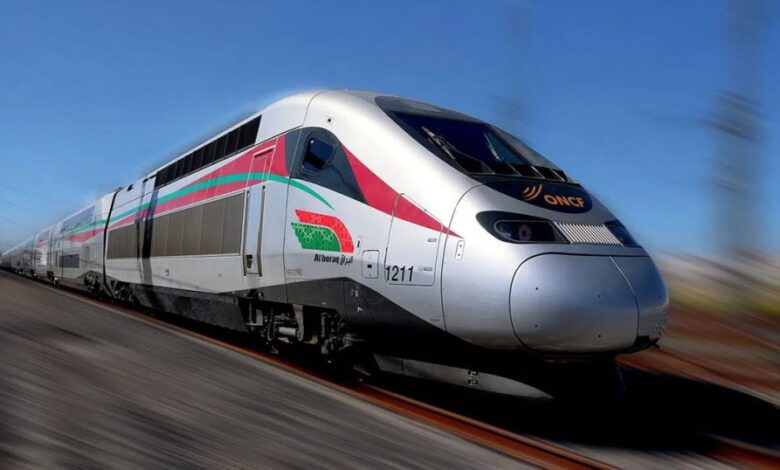
LGV: The African Development Bank Commends Morocco’s Strategy for Skills Transfer and Rail Industrialization
Morocco’s Railway Network: Beyond Infrastructure Investments
Beyond investing in infrastructure, Morocco is focused on developing national skills to support the growth of its railway network. In its assessment report on the Infrastructure Development Support Project (PADIF), the African Development Bank (AfDB) highlights the country’s strategy to enhance knowledge transfer and skill development among human resources.
This report accompanies a loan of €205 million aimed at supporting the modernization of Moroccan railway infrastructure.
A Strategic Partnership with SNCF
According to the AfDB, the development of the High-Speed Line (LGV) has been supported by a close cooperation with SNCF, a key partner in several strategic areas.
This collaboration has notably focused on project management, technical integration, operational readiness, maintenance, and project management assistance.
Thanks to this partnership, the teams at the National Railway Office (ONCF) and Moroccan consulting firms have benefited from significant expertise transfer, promoting the gradual upskilling of professionals in the sector.
Maintenance Now Carried Out by Moroccan Expertise
The African Development Bank emphasizes that this strategy is already yielding tangible results.
Today, nearly 200 Moroccan railway workers are responsible for 100% of the LGV’s maintenance, a number expected to rise to 350 specialists when the network reaches full capacity.
Regarding rolling stock, an industrial partnership with SNCF is gradually facilitating the transfer of skills, with the goal of achieving complete autonomy for Morocco by 2035.
The Railway Training Institute: A Catalyst for Skill Development
The report also underscores the central role of the Railway Training Institute (IFF), established in 2015 as part of the cooperation between Morocco and France.
The institute offers more than 140 training modules covering all professions related to railway operations, infrastructure maintenance, and technical equipment management.
This training program aims to prepare a new generation of professionals capable of supporting the Kingdom’s future railway projects.
A Thriving National Railway Industry
For the AfDB, Morocco’s strategy extends beyond just skills transfer.
The Kingdom is also developing a substantial industrial ecosystem through industrial compensation clauses integrated into contracts with international railway equipment manufacturers.
This approach fosters the emergence of local production to meet the needs of the ONCF, while also supplying African markets.
Benguérir, Fez, and Alstom: Pillars of the Industrial Strategy
The report highlights several projects illustrating this dynamic.
The partnership with the Republic of Korea for the acquisition of around a hundred regional trains has led to the establishment of a factory in Benguérir, aimed at strengthening the industrial integration of the Moroccan railway sector.
The AfDB also mentions the agreement between ONCF and Alstom, which entrusts Alstom Morocco with the maintenance of the new generation Prima M4 electric locomotives.
In Fez, a new industrial unit will increase the production of wiring harnesses and electrical cabinets intended for the group’s European factories.
One Billion Dollars to Prepare for the Next Phase
According to the African Development Bank, ONCF plans to invest nearly $1 billion between 2025 and 2027.
These investments will focus on enhancing maintenance activities as well as establishing new industrial complexes dedicated to refurbishing railway equipment and manufacturing components for high-speed trains.
For the AfDB, this strategy will enable Morocco to consolidate its industrial sovereignty, support the expansion of its railway network, and strengthen its position as a future rail hub in Africa.