Desalination: Acciona Highlights Its Grand Casablanca Project
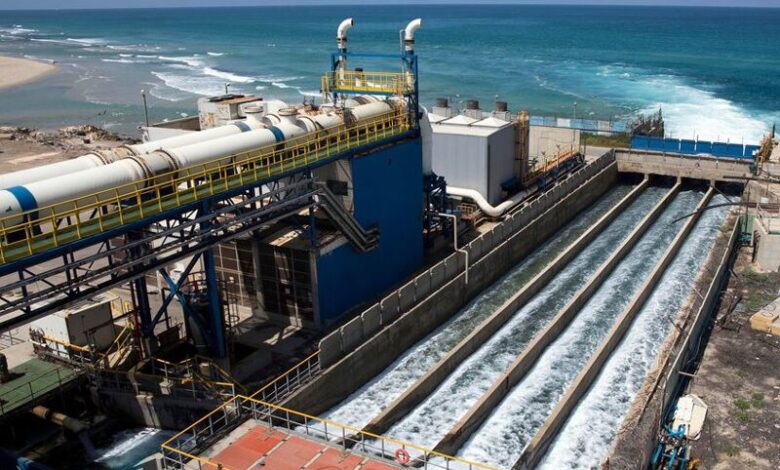
Grand Casablanca Desalination Plant: A Key Project for Acciona
The Grand Casablanca desalination plant is one of Acciona’s major water sector projects slated for the first half of 2026. In its financial results released on Thursday, July 30, to the National Securities Market Commission (CNMV), the Spanish infrastructure and energy group highlighted this Moroccan initiative as one of its three major undertakings in the sector.
Acciona’s water division reported a 14.6% increase in revenue during the first six months of the year, reaching €740 million, up from €645 million in the same period of 2025. Its earnings before interest, taxes, depreciation, and amortization (EBITDA) also grew by 12.4%, rising from €46 million to €52 million.
Casablanca Plant Among Acciona’s Flagship Projects
Acciona referenced the Grand Casablanca desalination plant alongside projects in Alkimos, Australia, and Facility E in Qatar. The group attributes the revenue increase in its water division during the first half of the year to these three initiatives.
Despite this growth, the sector’s operating margin experienced a slight decline, falling from 7.2% to 7%. This change is primarily attributed to rising costs, which absorbed part of the additional revenues generated by the division.
The Moroccan project involves the design, financing, construction, operation, and maintenance of a desalination plant to meet the water needs of the Greater Casablanca region. The project is being executed as part of a public-private partnership.
Acciona Holds 50% Stake in Project Company
According to information published by the Spanish group, Acciona owns a 50% stake in the company responsible for the project. The contractual period extends from 2024 to 2054.
The facility is currently classified among the group’s construction assets and is accounted for using the equity method. However, Acciona does not specify the revenues directly generated by the Casablanca project in its semi-annual results.
Nonetheless, the project appears repeatedly in the group’s financial documentation, including as one of the primary undertakings in the water sector, in the list of concessions, and in tables pertaining to interests and contract durations.
€3.8 Billion Order Book in Water Sector
As of the end of June, Acciona’s water division boasted an order book of €3.8 billion in design-build, operation, and maintenance contracts. The group estimates that this portfolio represents approximately 3.1 years of revenue for the division.
Of this amount, €3.171 billion pertains to contracts directly integrated into the group’s accounts, while €625 million is accounted for using the equity method.
Acciona has already invested €234 million of its own funds into its hydraulic concessions and plans to mobilize an additional €307 million between the second half of 2026 and 2035.
Brazil at the Heart of Water Expansion
One of Acciona’s major development initiatives in the water sector is located in Brazil. The group has secured several concessions there, particularly in Pernambuco, with Sanepar and Cesan, and was awarded a preferred bidder status for the Paraíba project.
These contracts, ranging from 22 to 35 years, are set to provide drinking water and sanitation services to over nine million people. Acciona estimates the associated investments at nearly €4.6 billion.
The group presents these concessions as a source of long-term recurring revenue while strengthening its international presence in hydraulic infrastructure.
Infrastructure Division Shows Double-Digit Growth
Overall, Acciona’s infrastructure division generated €4.481 billion in revenue during the first half of 2026, reflecting a year-on-year increase of 12.2%. Its EBITDA reached €384 million, up 12%.
Construction remains the division’s main activity, with €3.681 billion in revenues and €270 million in EBITDA. Concessions also recorded significant revenue growth, rising from €46 million to €84 million.
As of the end of June, 91% of the group’s concession portfolio was still in the construction phase.
Acciona’s Net Profit Plummets by 84%
Despite revenue growth, Acciona reported a marked decline in its net profits for the first half of 2026. The group’s revenue reached €10.142 billion, up 10%.
However, EBITDA dropped by 26% to €1.153 billion. The result before tax was €303 million, a decrease of 58%, while net profit attributable to the group plummeted by 84% to €83 million, compared to approximately €519 million a year earlier.
During the same period, net financial debt rose from €6.989 billion at the end of December 2025 to €8.243 billion by the end of June 2026.
Acciona Energy Faces Challenges from Sales and Prices
Acciona Energy also encountered a more challenging semester, with an EBITDA of €388 million, down 57%. The group attributes this evolution to the sales made in 2025, a drop in energy prices in Spain, and the absence of capital gains from asset turnover during the first half.
International operations, however, demonstrated better resilience, with EBITDA increasing from €282 million to €305 million, primarily due to strong performances in Chile and Australia.
In July, two new sales operations involving 64 MW of hydropower and 361 MW of wind energy in Spain generated €498 million in revenue and approximately €310 million in EBITDA linked to asset turnover.
Nordex Continues to Progress in Wind Energy
Nordex, the wind energy subsidiary, recorded a 30% increase in EBITDA, reaching €354 million. Its new orders reached 4.9 GW, reflecting a 10% increase.
The average price of orders also rose by 3.3% to €950,000 per MW, with nearly 800 MW of new orders coming from the United States.
For the entirety of 2026, Nordex maintains its forecast for revenue between €8.2 billion and €9 billion, with an expected EBITDA margin between 8% and 11%.
The Spanish group also shows mixed performance across its other businesses. The residential real estate sector saw an EBITDA growth of 74%, while Bestinver increased its assets under management to €8.3 billion.
Acciona is also undergoing a reorganization of several activities by merging its building services, urban and environmental sectors, airport operations, and freight transit into a new shared platform.