Elections of September 23: Morocco Moves Forward, But Is Its Political Class Keeping Up?
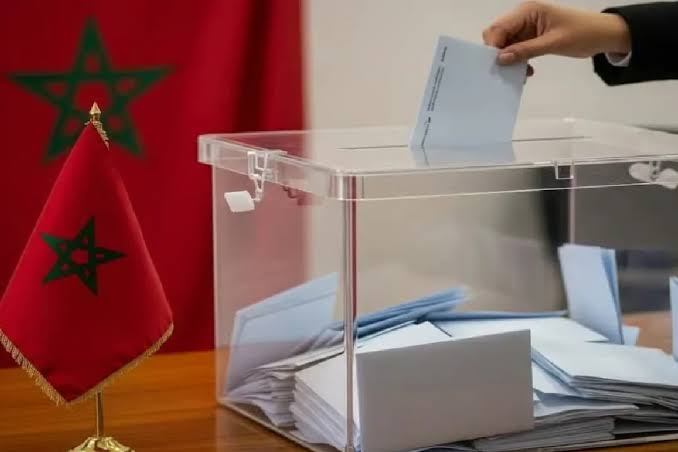
As the elections on September 23 approach, political parties are rolling out their programs, slogans, and promises. Purchasing power, employment, healthcare, education, and an increase in the minimum wage are all part of the agenda. Commitments abound. However, in a Morocco that is rapidly transforming ahead of 2030, one crucial question arises: is the political class truly capable of keeping pace with the changes in the country?
On September 23, Moroccans will head to the polls. A new political chapter will begin, complete with its share of programs, meetings, promises, and declarations.
As with every electoral event, political parties will pledge to create more jobs, provide better healthcare, enhance the education system, and boost purchasing power.
On paper, the proposals sound appealing.
In reality, however, a much tougher question must be addressed: who will deliver on these promises, with what resources, and within which timelines?
Struggling to Renew
One of the key issues in this election lies in the renewal of the political class.
For several years, the Moroccan political landscape has remained dominated by well-known parties and political figures. While slogans and campaign posters may change, the faces and rhetoric often leave a feeling of déjà vu.
Yet, the Moroccan citizen has also changed.
More connected, informed, and exposed to global economic realities, the public is now less responsive to vague promises.
They no longer just ask the parties, “What is your program?”
Now, they demand: “Who will implement it? How much will it cost? Where will you find the funding? And why wasn’t this done before?”
A series of questions that future candidates will need to answer beyond mere slogans.
A Minimum Wage of 5,000 Dirhams: An Attractive Promise, But at What Cost?
The issue of the minimum wage is sure to play a prominent role in the electoral debate.
Raising the minimum wage to 5,000 dirhams may initially appear to be a socially attractive measure. For workers, an increase in income is, of course, an improvement in purchasing power.
However, behind the electoral promise lies a much more complex economic equation.
A significant increase in labor costs mechanically burdens businesses, particularly in labor-intensive sectors with thin margins.
Moreover, Morocco must consider its attractiveness to foreign investors.
Why do they come to Morocco?
For its stability, proximity to Europe, infrastructure, ports, industrial zones, trade agreements, and a mix of competitive production costs and available skills.
If labor costs rise substantially, international investors will have to reevaluate their calculations.
Thus, it’s not just a matter of asking: “Can we raise the minimum wage to 5,000 dirhams?”
The real question is: “Can we increase wages while maintaining Morocco’s competitiveness?”
The challenge lies here: to create more wealth and productivity before promising greater distribution.
Healthcare, Education, Unemployment: Where Are the Skills?
Significant social questions abound.
Healthcare remains a major challenge. Education is likely one of the most pressing issues facing the country. And unemployment, particularly among the youth, continues to be a central concern.
But another question deserves attention: do the parties really have the skills needed to implement these reforms?
A healthcare reform doesn’t simply mean announcing more hospitals.
It requires doctors, nurses, equipment, funding, effective governance, and an organization capable of operating day-to-day.
Education cannot be reformed merely by changing curricula. It demands a long-term vision, appropriate teacher training, and deep reflection on the skills Morocco will need in the future.
As for unemployment, it will not disappear simply through the announcement of hundreds of thousands of jobs.
A sustainable job necessitates a productive economy, competitive businesses, investment, innovation, and above all, skills that meet market needs.
Yet, Morocco has numerous skilled professionals and talents across its companies, administrations, universities, and industrial sectors.
The question is whether these skills are sufficiently present within political structures and whether they can genuinely contribute to public decision-making.
A Country Moving at High Speed
This is where Morocco’s paradox emerges.
While political debates sometimes revolve around the same old formulas, the country itself has undergone profound changes.
Highway infrastructure, ports, high-speed trains, industrial zones, renewable energies, automotive and aerospace industries, tourism, logistics, and digitalization: Morocco has embarked on a deep transformation of its economy and territory.
The Kingdom now aims to compete at a different level.
This evolution is also aligned with the vision for 2030, particularly with the upcoming organization of the World Cup alongside Spain and Portugal.
And it is this contrast that is striking.
Morocco sometimes seems to be advancing faster than its political discourse.
Citizens can witness the transformations taking place in their country and recognize the central role that King Mohammed VI plays in this modernization drive and in major structuring projects.
Yet, they may also wonder why some in the political class do not always evolve at the same pace.
Morocco is building infrastructures capable of welcoming the world in 2030.
But can it develop an education system that adequately prepares Moroccans for 2030 at the same rate?
Morocco is attracting international industrial investments.
But can it adequately train enough young people to fill the jobs of tomorrow?
Morocco is modernizing its cities, networks, and infrastructures.
But can it modernize its public services with the same speed?
Citizens Demand Efficiency, Not Miracles
By 2026, Moroccans may not even be seeking miracles.
They want efficiency.
A functioning hospital. A school that educates. A job that allows for a dignified living. An administration that simplifies life instead of complicating it.
Above all, they want to know where their country is headed.
Electoral promises must therefore withstand the test of economic reality.
Because making promises is easy.
Funding, hiring, training, producing, and reforming are far more challenging.
An electoral pledge may fill a meeting hall.
A successful reform, on the other hand, truly transforms citizens’ lives.
Can the Morocco of 2030 be governed using the recipes of yesterday?
The year 2030 represents a historic opportunity.
The World Cup can accelerate investments, tourism, infrastructure improvements, and international visibility for the Kingdom.
But true success will not solely be measured by the number of stadiums built, hotels opened, or kilometers of highways constructed.
It will be measured by Morocco’s ability to translate this momentum into sustainable growth, jobs, skills, and tangible improvements in citizens’ daily lives.
The elections on September 23 could thus represent more than just a change in majority or a reshuffling of seats.
They could serve as a real-life test of the political class’s ability to support a country that has already shifted to a new level.
The Morocco of 2030 will likely not be governable with the political strategies of 2010.
Greater skills, responsibility, transparency, speed of execution, and above all, the capacity to tell the truth to citizens are needed.
Even when that truth is less popular than a promise of 5,000 dirhams.
After all, citizens can accept a government saying, “We cannot do that yet.”
What they are far less likely to accept is being promised that it will be done tomorrow… when everyone knows it may be the day after tomorrow.
On September 23, the ballots will speak.
The question remains whether, this time, the parties will truly listen.
Because Morocco is already moving towards 2030.
Thus, the real question is no longer whether the country wants to shift into a higher gear. It’s whether its political class is capable of stepping up to the challenge.