Maroc PME Stops in Casablanca to Accelerate the Growth of Small and Medium Enterprises
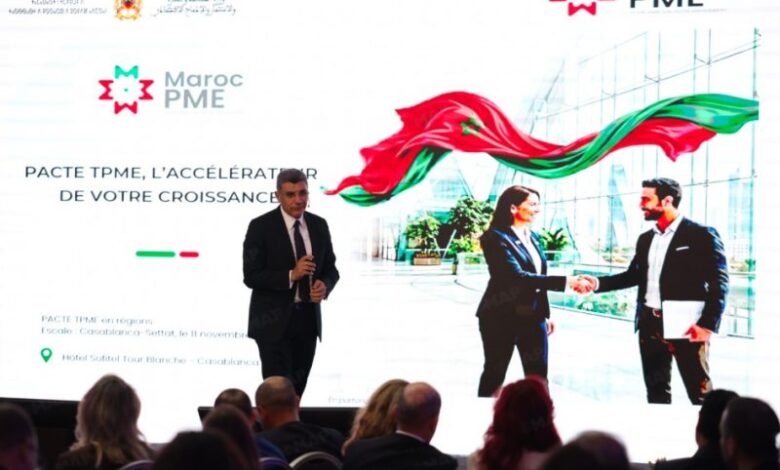
Maroc PME Launches National Caravan to Support SMEs Across Regions
Through the national caravan "PACTE TPME in Regions," Maroc PME aims to bring its support systems closer to businesses, offering tailored solutions that meet their maturity level, needs, and development ambitions.
On Wednesday, Maroc PME held a new stage of its national caravan "PACTE TPME in Regions" in Casablanca, focusing on presenting the mechanisms of the Plan for Accelerating Growth and Transformation for very small, small, and medium enterprises (PACTE TPME).
Under the theme "PACTE TPME: The Accelerator of Your Growth," this event is part of a nationwide tour that traverses all twelve regions of the Kingdom. The initiative seeks to bring entrepreneurial support mechanisms closer to business owners while taking into account the economic specifics and needs of each territory.
This Casablanca stage follows the program’s official launch on November 3 in Salé. It aims to strengthen interactions with regional economic stakeholders, facilitate businesses’ access to proposed solutions, and promote a better understanding of the various mechanisms available.
Tailored Support for Business Profiles and Ambitions
During this occasion, Anouar Alaoui Ismaili, Director General of Maroc PME, presented the PACTE TPME as a new approach to public support, based on an integrated and differentiated offering. This approach considers each company’s maturity level, needs, and prospects, aiming to strengthen their activities and support their transition to new growth stages.
The program is structured around four complementary axes: "Structuring & Fundamentals," "Resilience," "Competitiveness," and "Growth." These orientations are broken down into eight mechanisms covering several areas, including management capacity building, performance improvement, quality enhancement, environmental transition, and accelerating business development.
Alaoui Ismaili also emphasized the importance of this second stage of the caravan in the Casablanca-Settat region, considering its economic weight and the diversity of its entrepreneurial fabric. According to him, this meeting serves as an opportunity to better understand the expectations of regional businesses and connect the PACTE TPME mechanisms with the daily realities they face.
SMEs: A Key Driver of Productive Sovereignty
Anwar Radi, President of the regional representation of the General Confederation of Moroccan Enterprises (CGEM) El Jadida-Sidi Bennour, stressed the need to enhance the productivity of SMEs, their capacity for investment, and their contribution to wealth creation.
He urged a shift in the perception of SMEs, from viewing them merely as structures in need of support to recognizing them as potential economic players capable of developing into partners for larger companies and essential pillars of national productive sovereignty.
In this context, he highlighted the significance of the PACTE TPME, which provides a structured and tailored support chain based on each company’s maturity level and development prospects. Radi also underlined the importance of territorial proximity, streamlining procedures, and improving coordination among various stakeholders to ensure effective participation of businesses in the program.
Direct Engagement with Entrepreneurs
The event featured a detailed presentation of the support offerings of the PACTE TPME and the various mechanisms deployed by Maroc PME. It also facilitated discussions with regional economic actors about the main challenges related to the development of very small, small, and medium enterprises.
Individual meetings with agency teams allowed entrepreneurs to present their needs, learn about the conditions for accessing the mechanisms, and receive personalized guidance towards solutions that fit their projects.
Launched on April 29, 2026, the PACTE TPME represents one of the operational expressions of Maroc PME’s strategic development plan, "ORBIT 2030." Through this program, the agency aims to strengthen the resilience of the national productive fabric and foster the emergence of a new generation of competitive enterprises capable of significantly contributing to value creation and the economic development of the Kingdom.