Morocco: The Tangier-Marrakech High-Speed Train and Regional Trains Expected to Transform Mobility by 2029
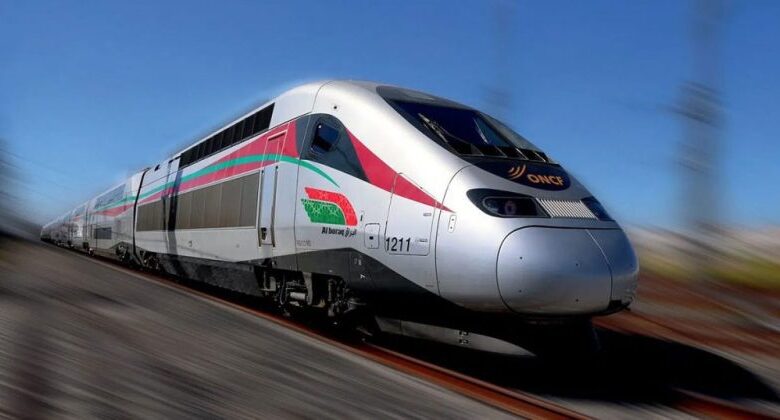
Transformative Railway Projects Set to Reshape Morocco’s Transportation Landscape by 2029
Major railway projects currently underway are poised to redefine the transportation landscape in Morocco by 2029. Presenting his department’s outlook before the House of Representatives, the Minister of Transport and Logistics, Abdessamad Kayouh, highlighted the anticipated impact of the high-speed train line connecting Tangier to Marrakech and future regional trains on urban and interurban mobility.
The Moroccan railway network is on the brink of entering a new phase of development. The Tangier-Marrakech high-speed line (LGV), along with the planned regional train projects in several major cities, is expected to revolutionize travel and enhance connectivity among the Kingdom’s main economic hubs by the target date of 2029.
This was stated by the Minister of Transport and Logistics, Abdessamad Kayouh, during his budget presentation before the Infrastructure Commission in the House of Representatives on Wednesday.
High-Speed Rail: Connecting Major Cities and Mohammed V Airport
Among the key structural projects discussed by the minister is the extension of the high-speed train line to Marrakech. According to Abdessamad Kayouh, this infrastructure will enable travel from Tangier to Rabat in just one hour, while the journey from Rabat to Mohammed V International Airport will take approximately 35 minutes.
The connection between Mohammed V Airport and the high-speed network is also a crucial element of this strategy. This link aims to facilitate transfers between air and rail transport, allowing international travelers to continue their journey to Marrakech by train.
The goal of this connectivity is to improve travel efficiency and enhance the integration of various transportation infrastructures.
Regional Trains to Streamline Urban Mobility
In parallel with the high-speed rail developments, regional train projects are planned for Casablanca, Rabat, and Marrakech. These new services aim to improve daily commuting within major urban areas and alleviate pressure on the road network.
The expansion of these rail services is intended to provide users with new alternatives while supporting urban expansion and the growing mobility needs in the country’s key regions.
Maritime Transport: A Strategic Priority for External Trade
Touching on maritime aspects, Abdessamad Kayouh also advocated for the establishment of a competitive national merchant fleet.
The minister emphasized that 97% of the Kingdom’s imports and exports are conducted via maritime routes, underscoring the strategic importance of this sector in Morocco’s commercial exchanges.
In this context, the development of a national fleet is seen as a significant step in enhancing the country’s logistical capabilities and gaining control over parts of its transport chains.
Through these diverse projects, Morocco aims to evolve its mobility system by combining railway modernization, improved interconnectivity of infrastructures, and reinforcement of maritime transport. The 2029 deadline thus represents a crucial timeframe for the realization of several of these ambitious goals.