Morocco Strengthens Its Position in the African Air Travel Market with 2.21 Million Seats in August
Morocco is continuing its expansion in the African air transport landscape. Airlines operating from Moroccan airports have reported a significant increase in their scheduled capacity for August 2026, driven by rising demand and enhanced connections with international markets.
According to the latest data from the Official Airline Guide (OAG), flights departing from Moroccan airports are expected to offer approximately 2.21 million seats during August, marking an annual increase of 8.8%, which translates to nearly 180,000 additional seats compared to August 2025.
With this level of capacity, Morocco maintains its third position in Africa, behind Egypt, which leads with around 3.19 million seats, and South Africa, holding second place with nearly 2.34 million seats.
Morocco Bridges the Gap with South Africa
Morocco’s growth comes amidst a rapidly expanding African aviation market. The scheduled capacity on the continent has increased by 8.4%, reaching approximately 27.3 million seats in August 2026.
Morocco thus accounts for over 8% of Africa’s air transport supply. Notably, the Kingdom is reducing its gap with South Africa significantly.
While the difference between the two countries stood at nearly 245,000 seats in August 2025, it has shrunk to about 127,000 seats one year later, confirming the acceleration of Moroccan air transport offerings.
Royal Air Maroc Accelerates Capacity
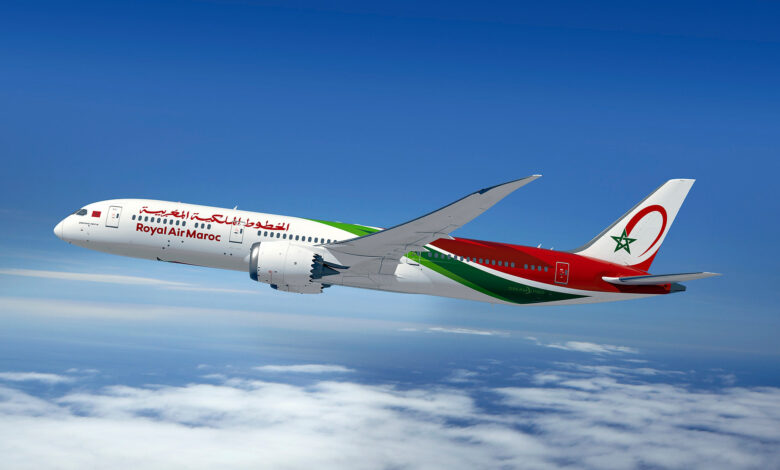
This dynamic is notably supported by the performance of Royal Air Maroc, which increased its capacity to approximately 868,100 seats in August 2026, compared to 767,100 during the same month the previous year.
The national carrier boasts an annual growth rate of 13.2%, equating to nearly 101,000 additional seats.
This increase allows Royal Air Maroc to maintain its status among the leading airlines on the continent, ranking fourth in Africa in terms of capacity, behind Ethiopian Airlines, Safair, and EgyptAir.
Casablanca Confirms Its Role as an Air Hub
On the infrastructure front, Mohammed V International Airport in Casablanca continues to strengthen its position among Africa’s primary airport hubs.
The number of scheduled seats departing from the airport is expected to approach 800,000 in August, an increase of 10.1% year-on-year. Casablanca maintains its fourth place on the continent, trailing behind the platforms in Cairo, Addis Ababa, and Johannesburg.
This performance underscores the strategic role of Morocco’s economic capital as a connecting platform between Morocco, Europe, Africa, and other international markets.
Europe: The Main International Destination
Regionally, North Africa leads in terms of scheduled air capacity, with around 7.9 million seats in August 2026.
International routes account for nearly 80% of Africa’s air transport supply, highlighting the importance of the continent’s connections with outside markets.
Europe remains the primary international destination from Africa, followed by the Middle East. This arrangement gives North African countries, and notably Morocco, a strategic position in the flow of travelers between the African continent, Europe, and global markets.
The growth of Moroccan air transport offerings reflects the Kingdom’s rising prominence as a gateway between Africa and Europe, bolstered by the expansion of Royal Air Maroc, the development of airport infrastructure, and the continued rise in international demand.