
Maersk Strengthens Rail Connection Between Tangier and Casablanca
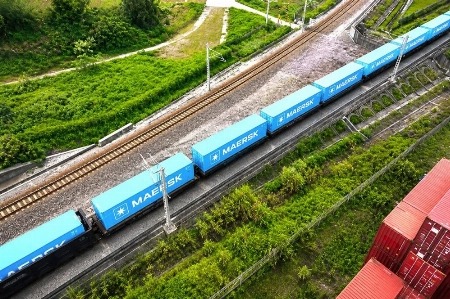
Optimizing Goods Flow: Maersk’s New Logistics Approach in Morocco
In light of the increasing volume of port traffic in Morocco, logistics operators are seeking new solutions to streamline the movement of goods. Maersk is placing greater emphasis on the synergy between the ports of Tangier and Casablanca, launching a high-frequency rail link that connects the two principal economic and port hubs of the Kingdom.
On August 14, the Danish group unveiled its new logistics framework, which is now fully operational. This system is based on regular train departures between Tangier and Casablanca, aimed at providing businesses with more predictable transit times and reducing their reliance on a single mode of transport.
Tangier as the Entry Point, Casablanca as the Industrial Hub
The model developed by Maersk leverages the complementary roles of the two major port areas. Tangier serves as a crucial maritime gateway to Morocco, thanks to its connectivity to major international trade routes.
Conversely, Casablanca is home to a significant portion of the Kingdom’s industrial and commercial activity. By utilizing rail transport, this initiative directly connects the international maritime access from the North to the country’s main economic region.
The objective is to create an integrated logistics chain where maritime transport, rail, and domestic distribution work in harmony.
Casablanca Port Facing Growing Volumes
This strategy emerges amid a significant increase in traffic at the port of Casablanca. According to data shared by Maersk, the port infrastructure handled 17 million tons of goods in the first half of 2026.
In June alone, traffic reached 3.53 million tons—an increase of 32% year-on-year. The port represents about 35% of national port traffic.
While the concentration of volumes is beneficial for Casablanca, it can also present operational constraints. Maersk has noted instances of congestion and limited flexibility in certain situations.
Rail Transport to Improve Flow
In this context, the rail connection between Tangier and Casablanca aims to better distribute goods traffic. It provides businesses with an alternative to reliance solely on road transport.
The regularity of departures and predictability of transit times are expected to enhance stock management and supply planning.
This organization could also help strengthen the resilience of supply chains by allowing companies to diversify their routes and entry points into the Moroccan market.
A Logistics Chain Extending to the Last Mile
Maersk’s system does not stop at transportation between the two cities; the company is looking to offer a solution that covers the entire journey of goods, from their arrival by sea to their final destination.
After maritime transport to Tangier and subsequent rail transit to Casablanca, Maersk also provides customs clearance, domestic storage, and final delivery by truck.
This approach enables shippers to centralize multiple stages of their logistics chain with a single point of contact.
According to Ruben Moratinos, Head of Sales Maghreb at Maersk, the connection between Tangier and Casablanca is intended to facilitate the movement of goods towards Morocco’s primary commercial center, while providing companies with increased opportunities to diversify their supply chains.
A Strategic Corridor for Moroccan Logistics
Beyond Maersk’s specific strategy, the development of this connection highlights a broader issue concerning Morocco’s logistical competitiveness. The increase in port volumes necessitates adequate capacity to swiftly move goods to various production and consumption areas.
In this perspective, rail can play a complementary role to road transport and help diversify logistical circuits.
The Tangier-Casablanca corridor thus brings together two significant advantages: Tangier’s strong international maritime connectivity and Casablanca’s economic and industrial weight.
For Maersk, this synergy aims to make supply chains more consistent, predictable, and resilient, while also reducing pressure on port infrastructures faced with a continuous rise in volumes.