Souss-Massa: A 15 Billion DH Desalination Plant
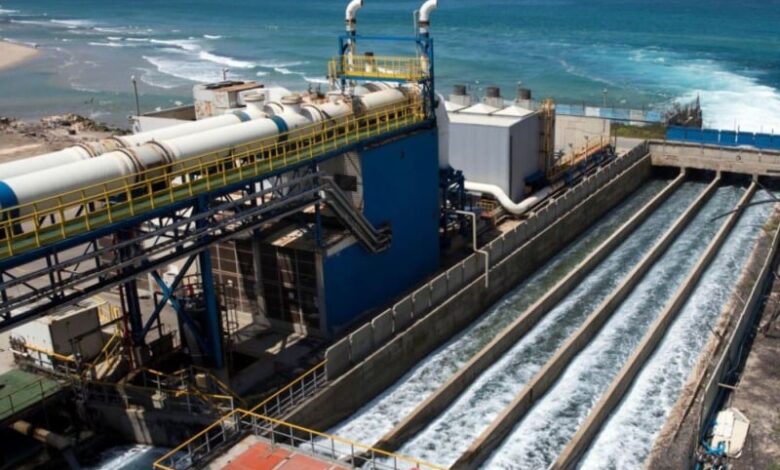
The Souss-Massa region is gearing up to host a significant new seawater desalination project. A proposed facility, planned to be located between Tiznit and Chtouka-Aït Baha, could mobilize an investment of approximately 15 billion dirhams and achieve a production capacity of 350 million cubic meters of water per year.
This initiative, which is currently undergoing studies, aligns with Morocco’s strategy to diversify its water resources and enhance water supply security in areas experiencing significant pressure on conventional water sources.
350 million cubic meters of water produced annually
The future station is expected to produce up to 350 million cubic meters of desalinated water each year. Of this total, 250 million cubic meters will be allocated for agricultural irrigation, while the remaining 100 million cubic meters will be dedicated to drinking water supply.
This distribution aims to meet the needs of both the local population and the agriculture sector, which is vital to the regional economy.
As such, the project is set to secure drinking water supply while also supporting agricultural activities in Souss-Massa, a region that has faced increasing pressure on its water resources for several years.
Tiznit, Chtouka-Aït Baha, and Taroudant in focus
The future infrastructure will directly benefit three provinces: Tiznit, Chtouka-Aït Baha, and Taroudant.
To ensure the distribution of the produced water, the station will be connected to a hydraulic network encompassing the basins of the Massa, Guerdane, and Souss.
This system aims to better distribute resources among different areas and strengthen supply to both agricultural zones and local communities. It may also help alleviate the pressure on groundwater levels due to irrigation demands.
A station powered by renewable energies
Another noteworthy feature of the project is that the future station is expected to operate entirely on renewable energy.
This approach reflects the desire to minimize the environmental footprint of desalination infrastructures while controlling operational costs. The use of renewable energies is also a critical aspect for large desalination facilities, which are notably energy-intensive.
A project developed under a public-private partnership
The project is set to be developed under a public-private partnership (PPP) model.
Technical, environmental, and land studies are currently being expedited alongside the continuation of necessary administrative procedures.
At this stage, however, no definitive timeline for the commencement of construction or the commissioning of the station has been announced.
A further strengthening of Morocco’s water security
This new station is part of a broader national program aimed at accelerating desalination development in Morocco.
In May 2026, the Minister of Equipment and Water, Nizar Baraka, stated that the Kingdom’s annual production capacity of desalinated water had reached 420 million cubic meters, with ambitions to increase this to 1.7 billion cubic meters. He also mentioned the Tiznit station project, which could reach a capacity of 350 million cubic meters per year.
The Souss-Massa project is thus expected to further bolster the use of desalination as a complementary supply source, particularly for regions facing water scarcity.
For the Kingdom, the goal is now to sustainably diversify water sources by combining reservoir resources, transfers between basins, groundwater, and desalinated water production.