Morocco Offers 500 Quintals of Fertilizer to Panama
Morocco Strengthens Agricultural Cooperation with Panama Through Fertilizer Donation
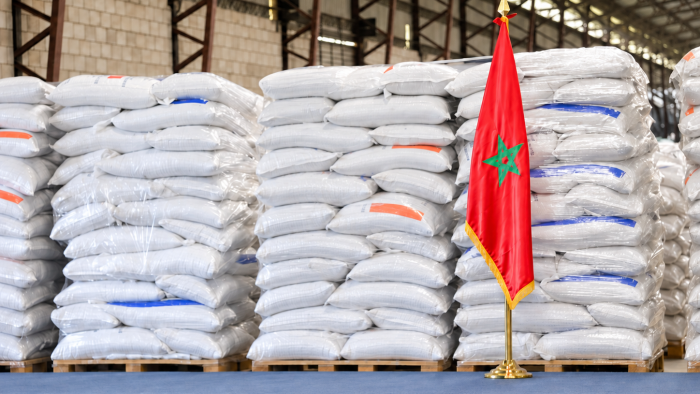
Morocco is enhancing its agricultural cooperation with Panama by donating 500 quintals of fertilizer aimed at benefiting family farmers and school gardens. This information was reported in the monthly report from Panama’s Ministry of Agricultural Development and Livestock (MIDA), published on September 14.
The donation, which was handed over by the Embassy of the Kingdom of Morocco, was received by the regional MIDA office in West Panama. The Panamanian agricultural services are expected to utilize this donation for the benefit of small producers and institutions engaged in school gardening programs.
130 Producers Trained in Fertilizer Use
In the West Panama region, the plant protection coordination team organized training for 130 producers from El Cacao and Capira. The aim was to support them in utilizing the fertilizers made available through the Moroccan donation.
Additionally, in the same province, MIDA has also distributed seeds, laying hens, and feed to 25 families participating in the eco-agricultural gardening program, "Familias Unidas."
Furthermore, agricultural authorities granted legal status to the agroforestry association Tierras de Canaán, which comprises 17 producers in Nuevo Emperador, within the Arraiján district.
Several Regions Benefit from Fertilizer Distributions
The MIDA’s monthly report also highlights other fertilizer distribution operations across Panama.
In the Ngäbe-Buglé comarca, the regional directorate distributed 1,564 quintals during August. Of this volume, 1,532 quintals were allocated to producers, while 26 were divided among 13 schools in partnership with the Caja de Ahorros. An additional six quintals were assigned to a facility newly incorporated into the program.
The Los Santos regional directorate distributed 500 quintals. Nationally, rural development services provided fertilizers to 15 schools and 143 beneficiaries of family farming programs.
In Colón province, 39 families also received fertilizer in August, bringing the total number of beneficiary families to 175 since the beginning of the year.
MD2 Pineapple Focused on Export
The report also emphasizes the agricultural activity in West Panama, particularly the production of MD2 variety pineapples.
The province has over 1,400 hectares dedicated to this crop, with more than 90% of the production intended for export. In August, producers shipped 124,783 boxes of pineapples, totaling 14,266.87 tons.
These exports reached eleven markets, including the United States, Spain, the Netherlands, Colombia, Saudi Arabia, Italy, France, Canada, Korea, Curaçao, and Turkey.
This recorded volume represents a 0.54% increase compared to August 2025, with 673 additional boxes shipped.
The region also exported 1,119.68 tons of watermelons to Europe, along with 2,640 kilograms of pitaya to European and Asian markets. Additionally, 193 boxes of orchids were sent to the United States and Central America.
Phytosanitary Measures Support Exports
To facilitate these agricultural flows, regional services issued 98 phytosanitary export certificates in August, of which 96 were for pineapples and two for heart of palm.
Fifteen exporting companies were inspected during the month, bringing the total number of phytosanitary certificates issued since the beginning of the year to 973.
Authorities also installed 32 traps aimed at combating the pineapple weevil, benefiting 15 producers in the areas of Zanguenga, Las Yayas, Llanito Verde, and Iturralde.
Panama Faces Effects of El Niño Phenomenon
The MIDA report also indicates a rainfall deficit in several provinces, attributed to the El Niño phenomenon.
In West Panama, a technical agro-climatic roundtable was convened with over 50 participants, supported by the Panamanian Institute of Meteorology and Hydrology (IMHPA), to discuss forecasts regarding rainfall.
The projections indicated low rainfall in August and November, while an increase in precipitation was anticipated in September and October.
In light of the challenges faced by some producers, the national directorate for rural engineering and irrigation advocated before the national assembly’s budget committee for a budget transfer of 2,305,365 balboas.
These funds are specifically intended to finance the acquisition of three drilling rigs to support producers impacted by the consequences of the El Niño phenomenon.