Maersk Increases Its Capacity to the Port of Casablanca by 48%
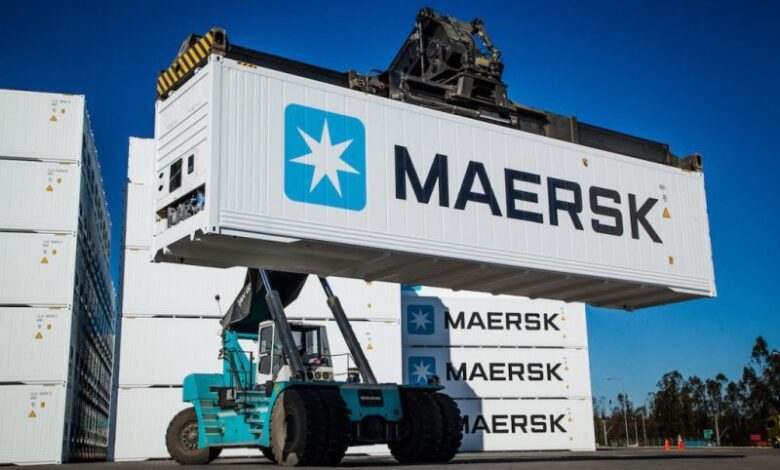
Danish Shipping Giant Maersk Expands Maritime Services to Casablanca Port
Danish shipping company Maersk has announced a significant enhancement of its services to the port of Casablanca, increasing transportation capacity on this maritime route by 48%. This decision, made public on October 22, coincides with the centenary of the first visit of one of the group’s vessels to the Moroccan metropolis. It underscores the importance of the Moroccan market in Maersk’s logistics strategy, as the company aims to meet the needs of both importers and exporters while diversifying its transportation solutions within the Kingdom.
Maersk Enhances Maritime Services to Casablanca
The announcement was made by Ruben Moratinos Collantes, Maersk’s commercial director for the Maghreb, following a meeting with the company’s clients and partners. According to Moratinos, the company now offers a connection to the port of Casablanca with an additional 48% in capacity.
This increase pertains to the maritime transport space available to economic operators on this route. It does not, however, indicate a corresponding rise in the port’s physical capacity, which is influenced by the docks and handling equipment. Actual transported volumes will vary based on reservations, vessel fill rates, and shipper demand.
With this enhancement, Maersk aims to strengthen its offerings directed toward one of Morocco’s primary commercial and industrial hubs, in a context marked by growing trade and an increasing demand for efficient logistics solutions.
Casablanca Port Accounts for Nearly 35% of National Traffic
Casablanca port holds a strategic position in Morocco’s international trade. According to data from the National Ports Agency (ANP) referenced by Maersk, the infrastructure handled 17 million tons of goods in the first half of the year.
In June alone, the port recorded a traffic of 3.53 million tons, an increase of 32% year-on-year. Maersk further estimates that Casablanca accounts for roughly 35% of the country’s port activities, confirming its significance in supplying the Moroccan market and in import-export operations.
However, this importance is accompanied by operational challenges. Maersk has noted frequent congestion issues and limited flexibility at the Casablanca port. These difficulties present challenges for companies striving to manage delivery timelines and optimize their supply chains.
Tanger Med: A Lever to Streamline Goods Flow
To navigate some of these constraints, Maersk has amplified the role of Tanger Med in its logistics operations in Morocco. On August 14, 2026, the company introduced a high-frequency rail link between Tanger and Casablanca, which is already operational and designed to transport containers disembarked at Tanger Med to the economic capital.
This multimodal solution combines maritime transport to the northern port of the Kingdom, rail freight to Casablanca, customs clearance options, warehousing, and final delivery by truck. The goal is to facilitate the movement of goods to the country’s main commercial center while providing shippers with greater flexibility in organizing their operations.
Nonetheless, the rail link between Tanger and Casablanca and the strengthening of the direct maritime service to Casablanca represent two distinct offerings in Maersk’s catalog. They cater to different needs while adhering to the overarching strategy of diversifying logistics routes.
Maersk Also Reconfigures Routes to West Africa
The enhancement of Casablanca’s services comes at a time when Maersk is reorganizing its regional maritime network. On October 19, the company announced a revamping of its services between Western Mediterranean and West Africa, set to take effect in the third week of December 2026.
The new WAF1 service will connect Algeciras in Spain, Tanger, and Dakar in Senegal. Meanwhile, the WAF5 line will serve Monrovia, Abidjan, Takoradi in Ghana, San-Pedro in Côte d’Ivoire, and Lagos, with network extensions to Algeciras and Tanger.
This reorganization aims to tailor maritime connections to meet the trade needs between Europe, Morocco, and West African markets. The Kingdom’s geographic position and its port infrastructures make it a crucial hub for the flow of goods between these regions.
Morocco Bridge Enhances the Group’s Logistics System
Since February 2024, Maersk has also been operating Morocco Bridge, a multimodal solution that combines rail and road transportation in Morocco with a ro-ro shuttle that runs twice daily between Tanger and Algeciras.
At the launch of this system, Emilio de la Cruz, General Manager of Maersk for Southwest Europe, highlighted the double-digit growth in the number of trucks heading to Spain and France.
With the 48% increase in capacity on its line to Casablanca, the development of rail solutions, and the restructuring of its services to West Africa, Maersk continues to bolster its logistics network in Morocco. The evolution of demand and operational conditions of the infrastructure will determine the extent to which these additional capacities translate into an increase in actual transported volumes.