DXN Launches Construction of Its Factory in Meknès Aiming for 250 Jobs
Malaysia’s DXN Holdings Begins Construction of New Factory in Meknès
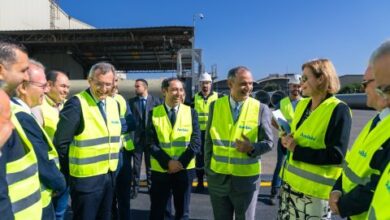
The Malaysian group DXN Holdings has commenced construction of its new factory in Meknès, which is set to become a regional industrial hub serving the markets of North Africa and Europe. The project has entered a new phase with the initiation of negotiations with Moroccan authorities regarding a definitive investment agreement, which will outline the subsidies and incentives provided to the company.
Located in the Agropolis industrial park on a plot of 80,765 square meters, this production facility marks the group’s first industrial presence in North Africa. It is expected to generate approximately 250 jobs and will enhance Morocco’s role in DXN’s international development strategy.
Ongoing Negotiations for an Investment Agreement
According to a press release from the group, DXN has secured its construction permit and has begun work on the site in Meknès. Previously, its subsidiary, Dexin Morocco, signed a memorandum of understanding on October 2 with the Ministry of Industry and Commerce, as well as with the Ministry of Investment, Convergence, and Public Policy Evaluation.
Discussions are now focused on finalizing a definitive investment agreement, which will establish the terms for public support and incentives intended to facilitate the project’s implementation.
DXN’s CEO, Prajith Pavithran, views this establishment as a significant milestone in the group’s international growth. He believes that Morocco will play a central role in supplying various markets, notably in North Africa, Europe, and the Middle East.
Spirulina and Ganoderma at the Heart of Production
The future Meknès factory will be dedicated to the production of spirulina and ganoderma-based products, with ganoderma being a mushroom widely used in certain Asian pharmacopeia traditions. These two product categories are among DXN’s primary commercial offerings.
The site is intended to function as a regional production center, complementing the unit that the group already operates in the Middle East. This organizational structure aims to bring industrial capabilities closer to the served markets and optimize supply chains.
For DXN, this establishment is expected to help reduce logistical delays and costs, while improving quality control and facilitating consumer access to the brand’s products. However, the tangible effects will depend on the ramp-up of the factory and the establishment of its production activities.
Approximately 250 Jobs Expected in Meknès
With nearly 250 jobs anticipated, the project represents a new opportunity for industrial development in Meknès and its surrounding region. Its location within the Agropolis industrial park aligns with the ongoing infrastructure development aimed at attracting international investors and production activities.
Beyond the direct jobs created, the launch of the unit may also generate demands for services, transportation, logistics, and supply procurement. The scale of these benefits will depend significantly on the selected industrial organization and the level of local integration of activities.
The signing of the definitive agreement and the progress of the construction site will be the next important steps in clarifying the conditions for the project’s realization.
DXN Aims to Increase Global Factory Count from 14 to 21
The investment in Morocco is part of a broader industrial expansion strategy. The Malaysian group plans to increase its production network from fourteen to 21 factories to support the growth of its operations and strengthen its presence across several continents.
For the fiscal year ending February 28, 2027, DXN has allocated an investment budget of up to 500 million ringgit, approximately 1.2 billion dirhams. This expenditure is intended to bolster industrial capabilities in Malaysia, Brazil, Morocco, Peru, and Bolivia.
The program also includes developing plantations in Bolivia, Brazil, and Malaysia, aiming to secure the group’s raw material supply and better manage various stages of its value chain, from cultivation to marketing.
Morocco’s Role in the Group’s International Strategy
Present in several international markets, DXN relies on integrating its operations and the proximity between its production sites and customers. The Meknès factory is expected to contribute to this framework by enhancing production capacities aimed at North Africa and Europe.
The group also plans to continue exploring new and underutilized markets, particularly in Africa and Europe. In this context, Morocco appears to be an industrial anchor supporting its regional development.
The commencement of construction signifies a tangible advance for the project, even though several parameters, including the definitive investment conditions and the commissioning schedule, remain to be clarified. Ultimately, DXN aims to make its Meknès site a crucial link in its international industrial network, with clear goals for production, supply, and employment.