Natural Phosphate: Morocco, the EU’s Second Largest Supplier by 2026
The European Union’s Importation of Moroccan Natural Phosphate
Between January and September 2026, the European Union imported natural phosphate from Morocco worth 137 million euros, approximately 1.51 billion Moroccan dirhams. This analysis, released on Tuesday, October 27, by the Swedish group Ragn-Sells, which specializes in waste management and recycling, positions Morocco as the second-largest supplier of natural phosphate to Europe, trailing only Russia, which recorded sales of 170 million euros during the same period.
These figures underscore the significant role Morocco plays in the European natural phosphate market, while also highlighting the increase in Russian exports. They further illustrate the distinction between imports of raw ore and those of processed phosphate products, a sector where Morocco holds a major position.
Morocco Accounts for Over 30% of European Imports
With sales of 137 million euros in the first nine months of the year, Morocco constitutes approximately 30.6% of the EU’s spending on natural phosphate imports from outside the European bloc. Russia leads with 170 million euros, equating to nearly 1.87 billion dirhams, and an estimated market share of 38%. The gap between the two countries reaches 33 million euros, with European purchases from Russian suppliers surpassing those from Morocco by nearly 24%.
South Africa rounds out the top three suppliers with 48 million euros (approximately 528 million dirhams), representing 10.7% of the imports in question. Other supplying countries collectively total nearly 92 million euros.
Based on these proportions, the European market for imported natural phosphate from third countries can be estimated at around 447 million euros for the period analyzed.
Rising Russian Exports in the Third Quarter
Available data indicates that competition between Moscow and Rabat has intensified throughout the year. In the first quarter of 2026, the EU purchased 53.8 million euros of Russian natural phosphate compared to 47.7 million euros from Morocco. Egypt was in third place with 11.6 million euros.
By the end of June, EU imports from Russia reached 105 million euros, making up 34% of the total in value. Morocco closely followed with 98 million euros, representing 32%, while Egypt had a total of 24 million euros, or 8%.
Comparing figures from the first half of the year to those at the end of September reveals approximately 65 million euros in Russian purchases in the third quarter, contrasted with 39 million euros for Morocco. However, these amounts are indicative, as they stem from the difference between two successive reports, and the most recent data from the European Commission remains provisional.
Throughout the first nine months of 2026, Russian imports rose by 17% year-on-year, according to Ragn-Sells, reaching their highest level for this period since 2016. This increase represents approximately 25 million euros more compared to the same period in 2025.
Natural Phosphate and Processed Fertilizers: An Essential Distinction
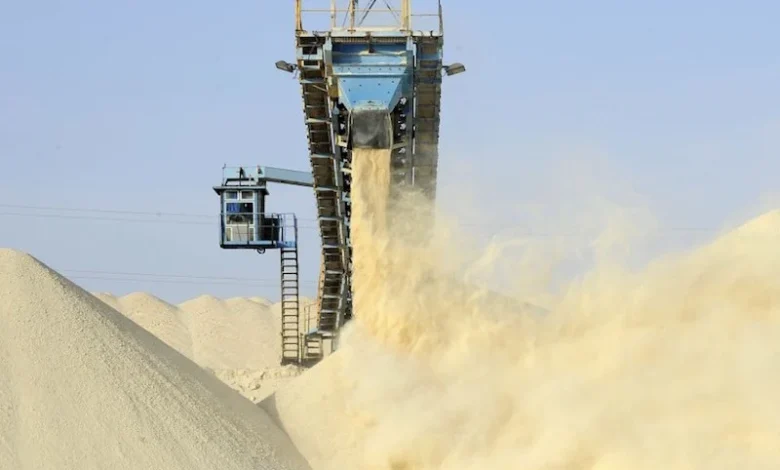
The 137 million euros attributed to Morocco exclusively involves natural phosphate, which refers to the raw material extracted before industrial transformation. This figure does not include Morocco’s exports of phosphoric acid, diammonium phosphate, monoammonium phosphate, or NPK compound fertilizers.
This distinction is crucial for understanding Morocco’s actual position in European trade. In 2025, when the analysis encompassed a broader range of products, including phosphates, phosphated fertilizers, and compound fertilizers, Morocco ranked as the top supplier to the EU, with sales totaling 1.6 billion euros (roughly 17.61 billion dirhams).
At that time, Russia was in second place with 890 million euros, followed by Israel, Norway, and Tunisia. Moroccan exports of processed products thus represent a significant portion of European supplies, the value of which far exceeds that of raw ore alone.
Phosphorus: A Strategic Raw Material for European Agriculture
The European Commission classifies phosphate rock and phosphorus among critical raw materials. These resources are essential for the production of mineral fertilizers and are also involved in animal feed production.
In agriculture, phosphorus plays a vital role and lacks direct substitutes for its main applications. However, extraction capacities within the EU remain limited. According to data cited by Ragn-Sells, the only operational phosphate mine in the EU, located in Finland, meets less than 10% of the agricultural needs of the Twenty-Seven.
This dependence on imports explains the focus on diversifying suppliers and securing supply chains. It also increases interest in solutions for recovering phosphorus from waste.
Ragn-Sells Advocates for the Development of Recycled Phosphorus
The analysis published by Ragn-Sells relies on the fertilizer trade dashboard from the European Commission’s Directorate-General for Agriculture. This tool aggregates customs data from Eurostat-Comext and European import surveillance statistics.
Simultaneously, the Swedish group advocates for the advancement of phosphorus recycling through its subsidiary EasyMining, which has developed the Ash2Phos process. This technology recovers over 90% of the phosphorus found in ashes resulting from the incineration of sewage sludge.
Ragn-Sells is currently constructing its first industrial plant in Germany to produce recycled calcium phosphate. The group draws on figures from European imports of natural phosphate from Russia and Morocco to argue for a revision of European regulations.
According to the company, current regulations still hinder the use of recovered phosphorus in animal feed. Therefore, the company seeks a review of this framework to encourage the valorization of this secondary resource.
Beyond supplier competition, the discussion centers on Europe’s capacity to reduce its dependence on imported raw materials. For Morocco, the challenge lies in solidifying its position in the European market, both in natural phosphate and processed phosphate products, while navigating a sector where supply security and circular economy issues are becoming increasingly critical.