Green Hydrogen: Six Moroccan Projects Move to Engineering Phase
Morocco Takes Significant Steps in Green Hydrogen Industry Development
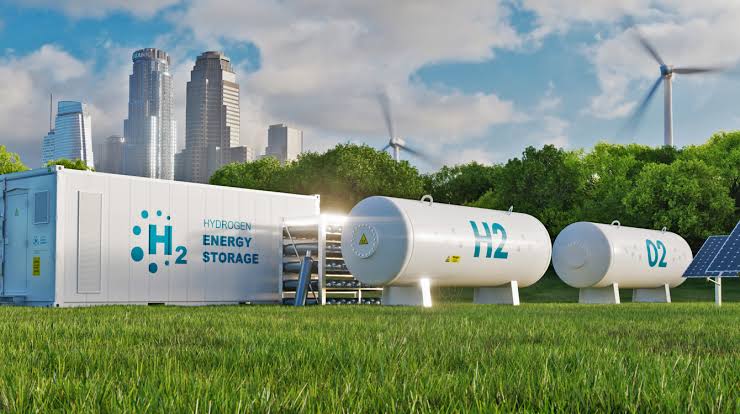
Morocco is making remarkable progress in the development of its green hydrogen industry. Six projects selected in the regions of Guelmim-Oued Noun, Laâyoune-Sakia El Hamra, and Dakhla-Oued Eddahab are moving into the preliminary engineering study phases (pre-FEED), followed by the basic engineering phase (FEED), according to the Ministry of Economy and Finance (MEF).
The total investment for these projects is estimated at $34 billion, which is approximately 334 billion dirhams. These initiatives are designed to harness 17.3 gigawatts of renewable electric capacity, install 6.5 gigawatts of electrolysis, and produce up to one million tons of hydrogen annually.
This development signifies a crucial advancement in structuring Morocco’s offerings in the green hydrogen sector. However, it does not mean that investments are definitively secured; technical studies, financing conditions, and final investment decisions remain critical for the realization of each project.
Focus on Three Southern Regions for Investment
The portfolio selected by Moroccan authorities includes two projects in the Guelmim-Oued Noun region, one in Laâyoune-Sakia El Hamra, and three in Dakhla-Oued Eddahab. The future industrial facilities will primarily focus on ammonia production. They will also be capable of producing methanol, synthetic fuels, and green steel.
The realization of these projects depends on the participation of various international and national groups from the energy, infrastructure, and industrial equipment sectors.
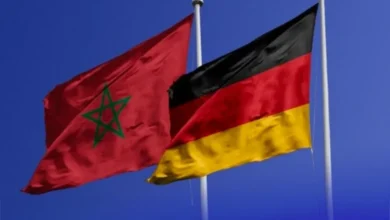
The ORNX consortium includes American Ortus Power Resources, Spanish infrastructure group Acciona, and German wind turbine manufacturer Nordex. Other investors include Taqa, a public Emirati group in partnership with Spanish energy firm Moeve (formerly Cepsa), Moroccan energy group Nareva Holding, and Saudi-listed company Acwa Power.
The last project is supported by Chinese groups United Energy Group and China Three Gorges.
Initially announced in March 2025 with a budget of 319 billion dirhams, the portfolio is now valued at $34 billion in official budget documents. The selected consortiums received land reservation contracts valid for six months, according to the Moroccan-German Energy Partnership.
Technical Studies Precede Investment Decisions
The transition to pre-FEED and FEED studies is a vital step in preparing the industrial facilities. The initial studies will specify the proposed processes, electricity and water needs, site locations for production units, necessary connections, and provide a preliminary cost estimate.
Subsequent FEED studies will define the technical configuration, project timeline, and budget. These milestones are critical before making the final investment decision.
However, the actual launch of the projects will depend on the findings of these studies, the mobilization of financing, the finalization of sales contracts, the acquisition of permits, and the specific conditions associated with each project. As a result, the six projects may progress according to different timelines.
Masen Tasked with Supporting Investors
The Moroccan Agency for Sustainable Energy (Masen) plays a central role in overseeing this new phase. According to the public enterprise report attached to the budget documents, Masen is responsible for providing support to selected investors and monitoring the pre-FEED and FEED studies of the chosen projects.
The Chbika project exemplifies the gradual advancement of such initiatives. On September 17, 2025, Masen successfully announced the completion of the pre-FEED studies for this project led by TotalEnergies H2, a subsidiary of the French TotalEnergies group. However, Chbika remains distinct from the six projects selected in March 2025.
For 2027, Masen’s investments are expected to reach 7.01 billion dirhams across its entire portfolio, according to the budget documents.
Significant Renewable Capacity for Morocco
The six green hydrogen projects collectively feature a renewable power capacity of 17.3 gigawatts. This capacity represents approximately 42% more than the total installed electric power in Morocco by the end of 2025, which is estimated at 12,214 megawatts.
Beyond solar and wind installations, their development will require electrolyzers, water supply systems, industrial conversion units, and infrastructure for shipping finished products.
The scale of equipment to be deployed underscores the significant investments necessary to establish an integrated industry, from renewable electricity production to the manufacturing of products aimed primarily at the ammonia, methanol, and synthetic fuels markets.
Realizing these ambitions will depend on the ability to convert studies into investment decisions, as well as securing essential financing and commercial outlets for the profitability of the installations.
Nador West Med at the Heart of Future Gas Infrastructure
In parallel with the development of green hydrogen, Morocco is preparing to enhance its gas infrastructure. The budget documents outline the establishment of a terminal at Nador West Med in the northeastern region of the Kingdom, designed for receiving, storing, and regasifying liquefied natural gas.
Its maximum capacity is set at five billion cubic meters per year. The facility will also include a 1,200-megawatt combined-cycle power plant and a gas pipeline of approximately 130 kilometers linking the terminal to the Maghreb-Europe gas pipeline.
The proposed network also includes a pipeline of about 220 kilometers towards Mohammedia, along with two branches of thirteen and nineteen kilometers serving Kénitra and Mohammedia, respectively.
A notice published on April 23, 2025, allowed the ministry to consult firms regarding these projects, with commissioning anticipated in 2027. The budget documents for 2027 now foresee a gradual execution of the various components.
Gas Capacity Expected to Reach Ten Billion Cubic Meters
In the medium term, the capacity of Morocco’s gas infrastructure is projected to reach ten billion cubic meters annually within five to six years, according to the roadmap presented by the ministry. This capacity is expected to be evenly distributed between the Nador terminal and a future Atlantic terminal.
Post-2030, planned projects include this second terminal, a regasification unit at the Dakhla Atlantic port, and new pipelines designed to complete the national network.
The ministry also anticipates a future connection with Mauritania and Senegal’s networks, in light of the development of the Atlantic African gas pipeline. Moreover, the proposed infrastructures are also seen as potentially compatible with the transport of hydrogen and other gases in the long term.
With the launch of studies for its major green hydrogen projects and the preparation of new gas infrastructures, Morocco is actively organizing its energy system. The next step will involve solidifying these projects on technical, financial, and industrial levels while confirming their implementation timelines.