Bourita Calls for Strengthening the International Response to Non-State Armed Groups
Title: Morocco Calls for Stronger International Response to Non-State Armed Groups at UN Assembly
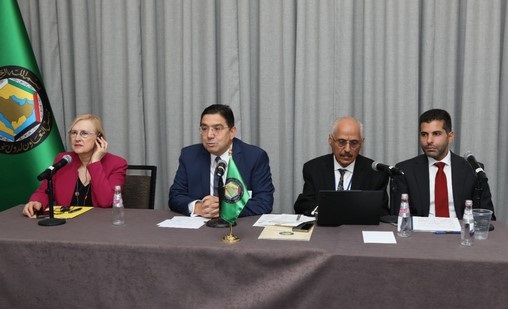
During a high-level meeting organized by the Gulf Cooperation Council (GCC) on the sidelines of the 81st session of the United Nations General Assembly in New York, Morocco’s Minister of Foreign Affairs, African Cooperation, and Moroccans Living Abroad, Nasser Bourita, called on Monday to enhance the international response to challenges posed by non-state armed groups.
Bourita reaffirmed Morocco’s stance on these groups, condemning in particular the actions of Houthi militias targeting the Kingdom of Saudi Arabia, as well as Iranian assaults that threaten the security and stability of GCC member states.
Additionally, the minister denounced actions that compromise freedom of navigation in maritime routes, which he asserted are being used as leverage to serve external interests.
He emphasized the increasingly significant threat posed by non-state armed groups, which now possess capabilities that enable them to exploit national vulnerabilities, cross borders, and connect various conflict theaters.
Bourita specifically referenced the situation in Africa, citing that nearly 24,000 deaths over the past twelve months have been linked to violence perpetrated by armed groups.
Moreover, the minister highlighted the growing convergence among terrorist groups, separatist movements, and criminal networks, as well as the use of armed groups as proxies in certain conflicts under strategies often referred to as "proxy warfare."
In light of these developments, Morocco advocates for earlier international action and strengthened cooperation to combat the financing of armed groups, the transfer of weapons, illicit trafficking, and the external support they may receive.
Bourita also called for enhancing accountability mechanisms and addressing gaps that enable certain armed groups to operate without holding their supporters responsible.
Finally, he underscored that the international response should not be limited to containing these groups but should also aim to prevent their ability to influence future conflicts while preserving the sovereignty and territorial integrity of states, as well as ensuring the security of their populations.