Brazil-Morocco: Jorf Lasfar at the Center of a Strategic Agricultural Mission
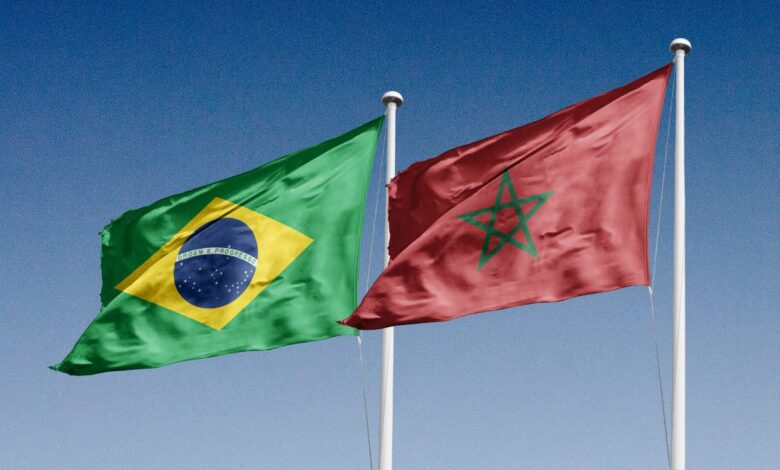
Brazil Strengthens Economic Ties with Morocco
Brazil is gearing up for a new phase in enhancing its economic relations with Morocco. A delegation from the Brazilian Ministry of Agriculture and Livestock is expected to visit the Kingdom from September 14 to 20, with scheduled stops in Casablanca, Rabat, and Jorf Lasfar, according to an administrative decision published on September 4 in the Diário Oficial da União.
The mission will be led by Brazilian Minister of Agriculture and Livestock, André de Paula, alongside Rafael Guimarães Requião, Deputy Secretary of Commerce and International Relations. The tour will also include a visit to Luanda, Angola.
Accelerating Morocco-Brazil Trade
This visit comes as trade between the two nations experiences significant growth. In the first seven months of 2026, Brazilian imports from Morocco reached $1.347 billion, roughly 12.46 billion dirhams. This marks a substantial increase from $990.31 million during the same period in 2025, reflecting a 36% rise, or an increase of $356.74 million within a year.
This momentum has allowed Morocco to strengthen its position as a supplier in the Brazilian market, moving up from 29th to 24th place during this period.
The trade relationship was already substantial in 2025, with Brazil importing $1.4299 billion worth of Moroccan goods, while its exports to the Kingdom amounted to $1.3656 billion. Consequently, Morocco gained a particularly strong foothold in the Brazilian market, becoming the leading African supplier to Brazil, surpassing Egypt, Nigeria, and Algeria.
Moroccan Fertilizers at the Core of Trade
The stop in Jorf Lasfar is especially significant considering the structure of bilateral exchanges. Brazilian statistics regarding the agro-industry do not directly account for Moroccan phosphates used as fertilizers, despite their essential role for Brazilian agriculture.
In 2025, products officially classified in the agri-food category accounted for only $33.09 million of the $1.4299 billion worth of goods imported from Morocco. A substantial portion of these Moroccan purchases falls under other customs categories, particularly phosphate inputs and fertilizers.
Available data for 2024 illustrates this dependence: chemical fertilizers, excluding raw fertilizers, made up 83.8% of Brazilian imports from Morocco, totaling nearly $1.2 billion. Morocco is thus one of Brazil’s main suppliers of chemical fertilizers, alongside Russia, China, and Canada.
Brazil Aims to Secure Its Fertilizer Supplies
This relationship is set against a broader context of Brazil’s agricultural dependence on fertilizer imports. The National Fertilizer Plan of Brazil includes the development of partnerships with several phosphate-producing countries, including Morocco, the United States, Peru, and China.
Brasilia also seeks to bolster its domestic production capabilities to gradually reduce its external dependency. Nonetheless, in the short term, imports remain crucial to meet the needs of the agricultural sector.
Figures for 2026 further confirm the strength of this demand. In the first seven months of the year, Brazilian imports of chemical fertilizers reached $8.796 billion, reflecting an increase of 8.05% year-on-year. Meanwhile, Moroccan sales to Brazil increased by $356.74 million, positioning the Kingdom among the suppliers with the most significant growth.
Brazil Strengthens Agricultural Sales to Morocco
The trade relationship also flows in the opposite direction, albeit with a very different structure. In 2025, 96.2% of Brazilian exports to Morocco were agricultural and agri-food products, amounting to $1.3148 billion out of a total of $1.3656 billion.
Brazil notably supplies the Moroccan market with sugar, corn, live cattle, black pepper, frozen beef, and wood. The sugar-alcohol complex represented $591.28 million, while corn accounted for $372.34 million, and live cattle amounted to $218.73 million. Together, these three segments constituted around 85% of Brazil’s agricultural exports to Morocco.
Strong Growth in Brazilian Cattle Exports
Live cattle exports represent one of the most remarkable developments in this relationship. Brazilian sales to Morocco soared from $11.26 million in 2023 to $47.33 million in 2024, eventually reaching approximately $217 million in 2025. By then, Brazil had become Morocco’s top live cattle supplier, holding 46.7% of the purchases, ahead of Spain and Uruguay.
The opening of tariff quotas has also supported exports of frozen beef, with Brazil becoming the top supplier to the Kingdom by volume in 2025, delivering 4,732 tons.
Jorf Lasfar: A Hub of Economic Significance
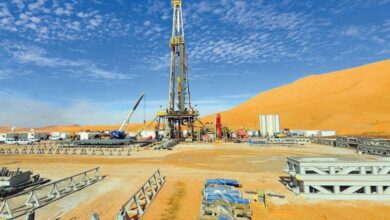
In this context, the inclusion of Jorf Lasfar in the Brazilian delegation’s itinerary is particularly noteworthy. This industrial and port complex concentrates a vital part of Morocco’s activities related to the processing and export of phosphates and fertilizers, making it central to one of the primary trade flows between Morocco and Brazil.
Thus, the ministerial mission takes place at a time when both countries are looking to deepen a relationship based on clear economic complementarity: Morocco supplies Brazil with fertilizers and essential inputs for its agriculture, while Brazil exports significant volumes of agricultural and agri-food products to the Kingdom.
With Brazilian imports from Morocco increasing by 36% in the first seven months of 2026, the visit in September could provide a new dimension to this cooperation, particularly in agriculture, fertilizers, market access, and supply security.