China Accelerates in Robotaxis: XPeng Begins Mass Production of Autonomous Taxis
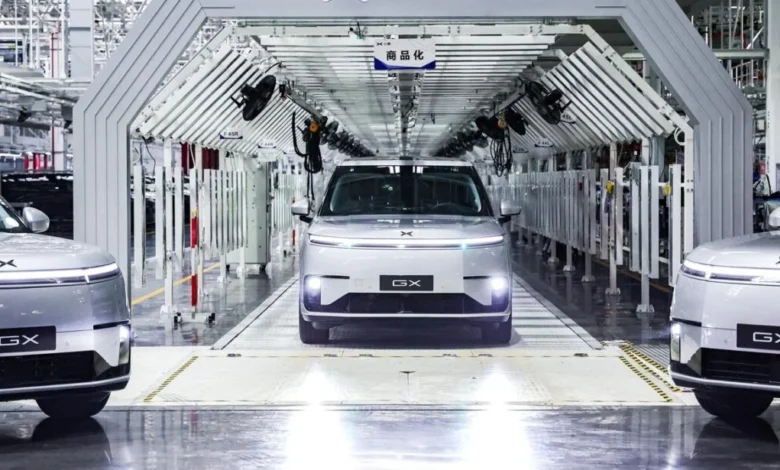
Chinese manufacturer XPeng has reached a new milestone in the global race toward autonomous mobility with the launch of mass production of its first robotaxi in Guangzhou.
While several companies are still limited to small-scale experiments, the Chinese brand is banking on the large-scale industrialization of its autonomous vehicles to ultimately deploy thousands of driverless taxis on Chinese roads.
Technology Developed Entirely In-House
Built on the new GX platform, XPeng‘s robotaxi has been designed with a fully integrated strategy encompassing everything from software to electronic components.
The vehicle is equipped with four Turing processors developed by the company, capable of delivering 3000 TOPS of computing power. Unlike several competitors that utilize LiDAR sensors and high-definition maps, XPeng favors a vision-based approach using only cameras and artificial intelligence.
The VLA 2.0 autonomous driving system is reported to react in less than 80 milliseconds, a critical speed for navigating the dense traffic of major Chinese cities.
A Passenger-Centric Experience
Onboard, the manufacturer emphasizes comfort to make the absence of a driver almost imperceptible. The robotaxi features “zero-gravity” reclining seats, tinted windows for passenger privacy, and touchscreen displays in the back.
The integrated voice assistant also allows control over various vehicle functions, including climate control, entertainment, and route tracking.
Goal: Completely Eliminate the Safety Driver
Real-world testing is set to begin in the second half of 2026, with XPeng aiming to completely remove the onboard safety operator by 2027.
To support this strategy, the company has opted to enhance its technological independence, particularly by developing its own electronic chips to reduce reliance on American suppliers.
A New Global Technological Battleground
This initiative underscores China’s growing dominance in technologies related to smart mobility, following its rapid ascent in the electric vehicle sector.
Despite concerns from financial markets regarding the project’s high costs and intense competition in China, XPeng aims to build a complete ecosystem around artificial intelligence and autonomous driving, leveraging technological partnerships and open software solutions.