Cimaf Aims to Triple Its Plant Capacity in Mali to 3 Million Tons
Moroccan Group Cimaf Continues Industrial Expansion in Mali
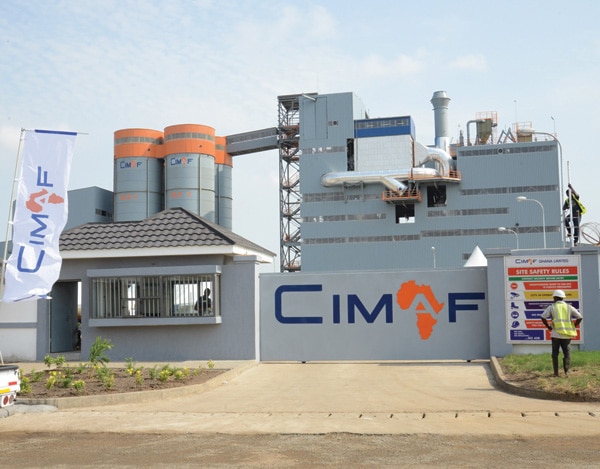
The Moroccan group Ciments de l’Afrique (Cimaf) is pursuing its industrial expansion in Mali. On Thursday, August 27, the operator presented its new program for the Natien plant, located near Sikasso, to Malian authorities. Production at the facility commenced on March 23.
Initially designed to produce one million tons of cement per year, the facility is now set to triple its capacity to three million tons by the 2027-2028 timeframe.
The overall investment amount is now estimated at approximately 56 billion CFA francs, which is nearly 923 million dirhams.
A 923 Million Dirham Investment
The industrial program presented by Cimaf allocates 35 billion CFA francs (about 577 million dirhams) specifically for the cement plant. An additional 21 billion CFA francs (around 346 million dirhams) is earmarked for logistics and the rolling stock necessary for the site’s operations.
Recent data provided by the Malian authorities indicates that the project is expected to generate approximately 250 direct jobs and nearly 1,500 indirect jobs.
At the time of the groundbreaking ceremony in February 2024, the ambitions were more modest. The initial proposal called for a capacity of one million tons, with an eventual expansion to two million tons, for an announced industrial investment of 30 billion CFA francs, with production intended to begin in February 2026.
The actual start-up on March 23 thus occurred ahead of the original schedule. The new program represents a significant scaling up, with maximum capacity now set at three million tons per year.
Natien to Become a Cornerstone for Cimaf in Mali
Located in the rural commune of Natien, about fifteen kilometers from Sikasso, the plant represents Cimaf’s second industrial establishment in Mali.
The Moroccan group entered the country in 2016 with its Diago facility near Kati. This unit originally had a capacity of 500,000 tons per year, which has since been progressively increased to one million tons.
Together, the two sites now provide Cimaf with a combined production capacity of two million tons of cement per year in Mali.
With the announced expansion at Natien, the Sikasso plant alone would produce three million tons per year, surpassing the current combined capacity of Cimaf’s two facilities in the country.
Opportunities in Mining and Infrastructure Markets
Cimaf is already supplying several major Malian projects within the infrastructure and mining sectors.
The group mentions particular engagements with the gold mines of Fekola, Morila, Komana, and Syama, as well as the lithium project in Goulamina. Its products are also designated for several road projects and civil engineering works, including the rehabilitation of National Road 6 between Bamako and Ségou.
This presence in significant construction projects should bolster Cimaf’s position as Mali seeks to enhance its local cement production capacities.
Solar Power to Lower Energy Costs
The Moroccan group has also incorporated photovoltaic installations into its industrial operations in Mali.
According to Cimaf, its solar system can cover all the electrical needs of its assigned site. The aim is to reduce dependence on electricity purchased from the grid and to manage energy costs associated with cement production.
This energy strategy aligns with the gradual increase in the group’s industrial capacities in Mali.
Mali Aims for Cement Self-Sufficiency
The expansion of Natien comes in a Malian market where cement needs are estimated at approximately six million tons annually.
Malian Minister of Industry and Commerce, Moussa Alassane Diallo, noted that the number of cement plants has increased from three in 2021 to six in 2026, with their total capacity now reaching 5.5 million tons per year.
Malian authorities believe the new planned capacities should allow the country to achieve self-sufficiency in cement production by 2027.
In this context, the Natien plant plays an important role. With its current capacity of one million tons, it already accounts for about 18% of the identified cement production capacity in Mali. Once expanded to three million tons, it would represent more than half of the sector’s current capacity.
Cimaf Continues Its African Expansion
Founded in 2011 as a subsidiary of the Moroccan group Ciments de l’Atlas (Cimat), Cimaf has gradually expanded its industrial network across the African continent.
The group is now present in twelve African countries and continues its expansion strategy in markets where demand for cement and infrastructure remains strong.
In Mali, the development of the Diago and Natien sites should raise the group’s total capacity to four million tons per year if the entire program announced for 2027-2028 is completed.
The Natien plant, officially launched on February 9, 2024, with a construction timeline of 23 months, thus enters a new phase. From an initial project of one million tons expandable to two million, it is now set to become an industrial unit capable of producing three million tons of cement per year, confirming Cimaf’s ambitions in the Malian market.