Fertilizers: Morocco Strengthens Its Position in the Zambian Market
Morocco Rises to Fourth Position in Zambia’s Fertilizer Suppliers in Q2 2026
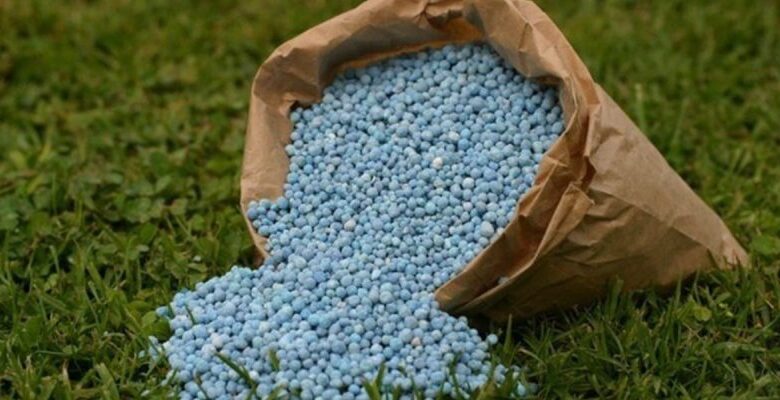
Morocco has secured the fourth position among fertilizer suppliers to Zambia during the second quarter of 2026, with exports valued at $13.24 million, equivalent to approximately 129.94 million dirhams. This information was released on Thursday, October 22, by the Bank of Zambia, indicating that Moroccan deliveries have increased by 8.4% year-on-year, enabling the Kingdom to surpass Russia in this African market.
Moroccan Fertilizers Experience 8.4% Growth
Zambia’s purchases of Moroccan fertilizers reached $13.24 million in the second quarter of 2026, a significant increase from $12.21 million during the same period in 2025. This growth represents an increase of $1.03 million, which is around 10.11 million dirhams.
With an estimated market share of 7.1% of Zambia’s fertilizer imports during this period, Morocco has strengthened its position among the country’s major suppliers. It has outperformed Russia, which recorded deliveries of $12.71 million, and is closing in on China, which holds the third spot with $15.28 million in exports.
South Africa continues to dominate the market with a substantial $69.14 million in fertilizer deliveries, followed by Nigeria at $43.25 million. China rounds out the top three, while Morocco holds the fourth-largest share.
South Africa Commands Over 37% of the Market
Zambia’s total fertilizer imports amounted to $186.3 million in the second quarter of 2026, approximately 1.83 billion dirhams. South Africa accounted for 37.1% of these purchases, followed by Nigeria at 23.2%, China at 8.2%, Morocco at 7.1%, and Russia at 6.8%.
Together, these five suppliers accounted for $153.62 million, or 82.5%, of Zambia’s fertilizer imports, with other countries sharing the remaining $32.68 million.
These figures are derived from the quarterly report of the Bank of Zambia focused on trade flows. The statistics are compiled according to the harmonized system classification, valuing imports in CIF, which includes costs, insurance, and freight.
Zambian Demand Driven by Agriculture
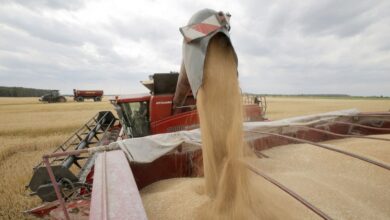
Morocco’s position in the market reflects a structural demand for fertilizers in Zambia, where agriculture heavily relies on maize cultivation. Traditionally, imports peak in the fourth quarter as the planting season approaches.
Customs statistics compiled in 2023 by the Zambian technical working group on fertilizers indicate that national demand typically ranges between 600,000 and 700,000 tons in a normal year.
Data from Trade Map, the International Trade Centre’s statistical database, also shows an increase in nitrogen fertilizer imports, which reached 681,000 tons in 2025, up from 433,000 tons in 2021, representing a total expenditure of $436 million, or about 4.28 billion dirhams.
Urea emerged as the primary imported product, with 367,000 tons valued at $226 million, while ammonium nitrate accounted for 171,000 tons and $125 million.
Lusaka Accelerates Development of Local Production
In addition to its foreign purchases, Zambia is working to bolster its industrial capacities to meet national agricultural demand. President Hakainde Hichilema laid the foundation stone for the expansion of United Capital Fertilizer Zambia’s (UCF) complex in Chilanga, Lusaka Province, on Tuesday, October 20.
Backed by the Chinese conglomerate Wonderful, the project represents an announced investment of $1.6 billion, roughly 15.7 billion dirhams.
According to the company, the expansion aims to add annual production capacities of 540,000 tons of ammonia, 520,000 tons of urea, 400,000 tons of ammonium nitrate, and 50,000 tons of food-grade carbon dioxide. However, no specific operational date has been announced.
UCF is already operating a compound fertilizer production unit and a urea plant that began operations in October 2025. The Zambian government estimates that the expansion could create around 10,000 direct jobs.
President Hichilema has presented this investment as a contribution to the national goal of producing ten million tons of maize annually.
A Market to Watch for Moroccan Exporters
The increase in Moroccan deliveries confirms the country’s presence as a key supplier in an African agricultural market characterized by high fertilizer needs. With $13.24 million in sales for the second quarter of 2026, Morocco has surpassed Russia and is closing the gap on China in a ranking led by South Africa and Nigeria.
However, the anticipated growth in Zambia’s industrial capacities may gradually alter the supply structure. For Moroccan exporters, developments in local production, agricultural timing, and the demand for nitrogen fertilizers will be crucial factors in assessing the prospects of the Zambian market.